
West Java Regional Parliament Expresses Concern Over Declining Citarum Water Quality Index
The Water Quality Index (WQI) of the Citarum River, which previously reached 52, has now fallen to the level of 48. This decline has become a point of concern amidst government efforts to maintain the sustainability of the Citarum Harum programme, following the expiration of Presidential Regulation Number 15 of 2018 regarding the Acceleration of Pollution Control and Damage to the Citarum River Basin.
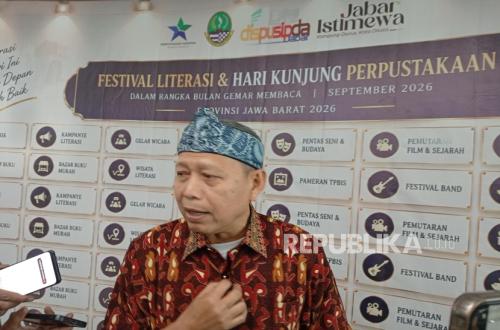
Daddy Rohanady, a member of Commission IV of the West Java Regional Parliament (DPRD), believes this condition indicates that much work remains to be done to ensure the Citarum becomes a truly clean and well-maintained river. According to him, efforts to maintain river quality cannot rely solely on government programmes but require changes in community behaviour.
“We certainly do not want the Citarum to be in this state. We want the Citarum to be truly ‘fragrant’ (clean), to become a legendary river of West Java that is genuinely good. But the fact is, there is still a lot of work to do,” Daddy stated on Tuesday afternoon.
He noted that waste remains one of the primary challenges along the Citarum River flow, despite the fact that Citarum management has received support from both central and regional governments.
“We have been assisted by the central government, yet it remains full of rubbish,” he said.
Daddy also reminded the public not to use the river as a dumping ground. In his view, this issue must be addressed at the source, particularly within household environments.
“I am conveying this through this forum and through the media, hopefully, it will be voiced: do not make the river the largest rubbish bin,” he said.
He encouraged the community to begin sorting waste in their respective homes. Waste that still has utility, he noted, can be utilised through the application of the 3R principle: reduce, reuse, and recycle.
“If we adopt the mindset that waste can be utilised, look at the 3Rs—which can be recycled, which can be reused. I believe that is something we can do,” he said.
Daddy assessed that change must begin with simple habits at the household level. In doing so, the amount of waste that potentially enters the river can be reduced from the source.
“Because each of us starts from our own homes,” he concluded.