
West Java Regional Council Urges KPID to Expand Media Literacy in Schools
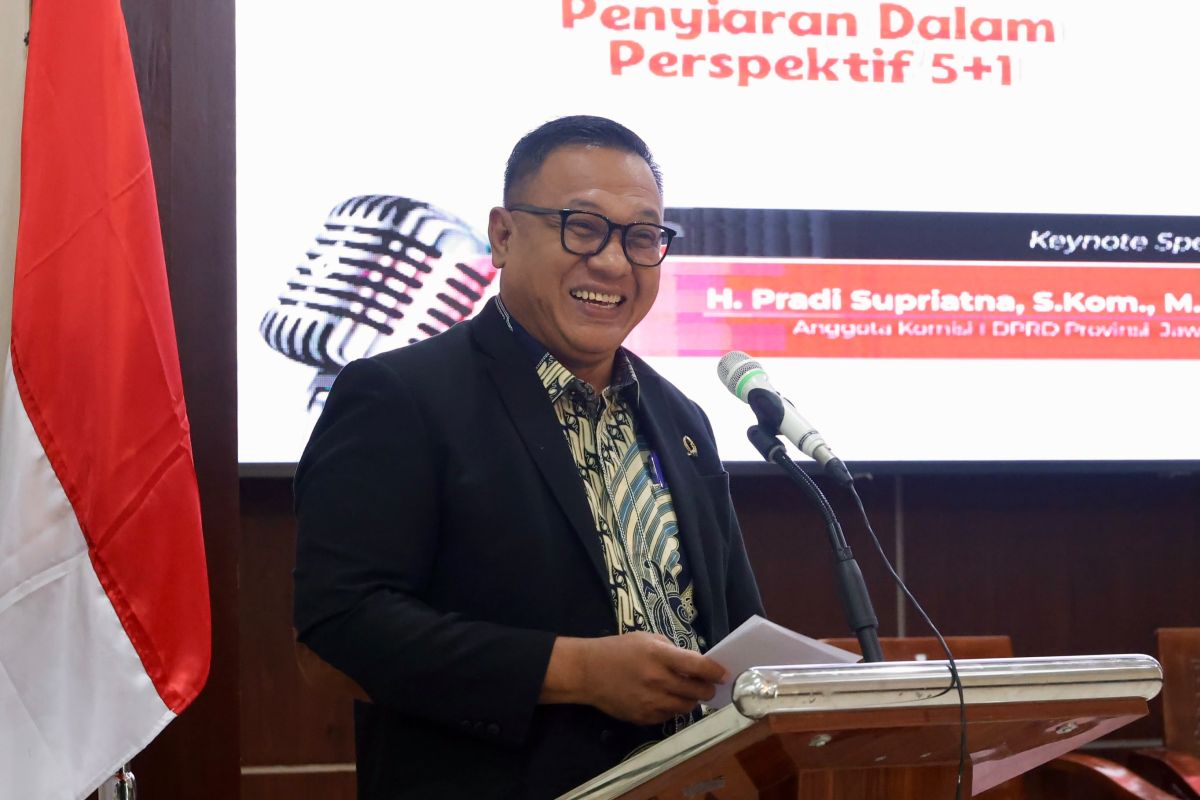
Bandung (ANTARA) - The West Java Regional Legislative Council (DPRD) has requested the local Regional Indonesian Broadcasting Commission (KPID) to expand media literacy programmes to the regency/city level and to junior and senior high school educational units to shield the younger generation from the onslaught of hoaxes and unhealthy information.
Pradi Supriatna, a member of Commission I of the West Java DPRD, noted that technological shifts have placed information access directly in the hands of the public without strict filters, while protective regulations often lag behind the rapid dissemination of digital content.
He added that regulatory limitations necessitate the development of self-resilience within the Millennial, Gen Z, and Gen Alpha generations. Without the ability to critically filter content, the consumption of misinformation risks triggering social misunderstandings and undermining national unity.
“Regulations are not yet in place, but the information has already arrived. We must ensure that inaccurate information does not become unhealthy consumption for the public,” he stated.
To anticipate these negative impacts, the West Java DPRD is encouraging the public to adopt information verification methods based on the fundamental journalistic principles of 5W+1H (what, who, when, where, why, and how) before resharing content.
“Once this literacy is implemented and understood, we can certainly protect ourselves. For example, when we receive information, we should not immediately reshare it. We must find the source and ensure whether the information is true,” Pradi said.
Furthermore, Commission I of the West Java DPRD considers secondary schools to be a strategic stronghold for instilling critical thinking in teenagers who are active on social media.
The DPRD is committed to supporting budget allocations so that KPID can collaborate across sectors with local governments and educational institutions.
“We strongly encourage this (expanding media literacy to schools), but it certainly requires support in terms of budget and other factors. We hope this can begin at the junior and senior high school levels,” Pradi concluded.