
West Java Records 0.05 Percent Deflation in July as Food Prices Fall
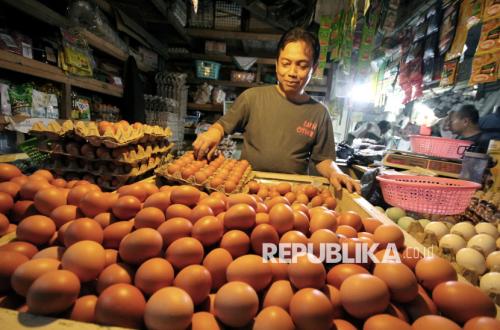
A decline in the price of essential food commodities pushed West Java into deflation on a month-to-month (m-to-m) basis in July 2026, with the consumer price index falling by 0.05 percent. Key staples experiencing price drops included shallots, red chillies, gold jewellery, bird’s eye chillies, and purebred chicken eggs.
The Head of the West Java Central Statistics Agency (BPS), Margaretha Ari Anggorowati, stated that the fall in staple food prices was due to the main harvest in several producing regions. For example, the shallot harvest took place in Bandung Regency, Garut Regency, and areas outside West Java. “Deflation was also caused by a decrease in demand for chicken meat and purebred chicken eggs during the school holiday period due to the suspension of the Free Nutritious Meals (MBG) programme,” Margaretha said during the Official Statistics News Release event for West Java Province on Monday (3/8/2026).
She detailed that the commodities contributing the most to month-on-month deflation in July 2026 were shallots (0.09 percent), red chillies (0.07 percent), gold jewellery (0.07 percent), bird’s eye chillies (0.05 percent), and purebred chicken eggs (0.04 percent). Conversely, the commodities contributing the highest month-on-month inflation in July 2026 were petrol (0.09 percent), cucumber (0.02 percent), primary school fees (0.02 percent), garlic (0.02 percent), and cars (0.01 percent). On a year-on-year basis, West Java experienced inflation of 2.72 percent in July 2026, with the largest contributors being gold jewellery (0.62 percent), petrol (0.31 percent), cooking oil (0.16 percent), rice (0.13 percent), and machine-rolled kretek cigarettes (0.09 percent).
Regarding trade, BPS West Java also reported that the province’s trade balance recorded a surplus of USD 13.79 billion during January to June 2026. This resulted from exports reaching USD 19.60 billion, significantly higher than imports of USD 5.81 billion. The value of West Java’s exports in that period rose by 5.11 percent compared to the same period in 2025. The largest market share for non-oil and gas exports from January to June 2026 was the United States, valued at USD 3.26 billion, followed by the Philippines at USD 1.74 billion and Japan at USD 1.40 billion, with their combined contribution to exports reaching 32.95 percent. Meanwhile, the largest supplier of non-oil and gas imports during the same period was China, valued at USD 2.30 billion (41.85 percent), followed by South Korea at USD 654.64 million (11.90 percent) and Japan at USD 651.17 million (11.84 percent).