
West Java Ready to Support KITA SEHAT Programme, Targets Higher Life Expectancy
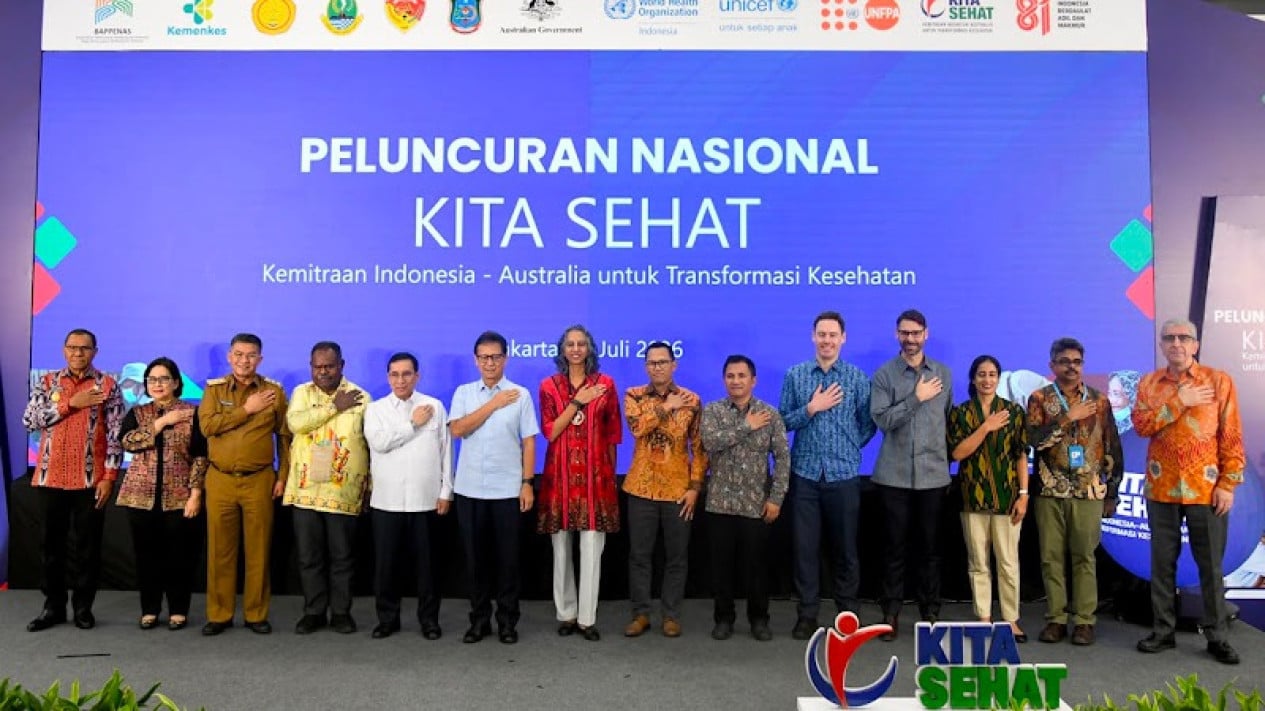
Jakarta, VIVA – The provincial government of West Java has fully committed to raising the population’s life expectancy through the strengthening of integrated primary healthcare services.
This commitment was affirmed by West Java Deputy Governor Erwan Setiawan while attending the launch of the KITA SEHAT programme at the office of the Ministry of National Development Planning/Bappenas in Jakarta on Monday (20/7/2026).
According to Deputy Governor Erwan, improving the population’s health is the primary foundation for developing superior human resources in West Java.
“We are committed to improving the quality of public healthcare services with the support of the KITA SEHAT programme. Strengthening primary healthcare is not merely about improving service quality, but is a form of health governance reform to make it more effective, equitable and sustainable,” Erwan said, quoted on Tuesday, 21 July 2026.
In his view, the KITA SEHAT programme is highly relevant to the social and health challenges in West Java, particularly in efforts to accelerate the reduction of stunting and improve toddler nutrition.
This collaborative programme is expected to serve as a catalyst for accelerating health transformation across West Java’s 27 regencies and cities.
As proof of the provincial government’s seriousness at the regional level, West Java previously rolled out the Village Doctor programme. This innovation brings medical personnel to remote areas to ensure communities have access to healthcare services that are closer, faster and of higher quality.
“The success of West Java’s health transformation will have a highly significant impact, not only for West Java residents but also for achieving national health development targets,” Erwan added.
Focus on preventive and promotive efforts
Health Minister Budi Gunadi Sadikin stressed that the simplest indicator of a healthy society is an increase in life expectancy.
The government is targeting to raise Indonesia’s life expectancy from 74 years to 76 years over the next five years.
“The government’s primary focus is keeping people healthy, and only then treating those who are ill. That is why strengthening primary healthcare services is a priority,” Budi asserted.
People who are able to maintain their health, Budi continued, will be spared various chronic diseases and thus not depend on hospital services.
He also urged the public to undergo regular annual health check-ups as an early detection measure against various disease risk factors.