
West Java Ready to Accelerate Target of Increasing Indonesia's Life Expectancy
The main benchmark of successful national health development lies in a rising life expectancy figure, which can only be achieved if the public paradigm shifts from treating to preventing disease.
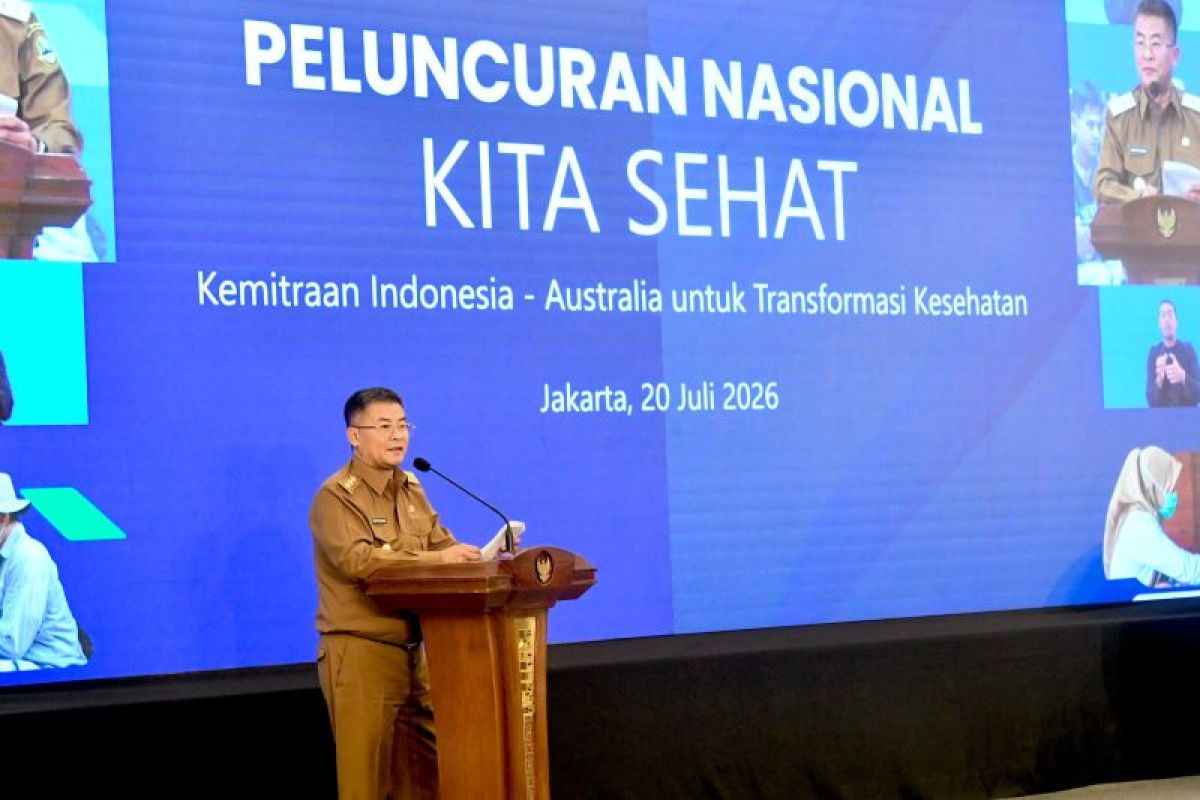
Bandung (ANTARA) - The West Java Provincial Government is ready to accelerate the target of raising the life expectancy of Indonesians from 74 to 76 years over the next five years, through the integration of the KITA SEHAT Programme (Indonesia-Australia Partnership for Health Transformation) and the village doctor innovation.
The health service transformation initiative through the KITA SEHAT Programme focuses on strengthening preventive efforts, tackling stunting, and fulfilling toddler nutrition across 27 regencies and cities in West Java.
“We are committed to improving the quality of public health services with the support of the KITA SEHAT Programme. Strengthening primary health services is not merely about improving service quality, but is a manifestation of health governance reform to make it more effective, equitable, and sustainable,” said West Java Deputy Governor Erwan Setiawan in a statement in Bandung on Tuesday.
Erwan affirmed that West Java’s seriousness in cutting medical access inequality has been demonstrated through the deployment of medical personnel to remote areas under the Village Doctor Programme, enabling chronic disease interventions and early detection to reach isolated residents more quickly.
He is optimistic that the successful execution of health reform in Indonesia’s most populous province will be the main determinant in achieving national health targets.
“The success of health transformation in West Java will have a very significant impact, not only on West Java residents, but also on achieving national health development targets,” Erwan added.
Health Minister Budi Gunadi Sadikin explained that the main benchmark for the success of national health development lies in a rising life expectancy figure, which can only be achieved if the public paradigm shifts from treating to preventing disease.
“The government’s main focus is keeping people healthy, and only then treating those who fall ill. Therefore, strengthening primary health services is a priority,” said Budi.
Budi reminded residents to make use of annual health check-up facilities routinely in order to control chronic disease risk factors before they worsen and require intensive hospital care.