
West Java Provincial Government to Form Teams to Track Out-of-School Children in Villages
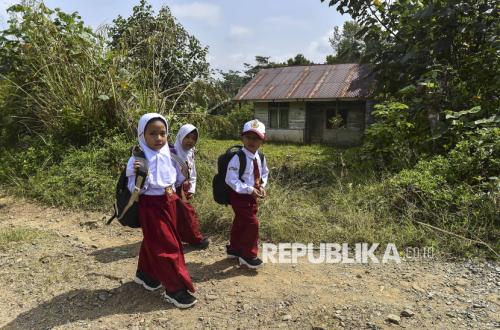
West Java Regional Secretary Herman Suryatman has called for stronger cross-sector efforts to ensure that no school-age child is denied access to education. The provincial government will form teams to track out-of-school children down to the village and urban-village level, involving sub-district heads, village heads and urban-village heads.
Herman stressed that the issue of out-of-school children (ATS) could not be left solely to the Education Office or the Ministry of Religious Affairs. Provincial, regency and city, sub-district and village governments must work together to identify why children are not attending school and ensure they regain access to education services.
“Next week, we will invite all sub-district heads in West Java. They will then work across sectors to educate village and urban-village heads across the province. We will even establish teams in villages to track down out-of-school children,” Herman said at an education coordination meeting at the Dewi Sartika Hall of the West Java Provincial Education Office in Bandung on Monday (12 October 2026).
Herman said efforts to reach out to children who are not in school must begin with an understanding of families’ actual circumstances, rather than simply assuming that children or their parents are unwilling to pursue education. He said a humane and comprehensive approach was essential to addressing the problem.
Economic hardship, the need to help parents work and disability can all prevent children from accessing education, he said. The government must therefore provide solutions tailored to each family’s needs.
“We should not simply ask why a child is not in school. We need to understand their circumstances. Some children have to help their parents farm or trade; some families need assistance, and some children have disabilities. The situations vary,” he said.
Herman said he believed most cases of children being out of school could be resolved if the government offered flexible solutions suited to families’ circumstances. These could include Community Learning Centres (PKBM) and equivalency education programmes: Paket A, Paket B and Paket C.
More flexible study hours, including at weekends or outside working hours, could provide an alternative for children unable to attend formal education, he said. Such options would give them a second chance to complete compulsory education.
“If creative and flexible solutions are offered through PKBM or equivalency education, I think they will be willing to take them up. I have visited several families whose children are out of school, and when we talk to them and offer solutions, they are willing,” he said.
Source: jawawa.id (https://jawawa.id/newsitem/west-java-provincial-government-to-form-teams-to-track-out-of-school-children-in-villages-1791967844)
Originally published by Republika (https://rejabar.republika.co.id/berita/tmw030423/pemprov-jabar-bentuk-tim-pemburu-anak-tidak-sekolah-di-desa), translated from Indonesian