
West Java Provincial Government Targets Zero Out-of-School Children by 2029
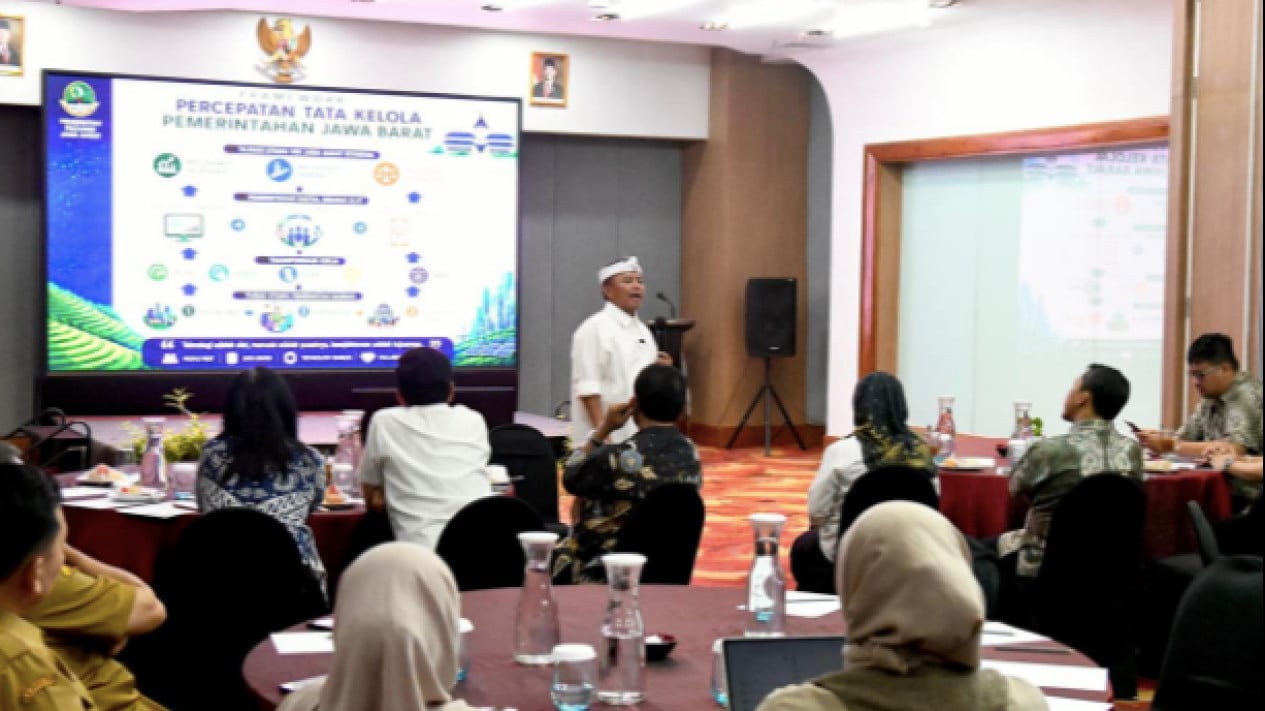
Bandung, VIVA – The West Java Provincial Government aims to become the first province free from out-of-school children (ATS) by 2029. To realise this target, the government is implementing transformations within the administration, ranging from civil servant (ASN) transformation to institutional and performance management improvements.
The West Java Regional Secretary, Herman Suryatman, expressed hope that these steps would strengthen the provincial governance under the leadership of Governor Dedi Mulyadi, commonly known as Kang Dedi Mulyadi.
“Thus, by 2029, West Java aims to be the first province to target a state free from out-of-school children (ATS),” he stated during his speech at the Technical Assistance Workshop for the Preparation of the West Java Provincial Action Plan for the Prevention and Handling of Out-of-School Children, held at the Mercure Hotel, Bandung, as reported on Thursday, 3 September 2026.
Herman continued, noting that the West Java Provincial Government is committed to accelerating the prevention and handling of out-of-school children.
These efforts are no longer viewed merely as government programmes, but as a strategic necessity to ensure that every child in West Java receives their right and opportunity to pursue an education.
According to Herman, addressing the issue of out-of-school children requires collective action and cross-sector synergy. Local governments cannot work in isolation; therefore, collaboration between the provincial government, regency/city governments, regional agencies, the education sector, and various stakeholders is key to producing targeted interventions.
Herman also emphasised the importance of data quality as the foundation for policymaking. Data regarding out-of_school children must accurately reflect the current situation so that the government can determine interventions that meet the specific needs of each child.
“Good data, good decision, good result,” remarked Secretary Herman.
He added that high-quality data will lead to precise decisions and ultimately produce tangible results that can be felt by the community.