
West Java Provincial Government Seeks to Extend Lifespan of Sarimukti Landfill
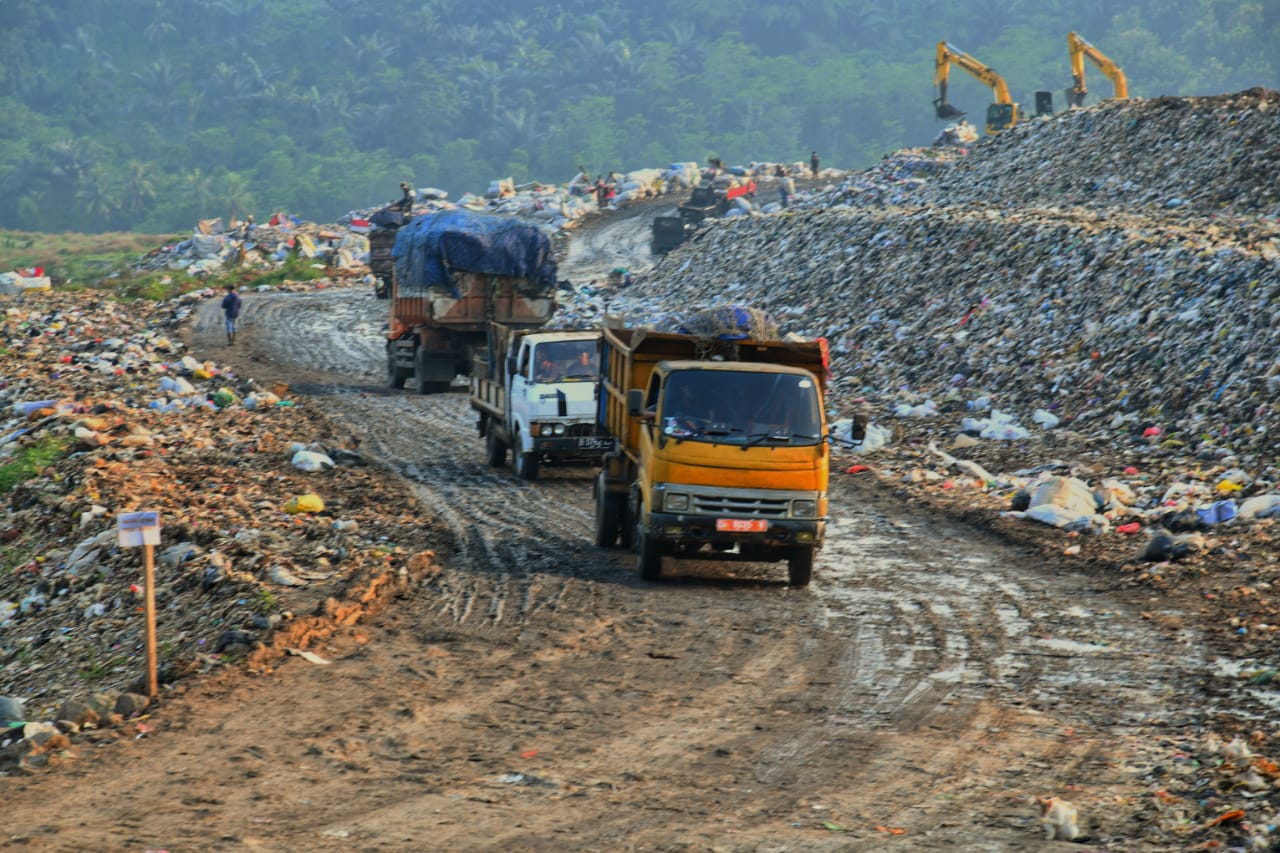
The West Java Provincial Government is extending the use of the Sarimukti landfill in West Bandung Regency, which serves as the final disposal site for waste from the Greater Bandung area.
Arief Perdana, Head of the Waste Management UPTD at the West Java Provincial Environmental Services Agency (DLH), explained that the authorities are currently awaiting the completion of the Legok Nangka Integrated Waste Treatment Facility (TPPAS), which is targeted for completion in 2029. While waiting for that facility to become operational, the agency will collaborate with third parties to extend the operational lifespan of Zone 5 in the Sarimukti landfill expansion.
This collaboration is necessary for restructuring efforts to prolong the use of Zone 5 until the Legok Nangka facility is finished. “First, we are attempting to optimise Zone 5. In addition to covering it with soil, we are also attempting to restructure it using rented heavy equipment and seeking partnerships with third parties regarding landfill mining,” he said on Thursday (3/9).
He explained that the process is still in the preparation stage. According to the plan, the expansion at Sarimukti is expected to commence in 2027, or adjusted according to the available remaining capacity.
“We hope to begin this in 2027. As Zone 5 reaches capacity, we will simultaneously endeavour to implement landfill mining efforts,” added Arief.
Regarding the capacity of Zone 5 in the Sarimukti expansion, he noted that physically, the capacity appears full, though the estimated remaining capacity is around 50-60%. “Looking at the incoming figures, it is still around 50-60% compared to total capacity. However, physically on the ground, it appears to be nearing capacity,” he explained.
Therefore, restructuring and optimisation are essential. “We are currently designing the optimisation of Zone 5, assessing whether additional embankments are required through geotechnical and geoelectrical studies. We will endeavour to ensure it remains usable at least until 202t, prior to the commencement of third-party collaborations,” he concluded.
Restructuring is also being carried out on Zones 1-4, which are no longer active due to being full. “All these zones will eventually be partnered with third parties for various uses, ranging from gas utilisation to Refuse Derived Fuel (RDF) and other purposes,” concluded Arief.