
West Java Prepares Upstream Waste Management Strategy
Waste management in West Java is deemed to require a new approach that does not solely rely on landfills (TPA). Commission IV of the West Java DPRD is encouraging community empowerment as a key strategy to reduce waste directly from its source.
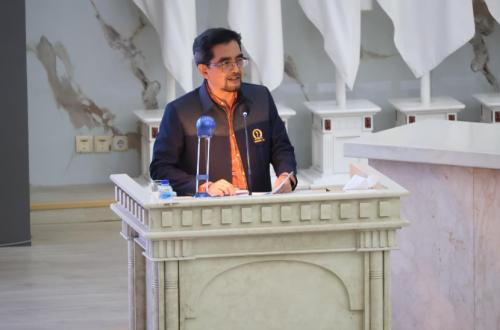
This push is articulated through the Draft Regional Regulation (Ranperda) Initiative on Community Empowerment in Waste Management. The explanation regarding this draft was presented by Commission IV during a plenary session of the West Java DPRD on Tuesday (6/10/2026).
The Deputy Chairman of the West Java DPRD, MQ Iswara, stated that the presentation was a follow-up to the approval from the West Java DPRD’s internal plenary meeting on 30 September 2026. “As the proposer, Commission IV must provide an explanation regarding the said Draft Regional Regulation,” said Icarb.
According to the discussion schedule, the next stage involves the Governor’s opinion on the Draft Regional Regulation regarding Community Empowerment in Waste Management, which is scheduled for a plenary session on 9 October 2026.
In the proposer’s explanation, West Java DPRD Commission IV member Fikri Hudi Oktiarwan noted that waste issues in West Java are becoming increasingly complex due to population growth, urbanisation, and changing consumer patterns. He added that the increasing volume of waste is not yet fully matched by available management capacity, which could impact environmental quality, health, and the community’s quality of life.
According to Fikri, waste management has tended to use a centralised or ‘end-of-pipe’ approach, with landfills as the primary reliance. However, this approach faces various limitations, ranging from landfill capacity to the risk of environmental pollution.
Therefore, a shift in approach is required by reducing waste from the source. Households, markets, campuses, offices, and commercial sectors are considered potential starting points for waste reduction and sorting.
“Community empowerment in waste management is a strategic approach that positions the public as the primary actors in the reduction, sorting, utilisation, and processing of waste,” said Fikri.
He assessed that strengthening communities could also reduce the burden on landfills while opening economic opportunities through recycling activities. The value of ‘gotong royong’ (mutual cooperation), which is part of West Javanese life, is seen as social capital for building institutions such as waste banks, community self-help groups, and environmental cooperatives.
Fikri stated that waste management regulations at both central and regional levels are actually available. However, there is currently no regulation that specifically utilises community empowerment as an instrument for waste reduction at the provincial level.
West Java previously had Regional Regulation Number 12 of 2010 on Waste Management, which was later amended by Regional Regulation Number 1 of 2016. However, these rules are deemed insufficient in specifically regulating the recognition, empowerment, guidance, institutional strengthening, and independence of waste management communities.
“Therefore, we recommend a model of Regional Regulation that specifically regulates community empowerment in waste management,” he concluded.
Source: jawawa.id (https://jawawa.id/newsitem/west-java-prepares-upstream-waste-management-strategy-1791284212)
Originally published by Republika (https://rejabar.republika.co.id/berita/tmhcji490/jabar-siapkan-strategi-pengelolaan-sampah-dari-hulu), translated from Indonesian