
West Java Police Chief Launches 'Jaga Rawat Jawa Barat' Movement to Strengthen Security Ecosystem
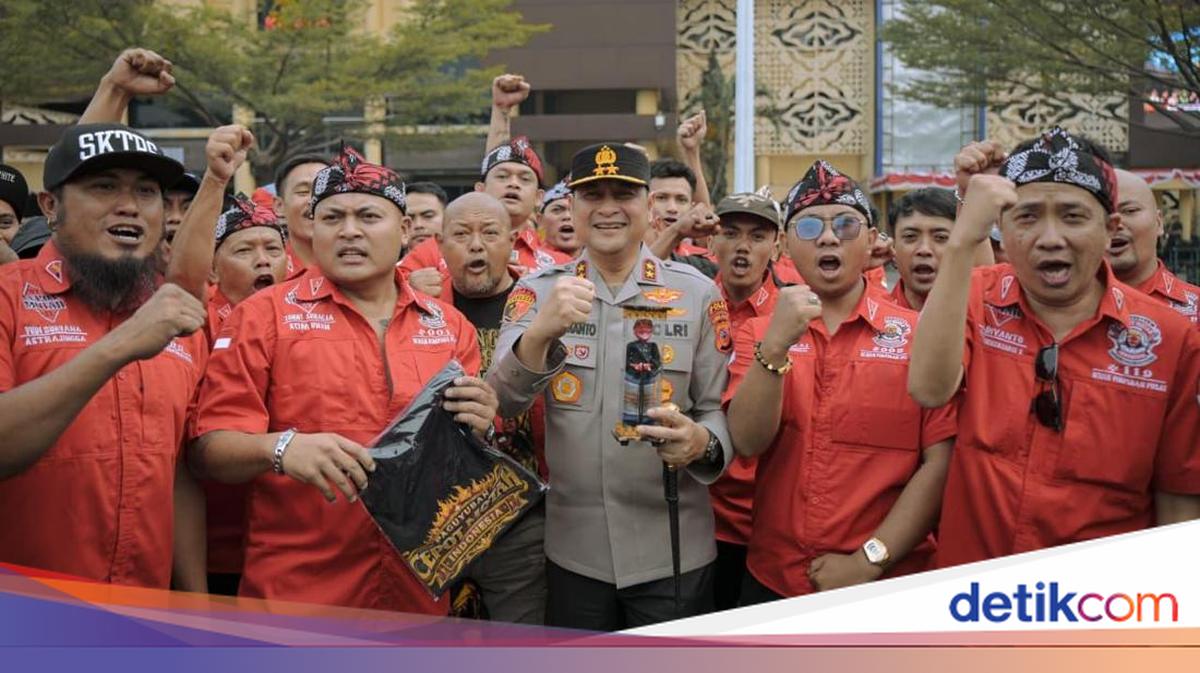
West Java Police Chief Inspector General Pipit Rismanto officially launched the ‘Jaga Rawat Jawa Barat’ movement as an implementation and strengthening of the precision police transformation at the regional level. The movement is expected to create a security ecosystem that is adaptive, responsive, collaborative, and solution-oriented.
The launch took place at the West Java Regional Police parade ground on Friday (17/7/2026). Pipit Rismanto directly led the assembly of Bhabinkamtibmas (Community Policing Officers) and the West Java Police Security Belt. The momentum was described as strengthening the role of Bhabinkamtibmas while tightening synergy through the Security Belt, a collaboration between the National Police, regional government, the military, religious leaders, community figures, academics, businesses, communities, and all elements of society. The goal is to guard and care for security in West Java.
The launch of the ‘Jaga Rawat Jawa Barat’ movement was marked by the striking of a gong by the West Java Police Chief, symbolising the start of a new paradigm in security management in the province. This movement embodies the values of precision police transformation at the regional level, prioritising a community policing approach, prevention, cross-sector collaboration, and fast, precise, and sustainable problem resolution.
The West Java Police Chief explained that ‘Jaga Rawat Jawa Barat’ is not merely a tagline, but a collective movement to build a security ecosystem involving all components of society. ‘Jaga’ is interpreted as a commitment to maintaining security stability, public order, and tranquillity, while ‘Rawat’ represents an effort to build awareness, strengthen collaboration, and sustain a sense of safety.
In his address, Pipit stated that West Java is one of the most populous provinces in Indonesia. Therefore, the National Police is expected to continue transforming through an adaptive, humanist, and collaboration-based approach.
“Security is not solely the responsibility of the National Police, but the result of joint efforts by all components of the nation. Therefore, the Security Belt is built as a multi-door collaboration space that integrates all community potential towards one common goal: guarding and caring for security and order in West Java,” Pipit said in a statement on Friday (17/7/2026).
Bhabinkamtibmas officers serve as the police’s front line and liaison with the community. Beyond their community development function, they also play a role in strengthening early detection, resolving issues through problem-solving approaches, and building constructive communication. The West Java Police Chief outlined four working principles emphasised for the force: adaptive, responsive, collaborative, and solution-oriented.
“These four principles form the foundation for building a security ecosystem aligned with the precision police transformation, a security system that relies not only on institutional police strength but on collaboration, participation, awareness, and shared responsibility,” Pipit said. “In this ecosystem, Bhabinkamtibmas officers act as the driving force, ensuring that all potential disturbances are detected early, every issue is resolved quickly and humanely, and every element of society has space to contribute to maintaining the security of their environment.”
During the event, the West Java Police Chief also presented awards to winners of competitions for exemplary Bhabinkamtibmas, the Three Pillars, Community Security Units, Security Service Companies, Security Guards, and Special Police in recognition of their support for public security and order in West Java. Pipit expressed hope that the ‘Jaga Rawat Jawa Barat’ movement would realise a safe, orderly, and conducive region.
“In line with the precision police transformation, this movement is expected to become the foundation for building a robust, participatory, and sustainable security ecosystem, with Bhabinkamtibmas as the front line and the principles of being adaptive, responsive, collaborative, and solution-oriented as the working culture in providing protection, shelter, and service to the community,” he added.