
West Java Parliament Gives Green Light to Rename Province 'Tatar Sunda'
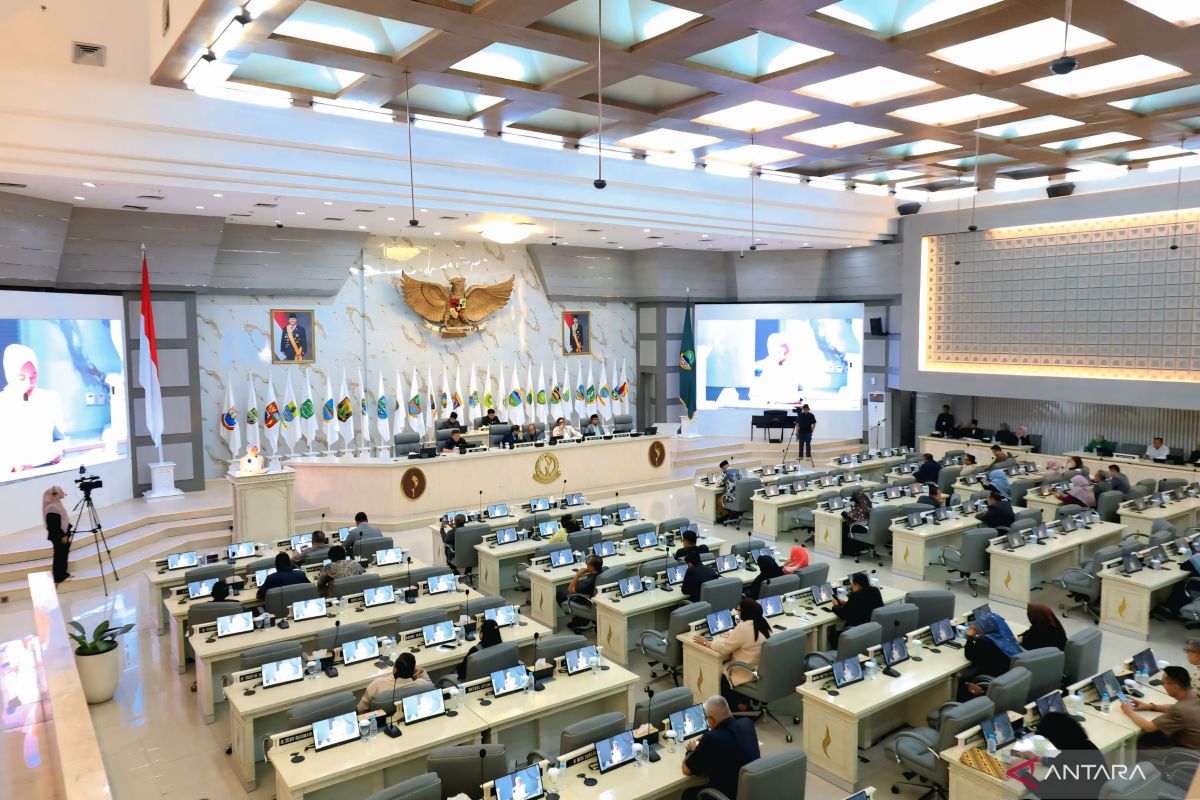
Bandung (ANTARA) - The discourse on changing the name of West Java Province to Tatar Sunda has entered a new chapter after all factions in the West Java Regional People’s Representative Council (DPRD) officially gave the green light to proceed with the proposal to the next legislative stage. This crucial decision to preserve identity received its most concrete response from the regional parliament following a hearing between Commission I of the West Java DPRD and academics, cultural figures, and Sundanese historians in Bandung on Thursday, after the issue had previously faded in 2013, 2015, and 2020. “The Democrat, PKB, PKS, PAN, PDIP, Golkar, and PPP factions have agreed to proceed to the next legislative stage for the renaming of West Java Province. The Gerindra and Nasdem factions have stated they will follow suit,” said Commission I Chairman Rahmat Hidayat Djati after chairing the meeting. “The proposing team has submitted this three times. But this is the first time it was attended by complete representatives from all factions,” he added. The strategic steps following this approval will depend on the refinement of the academic paper and the decision of the council leadership, whether it will be processed through a Special Committee (Pansus) or reviewed internally by Commission I. Rahmat also reminded that the name change regulation must ultimately secure approval from the central government. “Comments have also been conveyed from the Regional Governance and Autonomy Bureau regarding the stages, and from the Legal Bureau, because ultimately this requires central government approval,” Rahmat said. Interestingly, the DPRD’s spotlight extends beyond the provincial name. The legislature is also pushing for the strengthening of local identity in the naming of housing estates, tourist attractions, buildings, and the numbering of New Autonomous Region (CDOB) candidates, urging that they not merely use cardinal directions but instead adopt distinctive local names. “Including candidates for New Autonomous Regions, they shouldn’t just be called West, East, North, or South. They should reflect Sundanese names, not just West Cirebon, West Indramayu, East Cirebon, or North Sukabumi, but use distinctive local names,” Rahmat said, adding that the legal basis could be a Regional Regulation or a Governor’s Regulation. Meanwhile, Padjadjaran University Professor and member of the proposing team, Ganjar Kurnia, emphasised that the name change to Tatar Sunda carries deep historical, sociological, cultural, and psychological value to safeguard the Sundanese identity, which is increasingly marginalised by administrative approaches. Based on historical records, the Tatar Sunda region once stretched from Banten and Jakarta to Cipamali on the border of Central Java. Ganjar dismissed concerns about administrative complications or the potential for other regions to secede, citing the successful renaming of Ujung Pandang to Makassar as a routine bureaucratic process. “Those are just derivative matters. Administrative issues, letterheads, stamps, and so on are quite ordinary. It was said that almost all factions support it. It will then proceed to the next stages, including further study,” he said. While acknowledging that a name change is not an instant guarantee of economic prosperity, Ganjar stressed the importance of fostering a new work ethic through this identity. “The hypothesis is that changing the name to Sunda will not automatically bring prosperity. But by changing to a Sundanese name, there is an ethos, a spirit, a desire that I am Sundanese and must be better than others,” he stated. The West Java Provincial Government has confirmed that it has received, reviewed, and studied the academic paper for the proposed name change based on philosophical, sociological, economic, and juridical foundations. The provincial administration is currently awaiting direction from regional leadership to determine the next bureaucratic steps in accordance with Law Number 23 of 2014 on Regional Governance. “Of course, these stages do not come directly from the government, but must go through Commission I first, requiring approval similar to the proposal for New Autonomous Regions,” said Faisal, a Junior Policy Analyst at the West Java Regional Secretariat’s Governance Bureau, at the same location.