
West Java Offers 46 Strategic Projects, Targets Malaysian Investment
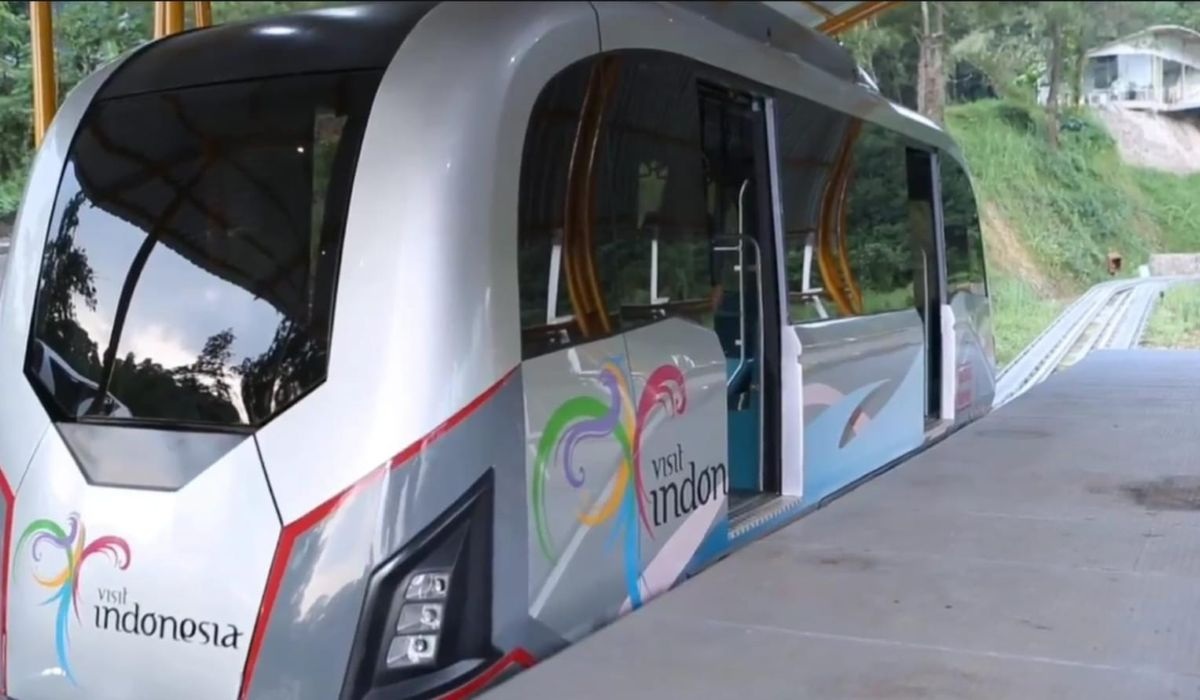
The West Java Provincial Government is preparing 46 strategic projects, potential cross-sector investments, and ‘clean and clear’ industrial zones to be offered during the Selangor International Business Summit (SIBS) 2026, scheduled for 9-10 July and 14-17 October 2026.
Dedi Taufik, Head of the West Java Investment and One-Stop Integrated Services Agency (DPMPTSP), stated that the provincial government is bringing a significant commitment to attract regional investors, particularly from Malaysia.
According to Dedi, the 46 strategic projects span nine to 12 leading sectors. These include aerospace, railways, automotive, creative industries, energy utilities, renewable energy, industrial zones, technology, health tourism, agriculture, infrastructure, and downstreaming.
Key projects prepared include the Kertajati and Patimban zones, the Bandung LRT, the Cirebon Raya Regional Waste-to-Energy Plant, the Majalengka Industrial Zone, the Agrivision Start-up, Sari Medika Resort, the Tasikmalaya Palm Sugar Industry Centre, and the Patimban Water Supply System.
“These projects are designed with high precision to attract the regional market from sectors such as aerospace, technology, energy, and downstreaming,” said Dedi.
In addition to strategic projects, the West Java Provincial Government will also offer 44 industrial zones described as ‘ready-to-use’ or ‘clean and clear’. These zones are spread across Bekasi, Bogor, Sukabumi, Purwakarta, Karawang, Subang, Indramayu, Majalengka, and Sumedang.
Dedi noted that these industrial zones are guaranteed to be ready in various aspects, including protection from illegal levies and local thuggery. Of these 44 zones, 24 have been facilitated under the KLIK scheme (Direct Construction Investment Facilitation).
Under this scheme, investors entering the zones do not need to endure long queues for Building Approval (PBG) and similar permits. Investors can proceed directly with construction as the primary Environmental Impact Assessments (AMDAL) have been completed by the government.
Addressing global business concerns regarding thuggery and intervention from local community organisations, Dedi emphasised that the West Java Provincial Government has taken both repressive and preventive digital measures. The provincial government has mobilised the Anti-Extortion Task Force (Satgas Saber Pungli) and maximised face-to-face-free licensing through the Online Single Submission (OSS) platform to reduce transactional spaces in the licensing process.
“We have resolved that. We must not let it affect others. We will continue to conduct evaluations, especially regarding illegal levies and thuggery. Now, one of the tools we have built, the OSS, is clear. We do not interact with others; as long as the requirements are complete, it can be implemented immediately,” said Dedi.
Regarding labour supply, which often becomes a source of friction on the ground, Dedi stated that West Java has prepared an official regional integrated online labour application. “Labour matters must go through this. That is why we have prepared the tool, the ‘Nyari Gawe’ application. We are directing entrepreneurs to use it,”
Investment certainty in West Java is further strengthened by Regional Regulation Number 4 of 2025 concerning Ease of Doing Business and Ease of Investment. In terms of connectivity, West Java is supported by several major toll roads, such as the Cikampek, Jagorawi, Bocimi, Cipali, Cipularang, Purbaleunyi, and Cisumdawu tolls. Additionally, there are projected developments for toll networks including Japek 2, Patimban, and Cigatas.
With the support of these regulations and infrastructure, the West Java Provincial Government is optimistic about gaining the trust of Malaysian investors for both upstream and downstream sectors. Dedi stated that the province targets a large investment realisation from Malaysian investors at SIBS 2026, with a target value of Rp50 trillion.
“My goal is Rp50 trillion. ‘Come, come, come to West Java.’ We guarantee everything for all investments in West Java,” said Dedi.
Beyond attracting inward investment, Dedi also hopes that West Java businesses can expand their markets to Malaysia through this forum. To this end, the provincial government is collaborating with the Chamber of Commerce and Industry (Kadin), entrepreneurs, and MSMEs from various sectors, including the footwear, plantation, and tourism industries.
“We are working on business matching; we are currently conducting curation so that West Java’s economy continues to advance, including our investment target of Rp314 trillion this year, from both foreign and domestic sources,” concluded Dedi.