
West Java Name Change to Tatar Sunda Proposed to Rescue Fading Sundanese Identity
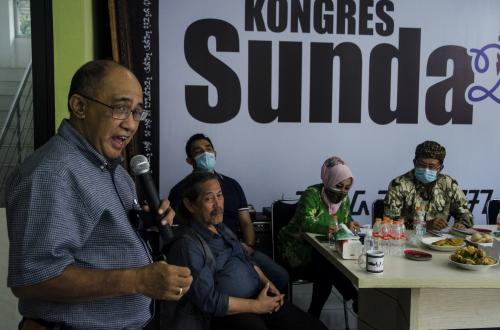
A prominent academic has stated that the proposed name change from West Java to Tatar Sunda carries profound historical, sociological, cultural and psychological significance, aimed at rescuing a Sundanese identity increasingly marginalised by administrative approaches. Ganjar Kurnia, a professor at Padjadjaran University and member of the proposing team, explained that historically, the Tatar Sunda region stretched from Banten, through Jakarta, to Cipamali on the border of Central Java. “Historically, Jakarta was administratively part of the Sunda region. Banten was also Sundanese territory, and history shows that Tatar Sunda extended from Banten to Cipamali in Central Java,” Ganjar said. He dismissed concerns about administrative complications or potential secession by other areas, citing the successful renaming of Ujung Pandang to Makassar as an example of a smooth bureaucratic process. “Those are just derivative matters. Administrative issues, letterheads, stamps and the like are ordinary. It is said that almost all factions support it. It will proceed to the next stages, including further studies,” he remarked. While conceding that a name change is not an instant guarantee of economic prosperity, Ganjar stressed the importance of building a new work ethic through identity. “The hypothesis is that changing the name to Sunda will not immediately bring prosperity. But by changing to the name Sunda, there is an ethos, a spirit, a desire that as a Sundanese person, I must be better than others,” he said. The West Java Provincial Government has confirmed receiving, reviewing and examining the academic paper for the proposed name change based on philosophical, sociological, economic and juridical foundations. The administration is currently awaiting direction from regional leaders to determine the next bureaucratic steps in accordance with Law Number 23 of 2014 on Regional Government.