
West Java Launches 'Jabar Berseka' Movement, Targets 80% Waste Resolution by 2029
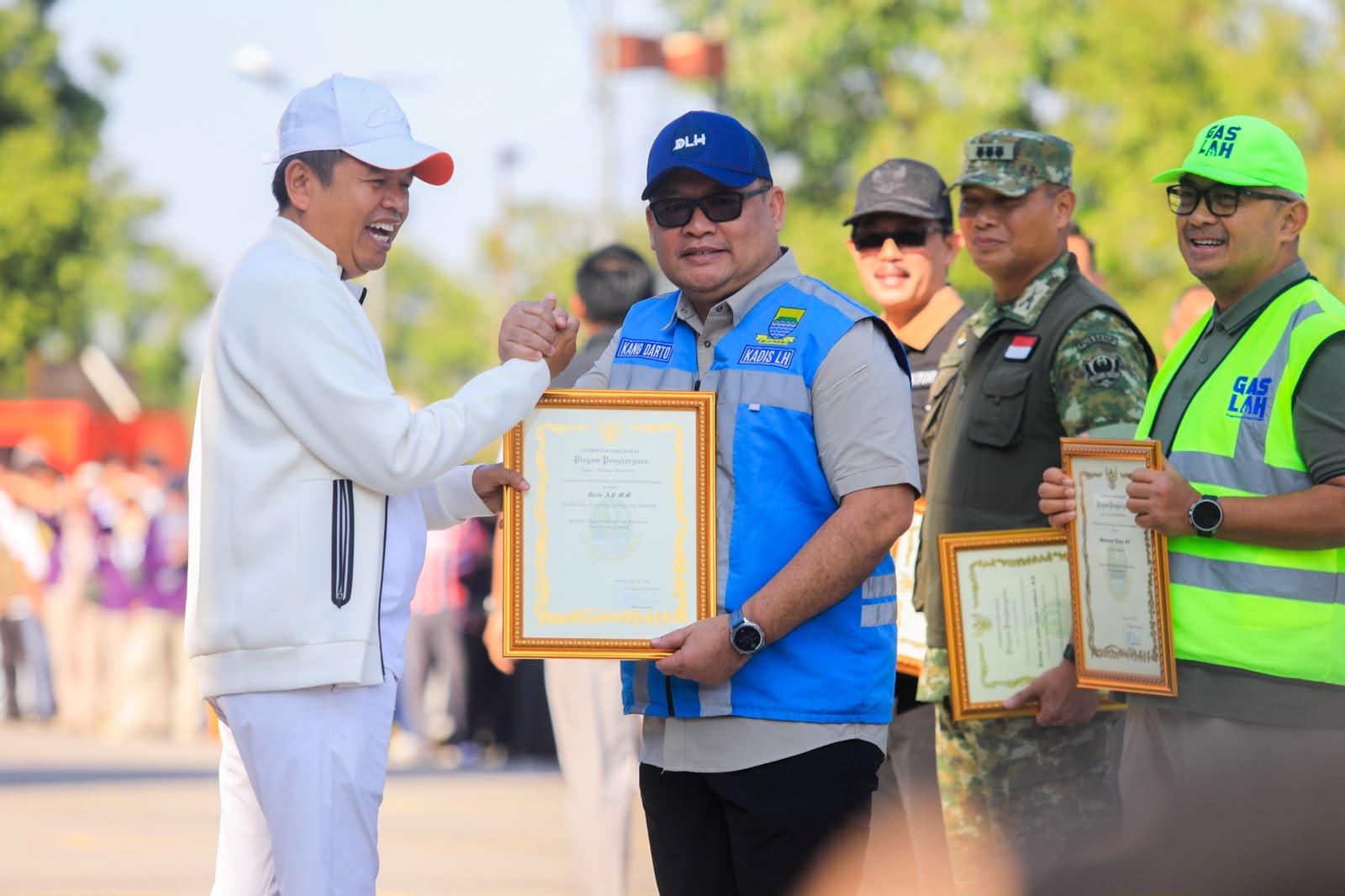
The central government, together with the West Java Provincial Government and municipal governments in the Greater Bandung area, has launched the Jabar Berseka (Clean, Neat, and Beautiful) movement. The initiative, aimed at accelerating the resolution of waste problems, was marked by the Jabar Berseka Alert Roll Call and a Joint Declaration on Waste Sorting from Home at Sport Jabar Arcamanik on Friday (24/7). The event, attended by more than 4,000 participants from government, the military, police, academia, students, neighbourhood associations, and environmental communities, served as a momentum to strengthen the waste management movement at its source.
Coordinating Minister for Food, Zulkifli Hasan, stated that waste has become an emergency condition in many major Indonesian cities, including the Greater Bandung area, which produces nearly 2,000 tonnes of waste daily. ‘The waste problem is not just a government matter, but a concern for all of us. If waste is managed properly, it can actually produce energy, fertiliser, and even fuel,’ he explained. He noted that the government is simplifying regulations for building waste-to-energy processing facilities so that waste handling can be accelerated in around 60 cities. The government is targeting the cessation of all open dumping systems within the next two years. ‘However, solving the waste problem does not solely depend on large-scale technology. The most important thing is sorting waste from households. Organic and inorganic waste must be separated from the source,’ he said.
West Java Governor Dedi Mulyadi stated that changing public behaviour is the main key to the success of the Jabar Berseka programme. He expressed concern that many people still prefer to record piles of rubbish rather than clean them up. ‘If there is rubbish, do not video it, pick it up. That is the culture we must change,’ he said. As a form of encouragement for behavioural change, the West Java Provincial Government will incorporate waste sorting and management activities as part of school learning. Additionally, recipients of educational assistance will be encouraged to bring clean plastic waste to school for recycling through partner companies. ‘I am ensuring that the provincial government will issue a Governor’s Regulation regarding the prohibition of littering, accompanied by sanctions for violators. We want Jabar Berseka, a clean, neat, and beautiful life towards a safe, healthy, clean, and beautiful Indonesia,’ he explained.
This movement also strengthens the national target that by 2029, at least 80 per cent of waste problems can be resolved through collaboration between the government, communities, the education sector, industry, and the use of environmentally friendly technology. At the same event, Bandung Mayor Muhammad Farhan called on all sub-districts and urban villages in Bandung City to continue innovating in waste management. He stated that awards received by several sub-districts, urban villages, and regional apparatuses in Bandung City should ignite enthusiasm for other areas to present similar innovations. ‘Other sub-districts should not want to be left behind. If others have received awards, then we must all rally our spirits so that these achievements can be attained together,’ said Farhan.
According to Farhan, sub-district and urban village heads have a strategic role as drivers of behavioural change among residents, from waste sorting and strengthening waste banks to utilising waste processing technology at the community level. ‘Waste management cannot rely solely on the city government. Its strength actually lies in the regions, in how urban village heads, sub-district heads, neighbourhood associations, and the community work together to build a new culture in managing waste,’ he added. Nevertheless, Farhan acknowledged that several areas still face major challenges due to high population density and the volume of waste produced. He mentioned Babakan Ciparay and Gedebage sub-districts as areas that still require more attention in waste handling. Therefore, the city government will continue to strengthen collaboration with all sub-districts through increasing human resource capacity, providing waste processing facilities, and developing region-based innovations.