
West Java Governor Damages Investment Climate
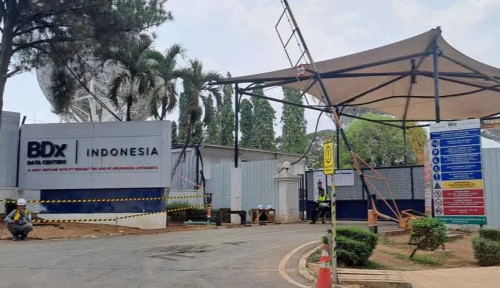
Indonesia is considered a viable destination for data centre investment, with at least Rp360 trillion in potential investment currently eyeing the country. Several regions targeted for data centre development include Batam, West Java, Madura, and Bali.
This development represents a golden opportunity that must not be squandered, as happened with the semiconductor industry in the 1980s. At that time, Indonesia was once a base for the semiconductor industry in Southeast Asia, but the opportunity eventually shifted to other countries due to policies deemed unsupportive of industrial development.
Investor interest in the data centre sector is currently quite significant. The government needs to prepare itself because the scale of the targeted investment is very large. The influx of such investment is expected to help Indonesia close the gap in attracting investment compared to other countries in the region.
The government has set an investment target for artificial intelligence (AI)-based data centres of Rp3lag360 trillion entering Indonesia. Operational experience in recent years is also a consideration for investors. Currently, there are at least 182 operational data centres in Indonesia.
The majority of these data centres are located in Jakarta, with 94 units, and Batam, with 16 units. This condition indicates that Indonesia already possesses the foundation to develop and operate data centre technology on a larger scale.
Specifically for Batam, data centre investment plans are estimated to reach US$15 billion to US$20 billion, with a national capacity target of approximately 1.3 gigawatts. With regional economic growth reaching around 7%, Batam has the potential to become a new economic growth centre supported by data centre investment.
However, this opportunity is not without challenges. In West Java, for instance, data centre development has come under scrutiny after being halted by the local government, specifically the Governor of West Java, Dedi Mujuadi, citing reasons related to the environment, water supply, and other considerations.
Policies that potentially create such uncertainty can become serious obstacles to the investment climate. Indonesia currently requires large amounts of investment to strengthen economic growth, which remains around 5%. Amidst this need, investor confidence in Indonesia is a vital asset, including through data centre investment opportunities.
If ongoing investments are subsequently halted unilaterally, such conditions risk creating uncertainty for investors. In the long term, this could affect the perception of business certainty in Indonesia.
Indonesia certainly does not want to repeat the same mistakes. The experience of the semiconductor industry in the 1980s serves as an important lesson on how government policy can determine the direction of investment and industrial development in the long term.
From the 1970s to the early 1980s, Indonesia was once a player in the Southeast Asian semiconductor industry. Several major global technology companies, such as Fairchild Semiconductor, National Semiconductor, and Monsanto, even established chip assembly bases in Jakarta and Bandung.
However, around 1985, policy conflicts emerged regarding production automation. The government at that time encouraged manual labour absorption and limited the use of automation for the sake of labour protection. This policy was deemed inconsistent with the needs of the semiconductor industry, which relies heavily on technology and automation.
Ultimately, several companies chose to move their investments to Penang, Malaysia. The opportunity previously held by Indonesia gradually shifted to its neighbouring country.
Today, Malaysia controls approximately 13% of the global market share for chip testing, assembly, and packaging activities. This experience shows that competition to attract investment is not just about market size, but also about policy certainty, infrastructure readiness, and ease of doing business.
Therefore, the government needs to immediately anticipate potential obstacles from local governments that could disrupt the investment climate. One important step is ensuring that local governments implement investment-friendly policies while still addressing environmental aspects and community needs.
Batam is one of the regions with great potential to position itself as a major regional data centre hub. This opportunity is expanding as Singapore begins to limit new data centre developments due to land and energy constraints.
Indonesia possesses several advantages to capture this opportunity. Indonesia is one of the largest digital economy hubs in ASEAN, with over 200 million internet users. Several tech giants have also announced significant investments to expand cloud and AI infrastructure in Indonesia.
One technology company has announced an investment of approximately US$1.7 billion for the expansion of cloud and AI infrastructure in Indonesia, while AWS has committed to investing up to US$5 billion. Firmus is even building a data centre campus in Batam with a target capacity of 170,000 AI accelerators.
Nationally, Indonesia’s data centre capacity is projected to exceed 2,000 megawatts by 2030. Demand is also expected to grow by about 16.8% per year, according to World Bank projections.
With such potential, Indonesia has the opportunity to make data centres one of its new engines of economic growth. However, this opportunity can only be realised if the government is able to maintain investment certainty, strengthen coordination between central and local governments, and ensure that policies do not change abruptly after investments have commenced.