
West Java Government Closes Pancawaluya 2026 School Orientation with Ecological Action
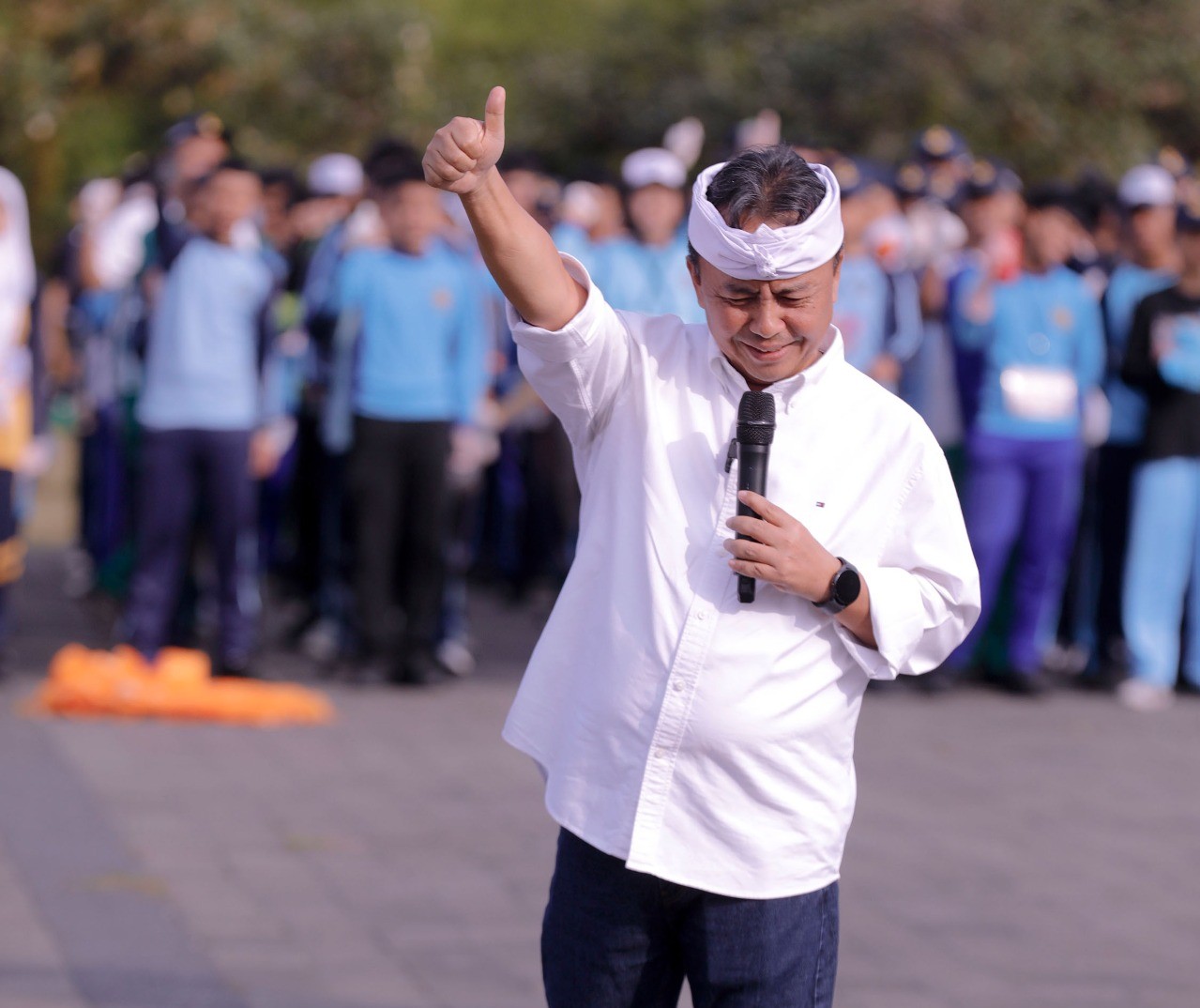
The West Java Provincial Government has closed the series of Pancawaluya School Environment Orientation (MPLS) activities for 2026 with an Ecology Action event centred at the Cikutra Heroes Cemetery (TMP) in Bandung City on Tuesday (21/7/2026).
The activity was attended by representatives of senior secondary school (SMA) and vocational school (SMK) students and was carried out simultaneously across all regencies and cities in West Java.
The Ecology Action was held at 882 state school locations, with the main activities centred in 27 regencies and cities. Overall, the event involved 343,374 new Year 10 students from SMA, SMK and special education schools (SLB), both state and private. Of that number, 327,604 students came from state schools.
West Java Regional Secretary (Sekda) Herman Suryatman emphasised that the Ecology Action is not merely the closing of MPLS, but the beginning of character formation that must continue to be realised in everyday life.
“This activity is only symbolic. What matters most is real action after returning home, to school, and to the community,” he asserted.
The Regional Secretary also urged students to familiarise themselves with involvement in various domestic activities as part of character building.
According to him, simple habits such as sweeping the house, washing and ironing one’s own clothes, helping parents trade or farm, and keeping the environment clean are exercises for building leadership, independence, responsibility and social awareness.
“The best way to predict the future is to create it today. Start with small, simple things, done consistently. Those good habits will shape your character and lead you to become leaders in the future,” he asserted.
The Regional Secretary added that a person’s success is determined not only by academic ability, but also by character and soft skills built through positive habits in daily life.
Meanwhile, Head of the West Java Education Office (Kadisdik) Purwanto said the Ecology Action is part of the pedagogical practice in implementing the Pancawaluya character education that is expected to become a culture across all educational units.
“The Ecology Action is not a one-day event. This is a learning practice that must become a habit at school. Starting with personal cleanliness, the classroom, the school grounds, and the surrounding environment as part of character education,” he said.
The Head of the Education Office explained that the Ecology Action was carried out collaboratively with River Clean Up Indonesia, the Sapulidi Community, regional agencies, the Indonesian National Armed Forces (TNI), the National Police, and various other environmental care communities.
At the provincial level, participants carried out various concrete actions, such as clean-up operations, cleaning neighbourhoods and rivers, cleaning and maintaining the graves of heroes, as well as taking part in environmental conservation education with River Clean Up Indonesia and the West Java Education Office’s Sapulidi Community.
In addition to being centred at TMP Cikutra, the Ecology Action was also held at SMAN 3 Bandung and SMAN 5 Bandung together with the Pandawara Group, as well as at all educational units across West Java.
Through this movement, it is hoped that the spirit of maintaining cleanliness and environmental sustainability will not stop with the MPLS, but will become a culture that continues to grow in students’ lives as a concrete manifestation of the character values of Cageur, Bageur, Bener, Pinter and Singer.