
West Java Environmental Agency Finds Dust from Cipatat Lime Factory and Mine Exceeds Quality Standards
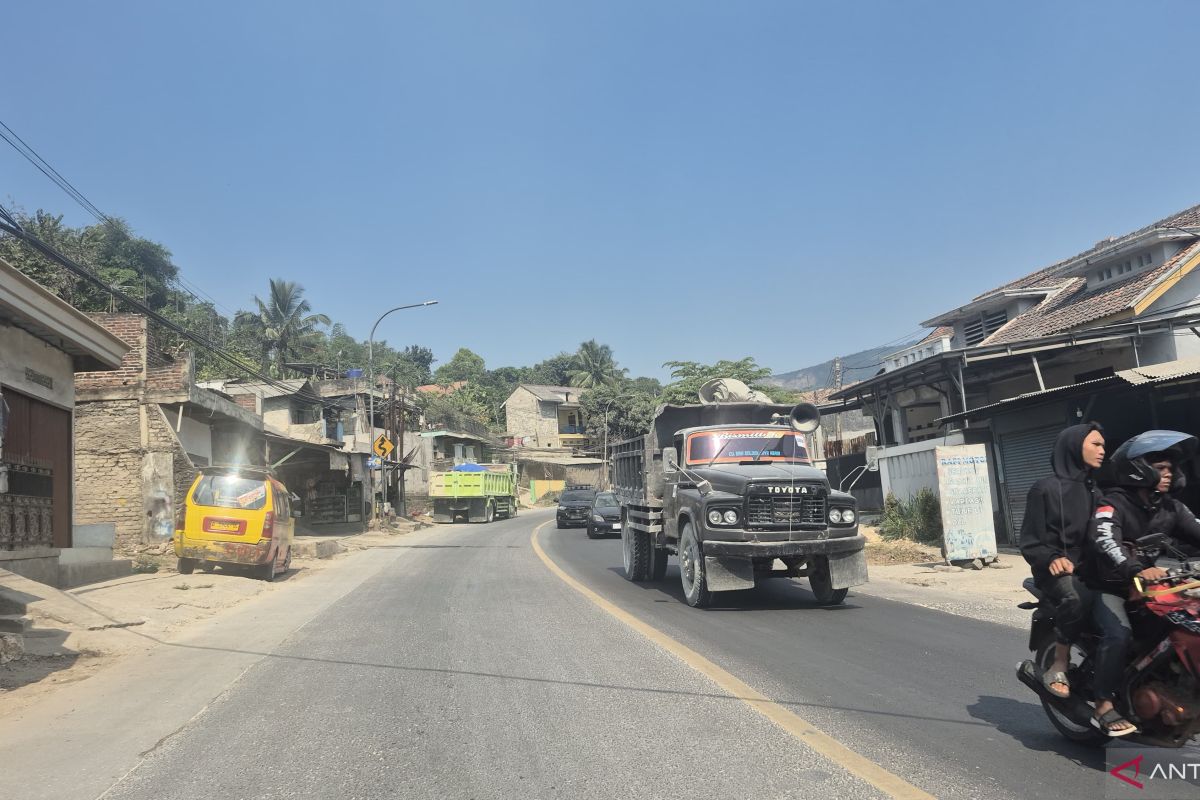
West Bandung (ANTARA) - The West Java Environmental Agency (DLH) has found three air pollution parameters exceeding environmental quality standards based on preliminary laboratory tests around the Citatah lime plant and quarry in Cipatat subdistrict, West Bandung Regency.
The head of the West Java DLH, Ai Saadiyah Dwidaningsih, said in West Bandung on Saturday that the finding came from sampling tests carried out by the Environmental Protection and Management Supervision (PPLH) team on 11 July 2026.
“Of the parameters tested, some exceeded the quality standards, namely TSP, PM10 and PM2.5. This means these dust levels are indicated to have been exceeded,” she said.
She explained that the preliminary laboratory results indicated significant dust pollution exposure, but the finding was not yet the basis for final conclusions as further testing at more representative points was still required.
“This is not final. We will conduct testing at several other representative points such as public areas, roads and mining areas. The initial sampling does not represent everything,” she said.
To strengthen the investigation, the West Java DLH is applying a clusterisation method, dividing the monitoring locations into three zones: the lime processing area, public areas and the mining area.
The step is being taken together with the Energy and Mineral Resources Office, the West Java Industry and Trade Office, the West Bandung Regency Government, and involving expert personnel.
While awaiting the results of a comprehensive study, the West Java DLH has issued technical recommendations to the business operators, including covering open material storage areas (stockpiles).
The DLH has also required the installation of emission control equipment such as dust collectors, bag filters or cyclones, and regular road watering to suppress airborne dust.
Ai stressed that companies proven to have violated quality standards and failing to implement the recommendations could face administrative sanctions up to fines in accordance with Environment Ministerial Regulation Number 6 of 2026 on Environmental Supervision and Administrative Sanctions.