
West Java DPRD to Review 2025 Budget Report Amid Delayed Payments and Revenue Shortfalls
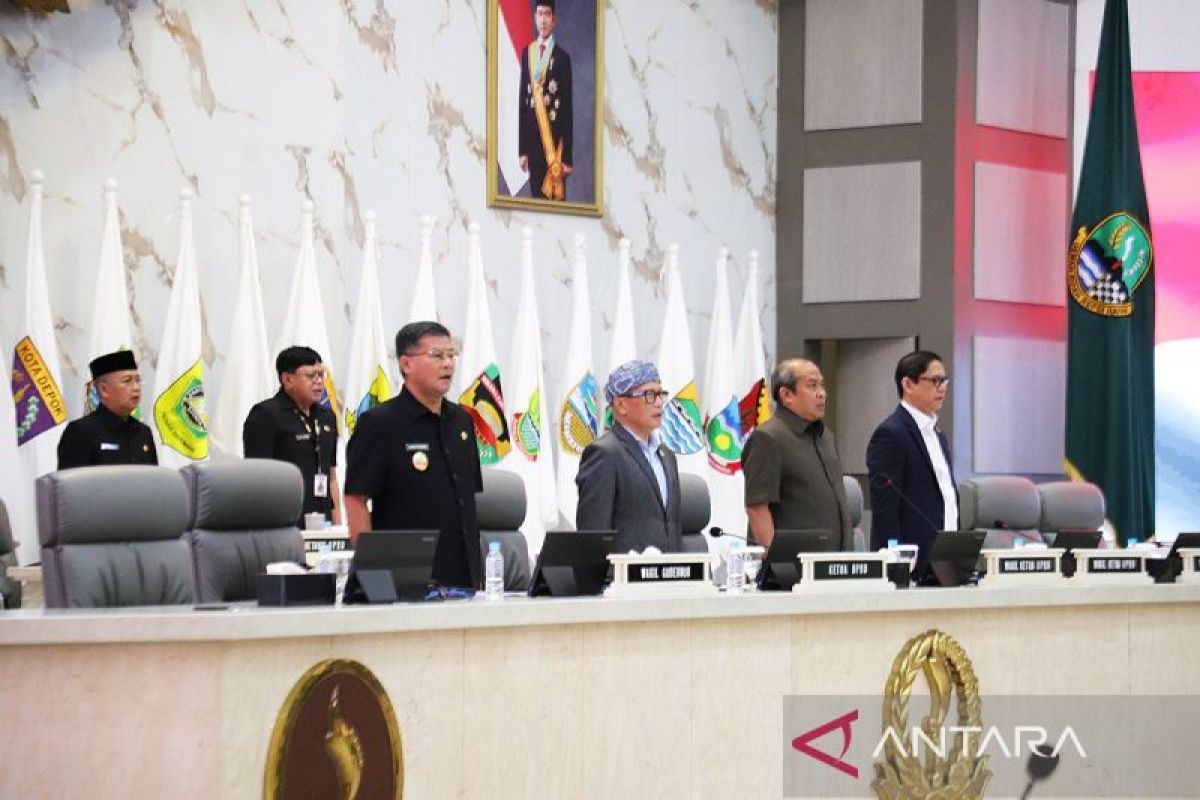
Bandung (ANTARA) - The West Java Provincial Parliament (DPRD) will soon deliberate the accountability report on the implementation of the 2025 Regional Budget (APBD), as an evaluation for the West Java Provincial Government to ensure regional financial management does not encounter future obstacles such as low absorption and deferred payments on strategic projects.
Speaker of the West Java DPRD, Buky Wibawa, said in Bandung on Wednesday that the DPRD’s Budget Committee (Banggar) is scheduled to directly “try” and dissect the draft regional regulation on APBD Implementation Accountability (P2APBD) in marathon sessions from 8 to 10 July 2026.
Buky targets for the budget accountability document to be scrutinised rigorously, on time, and with quality, before being reported back at the plenary session for decision-making on 14 July 2026.
“This is part of the legislative, budgetary, and oversight functions of the West Java DPRD to ensure that every APBD implementation is accounted for transparently, effectively, and accountably,” said Buky.
“The decline in revenue realisation in 2025 was influenced by the economic slowdown, a downturn in the automotive sector, changes in central government policy, and the implementation of the motor vehicle tax (PKB) surcharge policy,” said West Java Deputy Governor Erwan Setiawan, explaining the reasons for the region’s sluggish finances during the meeting.
Not only the revenue side — the West Java Provincial Government was also forced to take the extreme measure of deferring payments on a number of strategic projects in order to protect regional coffers from sliding into a deeper budget deficit.
Erwan also admitted that programme execution in the field remains stalled, particularly in the public connectivity sector.
However, Erwan stressed that his side views the success of the APBD not solely as measured by high budget absorption.
“But also by the tangible benefits felt by the public through reductions in poverty, unemployment, and stunting, as well as improvements in the Human Development Index (IPM),” Erwan added.