
West Java DPRD Proposes Tuition Fees for State Schools
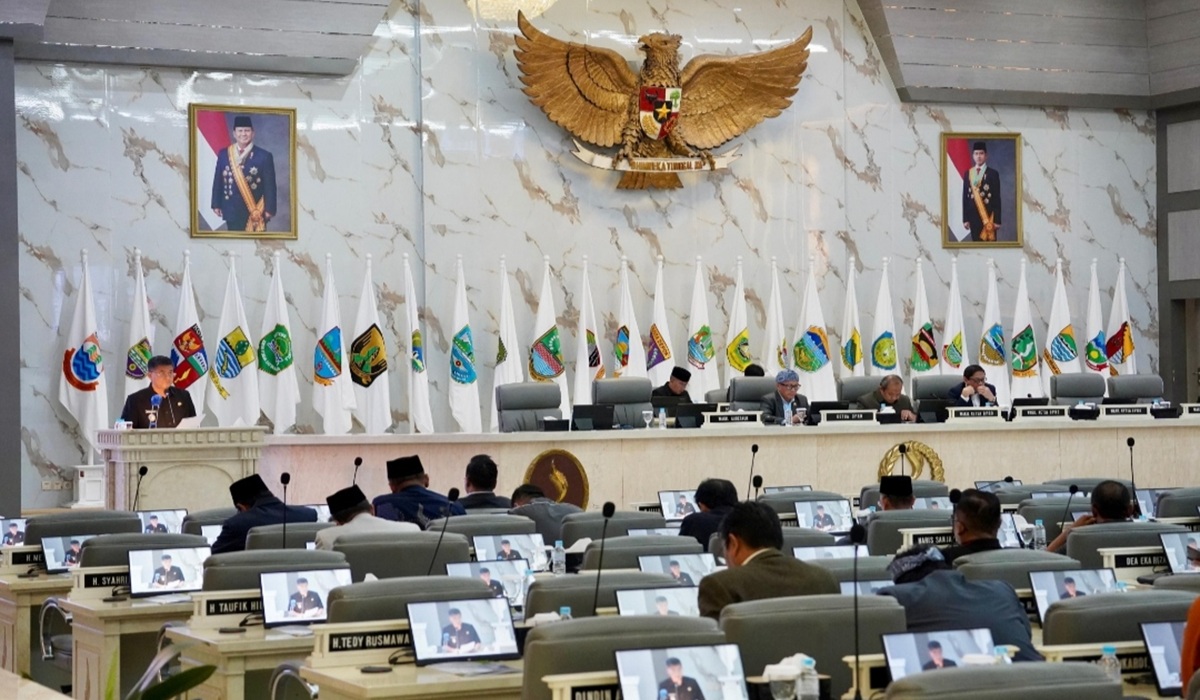
The West Java Regional People’s Representative Council (DPRD) has proposed collecting education development contributions (SPP) at state senior high schools (SMA) and vocational schools (SMK), citing minimal government budget allocation for the education sector.
Chairman of Commission V of the West Java DPRD, Yomanius Untung, explained that this proposal emerged following the government’s limited funding capacity to cover schools’ operational needs. Currently, he said, schools receive an average budget of around Rp1.6 million per student per year, whereas the ideal requirement to deliver quality education reaches Rp4.5 million per student per year.
‘This condition creates a gap between school income and the proper unit cost. If school income only meets 40 percent of needs, it is difficult for schools to accelerate the quality of learning, especially for those with a limited number of study groups,’ Yomanius said when contacted on Monday (13/7).
Therefore, Untung stated that his side is beginning to review a revision of the Regional Regulation on Education Implementation, which includes the proposal to reactivate SPP in state schools. He noted that this proposed reactivation of SPP would not be applied uniformly.
The West Java DPRD is designing a scheme that prioritises the principle of social justice, as fee collection would only be imposed on families with sufficient economic means. Meanwhile, vulnerable families would still be guaranteed free access to education.
In the draft revision of the regional regulation, the council proposes that students classified in desil 1 to desil 5, or poor and near-poor groups, be fully exempted from any levies.
‘Children from desil 1 to desil 5 families must not be charged any fees. SPP will only be applied to parents of students in desil 6 to desil 10 groups. The amount will also be set on a tiered basis, adjusted to each family’s economic capacity,’ he stressed.
Furthermore, Yomanius said the additional funding from this scheme would be managed accountably for fundamental school needs. This includes improving teacher competency, refurbishing educational facilities and infrastructure, and strengthening extracurricular activities as well as student achievement development in both academic and non-academic fields.