
West Java DPRD Highlights Need for Stronger Communication in Budget Policy
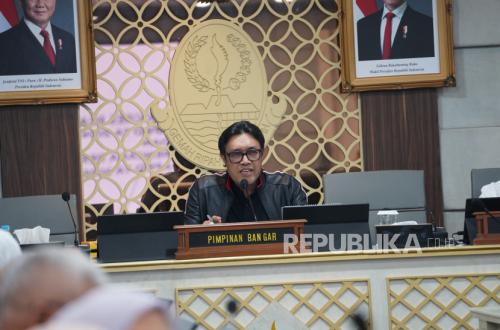
The Deputy Chairman of the West Java DPRD, Ono Surono, has stressed the importance of strengthening communication and coordination between the West Java Provincial Government, the Regional Government Budget Team (TAPD), and the DPRD in managing the Regional Revenue and Expenditure Budget (APBD), including the mechanism for budget shifts. The statement was made by Ono following a Budget Committee (Banggar) meeting of the West Java DPRD in Bandung on Tuesday (30/6/2026).
According to Ono, the DPRD, as an institution with a budgeting function, must be involved in every strategic policy related to the APBD to ensure the process is transparent, accountable, and in line with the partnership principle between the executive and legislative branches. “The West Java DPRD has noted several instances of budget shifts occurring without the results being conveyed to the DPRD. Going forward, this mechanism needs to be improved through more intensive communication between the governor, TAPD, and the DPRD,” Ono stated.
Beyond highlighting the budget shift mechanism, the West Java DPRD is also paying close attention to the potential deficit in the 2026 Fiscal Year APBD, which is estimated to reach approximately Rp 5.7 trillion. Ono explained that since the beginning of the 2026 APBD discussions, the DPRD and the West Java Provincial Government had anticipated possible fiscal corrections based on the evaluation results from the Ministry of Home Affairs. Key factors of concern include discrepancies in the calculation of Revenue Sharing Funds (DBH) between the central and regional governments, as well as mandatory spending obligations that must be met.
Consequently, the DPRD has requested that the regional government conduct a more in-depth analysis of revenue projections, including from motor vehicle tax, motor vehicle fuel tax, cigarette tax, and other income sources. “The DPRD wants all decisions regarding deficit management to be based on comprehensive data so they can be considered objectively, whether through spending efficiency, financing, or programme adjustments according to the region’s fiscal capacity,” he said. He emphasised that the priority programmes of the West Java Provincial Government must remain a focus so that public services are not disrupted by budget adjustments.
The West Java DPRD also reminded the regional government to pay close attention to the real economic conditions of the community. Although West Java’s economic growth was recorded at 5.85 percent, Ono assessed that this achievement needs further analysis as it is partly influenced by high government spending. According to him, a number of challenges are still faced by the public, ranging from declining purchasing power, increasing layoffs (PHK), rising goods prices, to pressure on the industrial sector which could impact consumption and investment.
Furthermore, the DPRD is encouraging the optimisation of the performance of Regional-Owned Enterprises (BUMD). Currently, the largest contribution to regional income still comes from certain entities, while a number of other BUMDs are considered to need performance improvements. The DPRD supports the West Java Provincial Government’s steps to restructure BUMDs through the formation of holding companies or mergers of regional companies to increase efficiency and contribution to regional income. On the other hand, the DPRD is also pushing for the optimisation of regional government asset utilisation as a source of increased income without burdening the public through new taxes or levies. “With strong synergy between the DPRD and the West Java Provincial Government, APBD management is expected to be more effective, accountable, and aligned with the interests of the community and the sustainability of regional development,” Ono concluded.