
West Java DPRD Flags Potential Gaps in New Student Admission Verification, Calls for System Evaluation and Staff Training
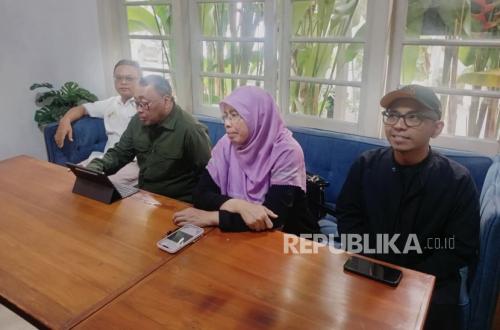
Maulana Yusuf, a member of Commission V of the West Java Regional Council, has highlighted issues regarding the implementation of the Student Admission System (SPMB), which is believed to still face several field-level problems. One of these concerns relates to the mechanism of buffer schools, which he believes needs evaluation to ensure the principle of fairness for prospective students is maintained.
Maulana noted that the existence of buffer schools is fundamentally a good policy. According to him, the scheme is designed to provide educational access to areas that lack schools, particularly state schools.
“In terms of regulations, the existence of buffer schools is good. The goal is to assist regions that do not yet have schools, especially state schools, so that educational access remains open to the public,” Maulana told Republika.co.id on Thursday (18/06/2026).
However, he admitted to receiving information that some prospective students living very close to schools were not admitted, while others from much further distances managed to pass through certain channels. This condition, he stated, requires serious attention from the SPMB organisers.
“If there are students whose homes are very close to the school but are not accepted, while those from further distances are admitted, there must be a transparent explanation. A good system must be able to ensure a sense of justice for the community,” he said.
Maulana requested that the entire selection process be conducted openly and accountably to avoid suspicion among the public. He believes that every report or complaint that arises needs to be followed up objectively by the relevant parties.
Furthermore, the politician, affectionately known as Kang Prof, also highlighted the document verification process conducted at the school level. He noted that verification officers face significant challenges in checking the validity of various documents required for registration.
He believes the government needs to provide adequate training to SPMB implementation officers so they possess uniform capabilities in performing administrative verification.
“Our concern is the readiness of verifiers in schools. They should not merely receive technical instructions without being equipped with sufficient training to recognise and verify the authenticity of the documents submitted by participants,” he said.
According to Maulana, training or technical guidance is essential so that officers can examine various documents more accurately, ranging from family cards to other supporting documents used in the selection process.
He also touched upon complaints from several teachers and SPMB committee members who must undertake additional duties during the student admission process. Therefore, he hopes that the budget allocated for the implementation of the SPMB can be utilised optimally, including for increasing the capacity of field officers.
“If the budget is available, it must be ensured that its use truly supports the quality of the SPMB implementation, including training for officers and support for the committee performing their duties,” said Maulana.
Commission V of the West Java Regional Council, he continued, will continue to oversee the implementation of the SPMB to ensure it runs transparently, professionally, and provides fair opportunities for all prospective students in West Java.
Meanwhile, Republika.co.id attempted to seek a response from the Head of Senior High School Affairs at the West Java Provincial Education Office, Iis Rostiasih, regarding the implementation of the 2026 SPMB, including the buffer school mechanism and the student document verification process. However, as of the time of publication, the official had not responded to the interview and confirmation requests submitted by Republika.co.id.