
West Java DPRD Drafts Bylaw on Family Protection from LGBT, Citing Presidential Regulation
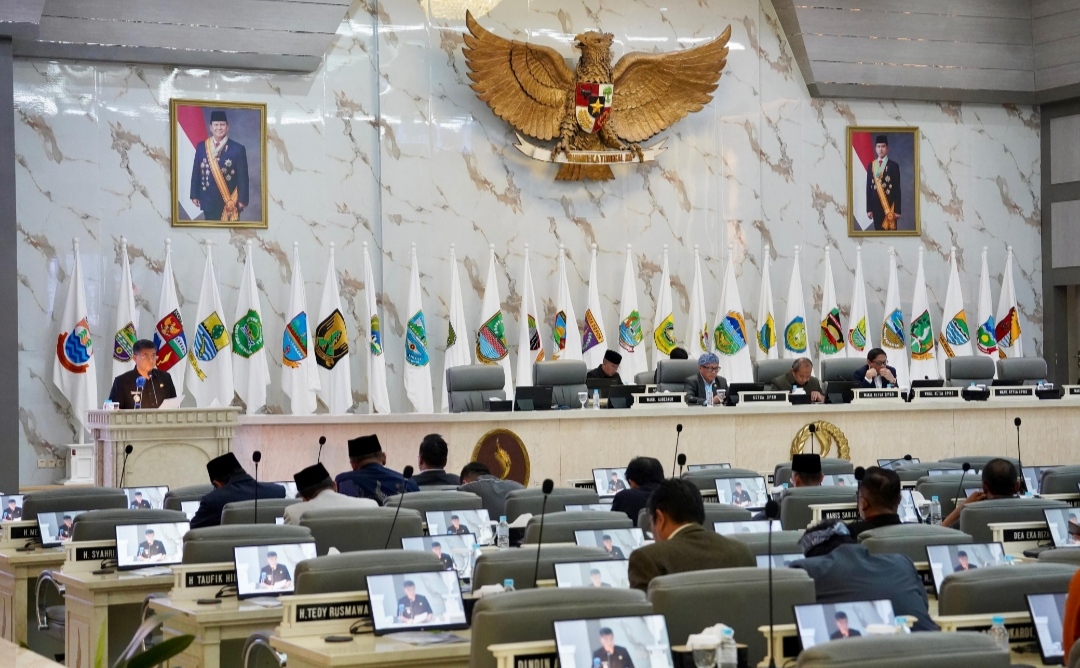
The West Java Regional People’s Representative Council (DPRD) is finalising a draft regional regulation (raperda) concerning the protection of families from the influence of deviant sexual behaviour (LGBT). This council-initiated regulation is expected to provide a formal legal framework to fortify family resilience in West Java.
Chairman of Commission V of the West Java DPRD, Yomanius Untung, explained that the discussion of the draft regulation is currently at the process stage within the Regional Regulation Formation Agency (Bapemperda) before being forwarded to a special committee (pansus). ‘This raperda is an initiative right of the DPRD which is now being processed. After Bapemperda, a special committee will be formed for further in-depth study,’ Yomanius said when contacted on Monday (13/7).
He stated that this initiative not only stems from public aspirations voiced through an audience with Indonesian Family Activists (Giga), but also refers to higher national regulations. The council is using Presidential Regulation (Perpres) Number 111 of 2025 concerning the General Policy for State Defence 2025-2029 as the primary legal foundation. In the regulation signed by President Prabowo Subianto on 24 October 2025, threats to the state are categorised into three types: military, non-military, and hybrid. Specifically, he added, LGBT culture is categorised as a form of non-military threat. ‘Because there is Perpres Number 111, that is our reference. This will later be mapped in detail and set forth in the academic paper for the Raperda,’ Yomanius said.
This step by the West Java Province is considered urgent given the absence of a specific provincial regulation on the matter, even though some areas such as the City of Bandung already have similar rules. The West Java DPRD hopes that if this provincial bylaw is passed, other regions will follow suit to create a uniform standard of protection. The importance of this legal framework is reinforced by concerning field data. According to data from Indonesian Family Activists (Giga), there are reportedly around 302,000 people in West Java indicated to have sexual deviations. Additionally, data from the West Java AIDS Commission (KPA) shows a significant upward trend in HIV cases over the past three years. While 8,620 new cases were recorded in 2022, the figure surged to 10,405 cases by the end of 2024.
Responding to the plan, the Chairman of the West Java Indonesian Ulema Council (MUI), Aang Abdullah Zein, expressed his support. He stated that the MUI is ready to provide a fatwa or sharia views if requested by Commission V of the West Java DPRD. Although supporting the legal prohibition of LGBT behaviour, Aang stressed that the approach must be educational and full of compassion. The MUI emphasised that the spirit of the regulation is not to create hatred towards individuals, but rather to provide rehabilitation and assistance for those deemed to need help. ‘We support the issuance of this bylaw. But remember, we do not hate the individuals. They are our brothers and sisters, they are afflicted with an illness that requires treatment and compassion,’ he said.