
West Java DPRD Criticises Poor Planning Behind Frequent APBD Shifts and Revisions
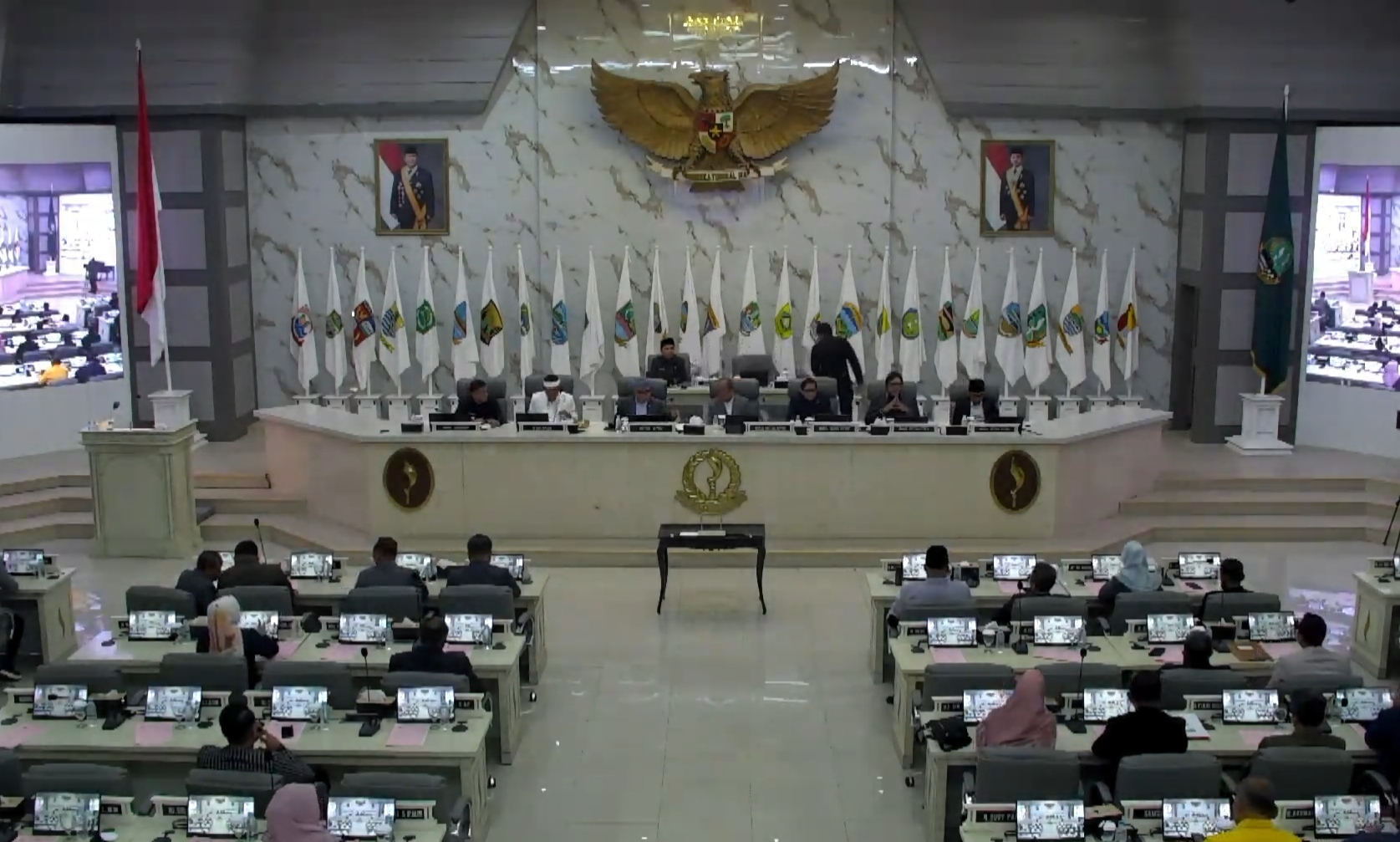
The West Java Regional People’s Representative Council (DPRD) has highlighted significant deficiencies in the provincial budget (APBD) planning under the leadership of Governor Dedi Mulyadi. During a plenary session in Bandung on Tuesday, Budget Committee member Daddy Rohanady expressed regret over the numerous sequential budget shifts and revisions, noting that eight shifts and five changes occurred throughout 2025, indicating weak planning by the regional government. “This shows that programme activities from the previous period were not sustainable. It is regrettable that in 2026, seven shifts have already occurred. The Budget Committee views that the planning was not properly prepared,” he stated.
Daddy explained that while the transition of regional leadership and Presidential Instruction Number 1 of 2025 were contributing factors, the government should not have neglected the province’s financial condition. The resulting fiscal damage and liquidity crisis in 2025 have severely impacted the 2026 APBD, potentially derailing the outputs, outcomes, and objectives set out in the Regional Government Work Plan (RKPD) and the Regional Medium-Term Development Plan (RPJMD). He also highlighted a historic first for West Java: a deferred payment amounting to IDR 600 billion, a situation he described as contradictory to the province’s achievement of maintaining an unqualified opinion (WTP) for 15 consecutive years.
Furthermore, the DPRD criticised the overly optimistic local revenue (PAD) targets. The assumption of a IDR 1 trillion increase in 2025 backfired, with actual revenue plummeting by IDR 1.2 trillion. “The 2025 revenue target was too optimistic, and it ultimately became a problem. Future revenue targets must be optimistically measured,” Daddy said. Consequently, the Budget Committee is urging the Regional Development Planning Agency (Bappeda) to change its revenue paradigm by maximising potential from separated assets, idle assets, and corporate social responsibility (CSR) funds. The council also demanded immediate corrective action on recurring issues such as school operational assistance (BOS) fund allocations and overpayments on physical projects, pledging to scrutinise future budgets more carefully to ensure a realistic balance between revenue, spending desires, and financing.