
West Java DPRD Begins Discussion of 2025 APBD Accountability Report
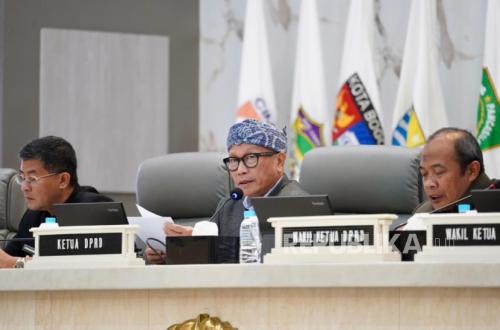
The West Java Regional House of Representatives (DPRD) has begun the discussion of the Draft Regional Regulation (Ranperda) on the Accountability Report for the Implementation of the 2025 Regional Budget (P2APBD). The deliberation is expected to be completed on schedule as part of efforts to strengthen transparent and accountable regional financial governance.
DPRD West Java Chairman Buky Wibawa stated that the plenary session held on Tuesday (7/7/2026) was a follow-up to the submission of the general views of the DPRD factions on the Ranperda P2APBD 2025, which took place on 2 July. The agenda for this plenary session was to hear the Governor’s response to the various inputs, criticisms, and recommendations from all factions.
According to Buky, after the governor’s response is delivered, the discussion will be continued by the Budget Agency from 8 to 10 July 2026. The results of the discussion are targeted to be reported in a plenary session on 14 July. “For the next stage, the discussion will be carried out by the Budget Agency from 8 to 10 July 2026. We hope the entire process can run according to schedule so that the results can be delivered at the plenary session on 14 July,” he said. He emphasised that the DPRD is committed to ensuring that every implementation of the APBD can be accounted for effectively, transparently, and accountably, as part of its legislative, budgeting, and oversight functions.
Meanwhile, Deputy Governor of West Java Erwan Setiawan expressed his appreciation to all DPRD factions for their views, questions, and recommendations regarding the Ranperda P2APBD 2025. He stated that all the input would serve as material for perfecting the draft regulation while improving the quality of regional financial management.
On the revenue side, the West Java Provincial Government is committed to continuously optimising Regional Original Revenue (PAD) through innovation, digitalisation of tax services, improving taxpayer compliance, optimising the use of regional assets, and developing new revenue sources without burdening the public. Erwan explained that the decline in regional revenue realisation in 2025 was influenced by several factors, including the economic slowdown, a downturn in the automotive sector, changes in central government policies, and the implementation of the motor vehicle tax surcharge policy.
On the expenditure side, he acknowledged that there were still programmes with suboptimal absorption, particularly in the roads and transportation sectors. This condition was influenced by project implementation adjustments, procurement processes, contract efficiency, and efforts to maintain work quality. According to Erwan, the success of the APBD is not solely measured by the amount of budget absorption, but by the benefits felt by the community, such as reductions in poverty, unemployment, and stunting rates, as well as an increase in the Human Development Index (IPM). The West Java Provincial Government also acknowledged the postponement of payments for several strategic projects as a measure to maintain regional cash stability and avoid a larger budget deficit. “Going forward, we are committed to improving the quality of planning, accelerating the procurement of goods and services, and strengthening programme implementation oversight so that APBD absorption becomes more optimal,” Erwan said.