
West Java Deputy Governor Targets Full Digital Social Protection Registration by 2027
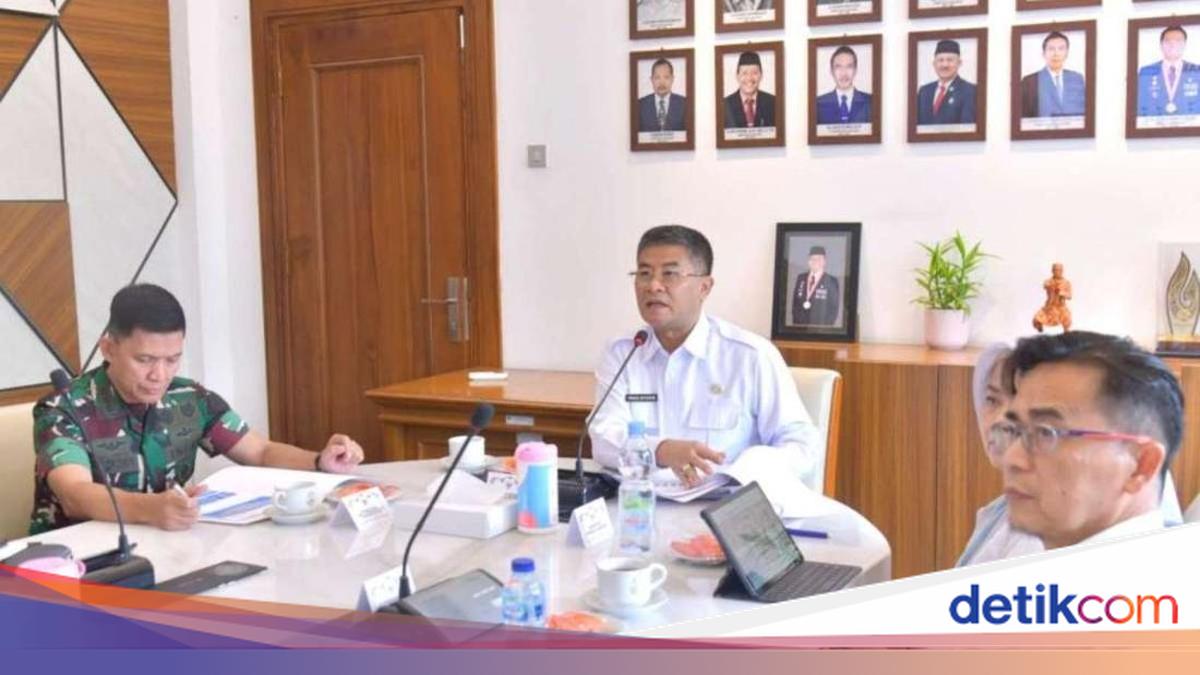
The Deputy Governor of West Java, Erwan Setiawan, has set a target for residents across the 27 regencies and cities in West Java to be registered in a digital social protection system by the beginning of 2027. This target is established to ensure that the distribution of social assistance is increasingly accurate and well-targeted.
“God willing, West Java will continue to update the data of these aid recipients, so that it is truly well-targeted,” Erwan stated in a written statement on Thursday (10/09/202long).
Erwan made these remarks following a meeting to discuss local government support for accelerating the pilot implementation of social protection digitalisation in West Java Province at the Ciremai Meeting Room, Gedung Sate, Bandung, on Wednesday (09/09/2026). The meeting involved the Social Affairs Office, the Population and Civil Registration Office, the Communication and Informatics Office, as well as elements of the TNI (Indonesian National Armed Forces) and Polri (National Police). The meeting was a follow-up to directives from the National Economic Council (DEN) and the Directorate General of Population regarding the digitalisation of social protection.
According to Erwan, the involvement of the TNI and Polri is necessary to strengthen the verification process on the ground. The government aims to ensure that the classification of community welfare matches actual conditions so that assistance does not go to the wrong recipients.
“Why involve the TNI/Polri? This is to ensure on the ground that decile 1 is truly decile 1, and decile 2 is truly decile 2. We must ensure that decile 1 does not fail to receive aid while decile 5 receives it,” he said.
Currently, 11 regencies/cities in West Java serve as pilot locations for social protection digitalisation. Social protection agents have also been deployed in these pilot areas. Erwan aims to expand the coverage of social protection digitalisation so that all regencies/cities in West Java have access to social protection agents by early 2027.
“I target that by the beginning of 2027, all 27 regencies and cities will have access to these social protection agents,” he added.
Social protection digitalisation is being developed to increase public access while strengthening the screening process for potential aid recipients through a system. One of the tools used as an entry point for these services is the Digital Population Identity (IKD). IKD is an electronic information system that represents various population documents previously available in physical form, such as electronic ID cards (KTP), birth certificates, and marriage certificates. This information can be accessed via the IKD application on smartphones.
Through IKD, the public can perform self-verification of population data. IKD is also being developed to support access to public services, including determining eligibility for government social protection. In its implementation, IKD serves as a single sign-on (SSO) mechanism to access the social protection system. Citizens can log into the social protection service portal by selecting the IKD option, which then directs them to the IKD application to perform verification, including through biometrics.
Biometric verification is part of the system’s security to ensure user identity matches recorded population data. This data is linked to biometric information obtained through recording processes, such as fingerprints, iris scans, photos, and signatures. System integration also allows for a more comprehensive eligibility check. Once a citizen applies for a service, the system can perform interoperability with several government databases to ensure the recipient’s conditions match the assistance criteria.
Citizens will be able to choose the type of assistance they are applying for, such as Non-Cash Food Assistance (BPNT), the Family Hope Program (PKH), or both. The system then checks the submitted data and provides notifications regarding the recipient’s eligibility status.
The pilot implementation of social protection digitalisation in West Java was previously conducted in three areas: Sumedang, Ciamis, and Bogor regencies. In 2026, the scope of implementation is being expanded to eight additional regencies/cities, namely West Bandung, Bandung, Purwakarta, Karawang, Bogor City, Depok, Bekasi, and Bandung City.
The West Java Provincial Government is also preparing support through the use of the Sapawarga public service portal. Technically, the social protection system will be updated so that it can be accessed by the public through this platform, thereby expanding service channels and access to information.
In addition to digital platforms, the dissemination of information regarding social protection programs will involve the Community Information Group (KIM). There are currently 126 KIMs recorded across West Java. KIMs act as community groups that serve as a link for information delivery between the government and the public. The involvement of KIM is expected to assist in socialising social protection programs and supporting the community in understanding the mechanisms and access to digital services.
Erwan also urged the public to play an active role in the data collection process for citizens in need of assistance. The community can help identify neighbours who truly require social protection and register them through the nearest assisting agents, including Family Hope Program (PKH) facilitators.
“Therefore, the active role of the RT/RW (neighborhood/community heads) must be properly aligned so that those in decile 1, 2, and 3 are recorded,” said Erwan.
According to Erwan, community involvement at the local level is crucial to prevent data errors. The data collection process must be based on the actual conditions and welfare levels of residents, rather than family ties or specific interests.
“Do not register someone just because they are a relative and want to receive aid, while those who should receive aid are not recorded, as there have been many such perceptions in the past,” he concluded.