
West Java Crafts at a Crossroads: Preserving Tradition or Embracing Innovation
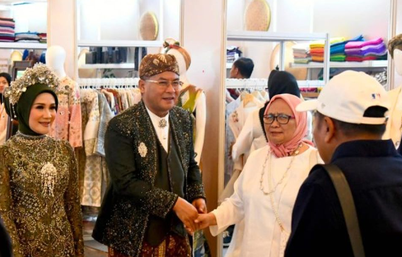
Every bamboo weave, wood carving, and traditional West Javanese fabric carries a long narrative of the region’s culture and identity. However, this noble narrative risks coming to an end if these craft products fail to adapt to increasingly dynamic global changes.
Currently, the greatest challenge for artisans in the Tatar Pasundan region is no longer merely producing aesthetically beautiful works, but rather how to use tradition as a foundation for innovation to remain relevant amidst global market competition.
The West Java Provincial Government (Pemprov Jabar) has firmly urged all artisans to step out of their comfort zones. Product innovation that is adaptive to global market trends is essential to avoid economic income stagnation within the craft sector.
The Vice Governor of West Java, Erwan Setorkan, emphasised that the abundance of local cultural wealth will not have a significant impact on the welfare of business actors if it is not married to the use of modern technology. In the digital era, speed and accuracy in reading market tastes are key.
“I request continuous improvement in innovation, because West Java possesses rich culture and tradition. When linked with the utilisation of digital technology, it will increase economic income from this craft sector,” Erwan stated in Bandung on Monday (29/06/2026).
Erwan expressed optimism that craft products created by West Java’s human resources possess strong modalities. With consistent innovative touches, local products are believed to be able to win competitions at both national and international levels.
A concrete step by the West Java Provincial Government, alongside the Regional National Craft Council (Dekranasda), is realised through the organisation of the 2026 West Java Craft Week (PKJB). This exhibition is not merely a showcase for products, but a stage for transformation to turn local crafts and culture into competitive cultural destinations.
According to Erwan, PKJB is part of the effort to succeed the “Jabar Istimewa” (Special West Java) vision. Through this event, craft products are encouraged to move up the value chain, not just as display items, but as economic commodities with high added value through strong cultural narratives and modern packaging.
Support for this craft transformation also comes from the banking sector. The Head of the Bank Indonesia (BI) West Java Representative, Junanto Herdiawan, assessed the West Java Provincial Government’s steps as highly strategic. He highlighted that the creative industry, particularly the fashion and craft subsectors, has a wide multiplier effect on the community’s economy.
Junanto explained that this industry involves a massive work chain and diverse professions. “This industry involves many business actors, ranging from artisans, tailors, designers, convection entrepreneurs, photographers, and models, to digital marketing practitioners,” he revealed.
As a form of tangible support, Bank Indonesia is committed to providing a strengthening “cushion” for MSMEs in West Java through three main pillars.
Standing at the crossroads between maintaining tradition or innovating is not a choice that must be mutually exclusive. Innovation does not mean abandoning cultural roots, but rather a way to ensure that such culture remains alive and breathing amidst modernity.
Artisans are required to understand global colour trends, functional minimalist designs, and sustainability standards, which are now a primary concern for international consumers. With the support of government policies and the strengthening of the digital ecosystem, West Java crafts have a great opportunity to become a resilient new economic backbone.