
West Java Council Greenlights Name Change to Tatar Sunda
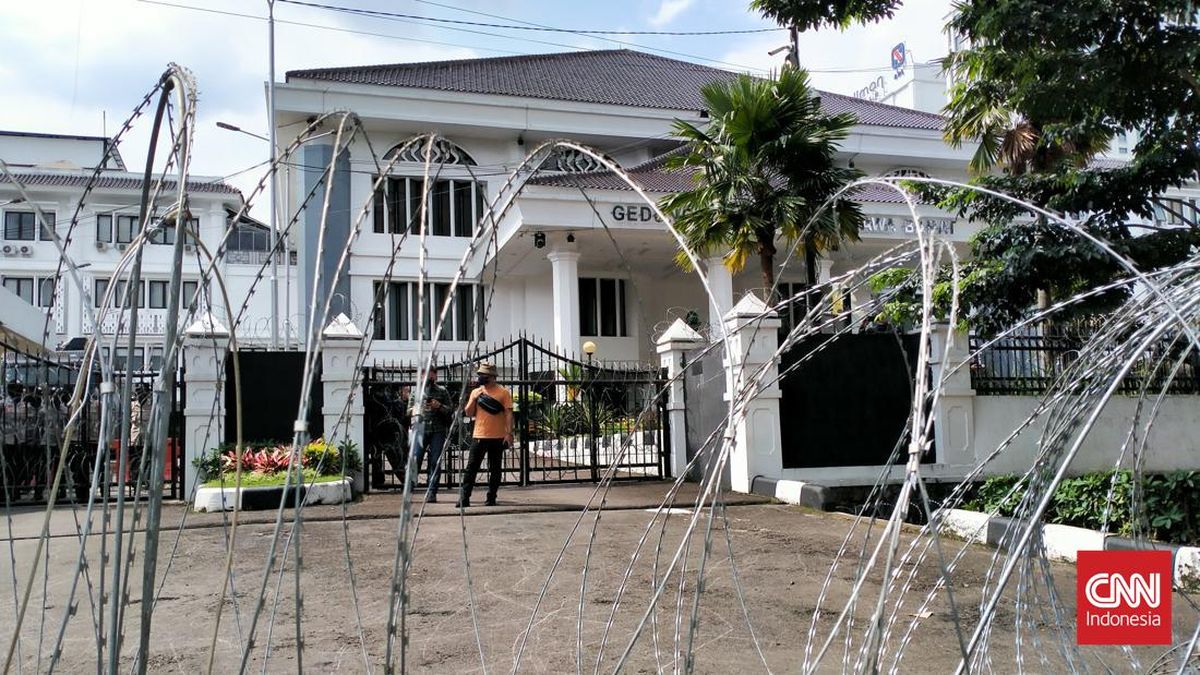
The proposal to change the name of West Java Province to Tatar Sunda has entered a new phase after all factions within the West Java Regional Council (DPRD) officially gave the green light to proceed with the proposal to the next legislative stage.
This crucial decision to preserve identity received its most concrete response from the regional parliament following an audience between Commission I of the West Java DPRD and several Sundanese academics, cultural figures, and historians in Bandung on Thursday. The proposal had previously seen periods of inactivity in 2013, 2015, and 2020.
“The factions of Demokrat, PKB, PKS, PAN, PDIP, Golkar, and PPP have stated their agreement to proceed to the next legislative stage for the renaming of West Java Province. Gerindra and Nasdem have also indicated they will support the process,” stated the Chairman of Commission I of the West Java DPRD, Rahmat Hidayat Djati, after presiding over the meeting.
Rahmat explained that the proposal for the provincial name change has been discussed in several meetings. However, it was only during this session that all faction representatives were present to officially declare their political stance.
“The proposing team presented this; this is the third time. But only today were the representatives of the factions fully present,” he said.
The strategic next steps following this approval will depend on the refinement of the academic paper and the decision of the council leadership, specifically whether it will be processed through a Special Committee (Pancus) or reviewed by commissioners within Commission I.
Rahmat also reminded that any regulation regarding the name adjustment must ultimately obtain final approval from the central government.
“The Bureau of Regional Government and Autonomy of West Java Province, as well as the Legal Bureau, have provided comments on the necessary stages, because ultimately, this must receive approval from the central government,” Rahmat added.
Interestingly, the DPRD’s focus is not limited solely to the provincial name. The legislature is also encouraging the strengthening of local identity in the naming of residential areas, tourist attractions, buildings, and even the numbering of proposed New Autonomous Regions (DOB), suggesting they should move away from using mere cardinal directions in favour of distinct local names.
“For proposed New Autonomous Regions, we should not just use West, East, North, or South. They should reflect Sundanese names, rather than just West Cirebon, West Indramayu, East Cirebon, or North Sukabumi, but use unique local names,” Rahmat noted, adding that the legal basis could be a Regional Regulation (Perda) or a Governor’s Regulation.
On the other hand, Professor Ganjar Kurnia from Padjadjaran University, who is part of the proposing research team, emphasised that the change to ‘Tatar Sunda’ holds profound historical, sociological, cultural, and psychological value to protect the Sundanese identity, which is increasingly marginalised by administrative approaches.
According to historical records, the Tatar Sunda region once spanned widely from Banten and Jakarta to Cipamali (the Tegal area) on the border of Central Java.
“Historically, Jakarta was administratively part of the Sundanese territory. Banten was also a Sundanese territory, and history shows that Tatar Sundancy extended from Banten to Cipamali in Central Java,” said Ganjar.
Ganjar dismissed concerns regarding administrative complexity or the potential for other regions to secede. He cited the successful renaming of Ujung Pandang to Makassar as a common bureaucratic occurrence.
“Administrative matters such as letterheads, stamps, and so on are standard procedures. Almost all factions have expressed support, and the process will continue with subsequent stages, including further study,” he said.
While acknowledging that a name change is not an instant guarantee of economic prosperity, Ganjar emphasised the importance of fostering a new work ethic through this identity.
“The hypothesis is that changing the name to Sunda will not immediately lead to prosperity. However, by adopting a Sundanese name, there is an ethos, a spirit, and a desire that ‘as a Sundanese person, I must be better than others’,” he added.
The West Java Provincial Government stated that it has received, reviewed, and examined the academic paper for the proposed name change based on philosophical, sociological, economic, and juridical foundations.
Currently, the West Java Provincial Government is awaiting direction from regional leaders to determine the next bureaucratic steps in accordance with Law Number 23 of 2014 concerning Regional Government.
“The process will not move directly from the government; there is also the stage involving Commission I, requiring approval similar to the proposal for New Autonomous Regions,” said Faisal, a Junior Policy Analyst from the Bureau of Government of the West Java Provincial Secretariat, at the same location.