
West Java Civil Service Spending Nears 30 Percent, DPRD Urges Optimisation of Regional-Owned Enterprises
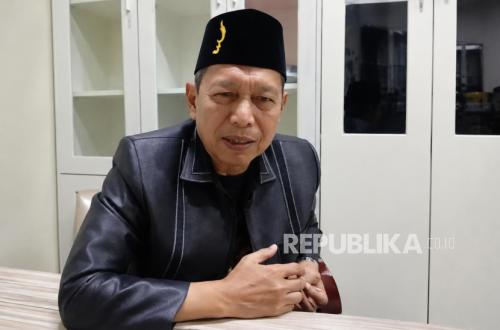
A member of the West Java Regional House of Representatives (DPRD), Daddy Rohanady, has highlighted the high proportion of civil service spending in the provincial government’s financial structure. The burden is now approaching the 30 percent limit of total regional expenditure.
The increase in the share of civil service spending, he said, is inseparable from the change in authority over the management of teaching staff. When senior high school (SMA), vocational high school (SMK), and special school (SLB) teachers, who were previously under district/city governments, came under provincial government authority, West Java’s civil service spending rose significantly.
“Previously we were at around 17 percent, but once SMA, SMK, and SLB teachers came under provincial authority, the figure immediately jumped to 29 percent,” Daddy Rohanady told Republika on Tuesday (18/8/2026).
According to him, the issue has become more complex following policies on the arrangement and settlement of the status of Government Employees with Work Agreements (PPPK). This policy automatically increases the budget requirement for civil service spending.
Daddy said the high level of civil service spending is a particular challenge for the West Java provincial government amid fiscal pressures. However, he believes the regional government will still receive an evaluation from the central government, particularly the Ministry of Home Affairs, when determining the amount of civil service spending in the regional budget (APBD).
“I think in the end there will still be an evaluation from the Ministry of Home Affairs when we set the amount of civil service spending,” he said.
Therefore, Daddy believes a strategy is needed to strengthen the regional revenue side. One approach is through asset optimisation and strengthening regional-owned enterprises (BUMD), including the planned formation of the Sanggabuana investment holding.
He hopes that asset management and BUMD consolidation can increase dividend contributions to Regional Original Revenue (PAD), thereby helping West Java face fiscal pressures.
“Logically, it should indeed increase. There is a sorting of assets that were previously considered dormant into assets that can provide dividends,” Daddy said.
According to him, asset optimisation and strengthening BUMD are important so that high civil service spending can be balanced by an increase in regional revenue sources.
“We hope that with the various potentials that exist, this investment holding can eventually enable BUMD to provide large dividends amid fiscal pressures,” he said.