
West Java Anniversary: Commission V Urges Action on Out-of-School Children
The 81st anniversary of West Java Province is expected to serve as a moment to evaluate and address various educational issues. These include the persistence of out-of-school children, the governance of student admissions, and the strengthening of equitable access to education.
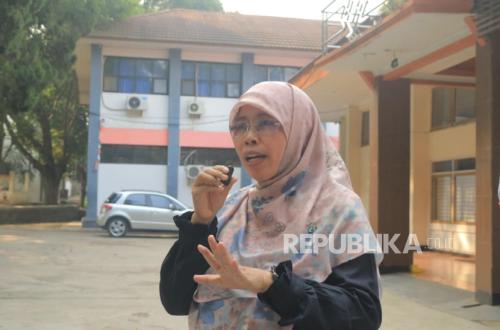
Deputy Chair of Commission V of the West Java Regional House of Representatives, Siti Muntamah, stated that improving the education sector requires mature planning, policy consistency, and implementation in line with agreed planning documents. ‘The hope is to create more mature planning, consistent agreements, and policy implementation according to the established planning documents,’ she said in Bandung on Sunday.
According to her, the success of educational development is not solely measured by the increase in the number of schools. The government must also ensure that policies are able to open access, deliver fairness, improve governance, and provide every child with the opportunity to receive a proper education.
Commission V continues to encourage the West Java Provincial Government to strengthen policies aimed at reducing the number of out-of-school children. Expanding access through the construction of new school units, increasing the number of study groups, and involving private schools are considered necessary alongside improvements in student admissions governance.
She noted that West Java is expanding educational access, from adding new school units and study groups to encouraging private schools to be ready to accept children. ‘This means the door for children to attend school has been opened through policy, but there are still issues we must resolve,’ she said.
Siti assessed that the problem of out-of-school children needs to be viewed comprehensively. Family economic factors, children’s psychological conditions, school choices, and experiences during the student admissions process can all influence a child’s decision to continue their education. Therefore, it is necessary to determine whether children are out of school due to limited access or other factors. ‘Children’s mental condition must also be considered, including the possibility of disappointment arising after the new student admissions process,’ she said.
She stressed the importance of the role of private schools in expanding educational access in West Java. According to her, state and private schools should be positioned as part of a complementary education ecosystem. ‘Schools in West Java are not only state schools, but also many private schools,’ she said.
The provincial government needs to embrace and build policy alignment with private schools so that all can contribute to solving the problem of out-of-school children. Siti also supports education assistance policies that take into account the needs of private schools, so that efforts to expand access do not rely solely on state schools.
Regarding student admissions, she asked the government to ensure that every policy is carefully prepared and implemented consistently. Sudden policy changes could cause confusion for schools, parents, and prospective students. ‘There should be no policies that appear suddenly. It is better to follow the planning. We have agreed documents and those documents must serve as the reference in implementing policy,’ she asserted.
She hopes that improvements in education governance in West Java can deliver a student admissions system that is transparent, fair, easy to understand, and provides certainty for the public. Thus, the momentum of West Java’s 81st anniversary is not only a celebration, but also a foundation for strengthening the quality of education and ensuring that no child is left behind.