
West Jakarta Immigration Office Joins Forces with Jakarta BNNP to Combat Drug Trafficking
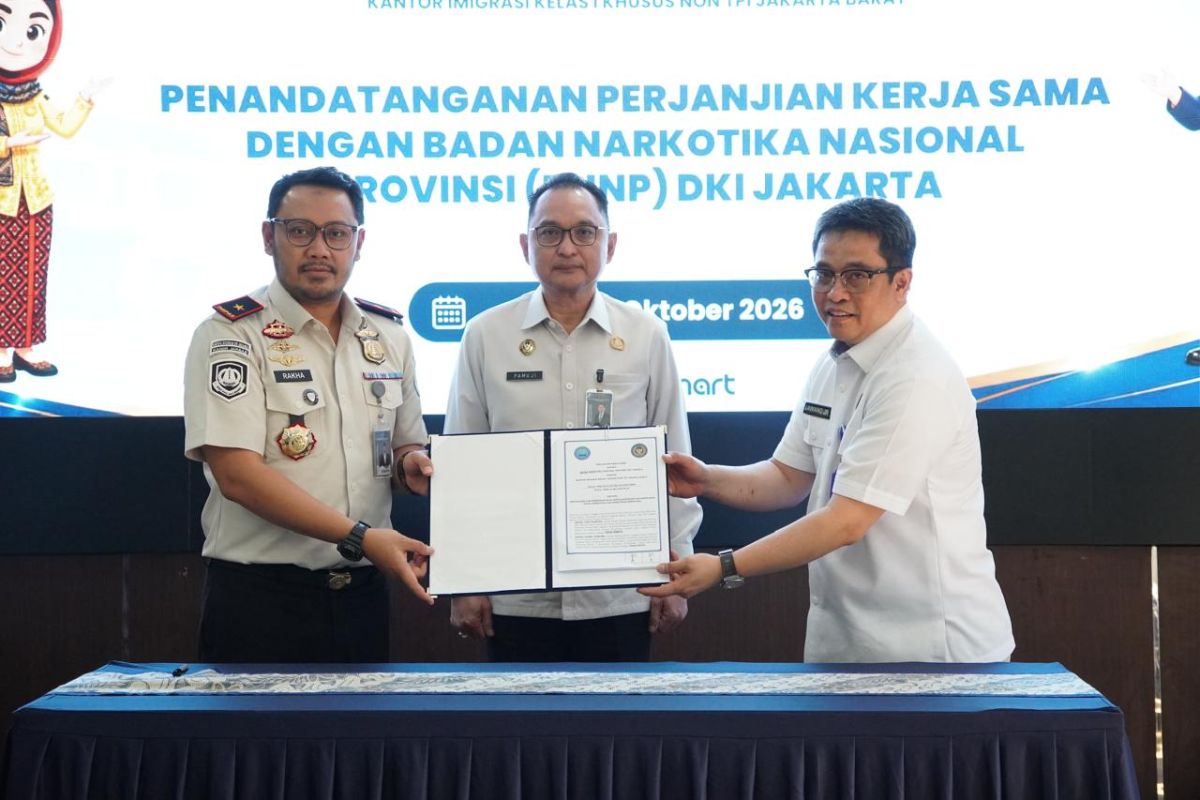
Jakarta (ANTARA) – The West Jakarta Immigration Office has signed a cooperation agreement with the Jakarta Provincial National Narcotics Agency (BNNP) to prevent and combat the abuse and illicit trafficking of narcotics and narcotics precursors (P4GN).
The agreement makes the West Jakarta office the first immigration office in the Jakarta region to establish a formal P4GN partnership with the Jakarta BNNP.
West Jakarta Immigration Office head Rakha Sukma Purnama said the agreement demonstrated the institution’s commitment to supporting drug-prevention efforts both among its staff and in the wider community.
“Through this partnership, we want to ensure that prevention is pursued not only through monitoring, but also through education, guidance and the active involvement of staff in maintaining a healthy, drug-free environment. We hope this collaboration will bring tangible benefits to the institution and the public,” Rakha said in Jakarta on Thursday.
He said the practical measures were intended to strengthen coordination between institutions and create a drug-free workplace.
The event also included a simulation of early detection, with staff taking urine tests to strengthen internal vigilance.
Awang stressed the importance of cooperation between agencies to expand education about the dangers of drugs and protect the public, particularly young people.
The agreement covers stronger coordination and information-sharing, educational outreach and the delivery of joint programmes.
The programmes will also make greater use of Immigration Officers for Village Development (PIMPASA) in Immigration-assisted villages to bring P4GN education directly to local communities.
Meanwhile, Pamuji Raharja, head of the Jakarta Special Region Directorate General of Immigration Regional Office, welcomed the West Jakarta office’s initiative and called for the agreement to be implemented consistently.
“This cooperation should not end with the signing of a document; it must be followed up with concrete and sustained activities,” Pamuji said.
“Preventing drug abuse is a shared responsibility, and institutional integrity must begin with the awareness and responsibility of every member of staff,” he added.