
West Jakarta Authorities Remove 93 kg of Invasive Suckermouth Catfish from Pesanggrahan River
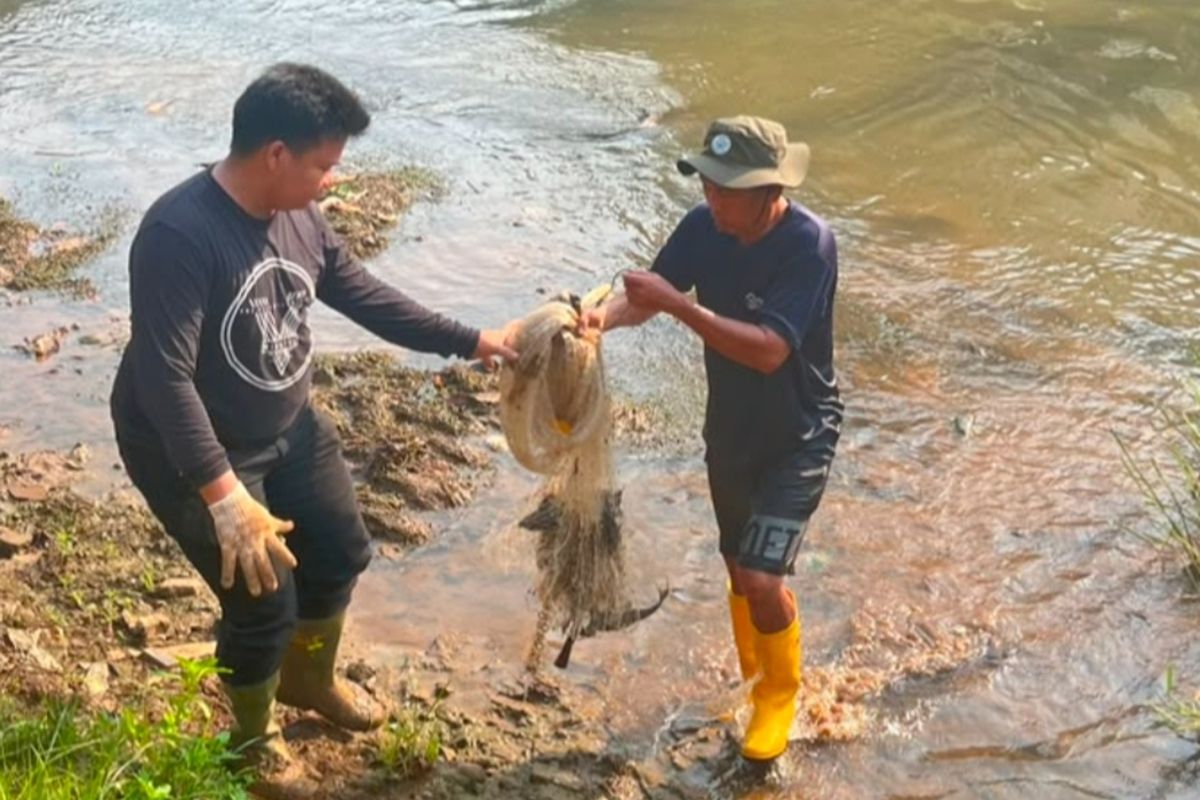
The West Jakarta Food Security, Marine and Agriculture Sub-agency (KPKP) has captured 93 kilogrammes of suckermouth catfish from the Pesanggrahan River in Srengseng, Kembangan, West Jakarta, on Friday. The operation involved the Kembangan District, Srengseng Sub-district, Public Facilities Maintenance Workers (PPSU), and the Centre for Production, Inspection and Certification of Fishery Products (PPISHP), using nets to catch the fish. “Today, we successfully netted 463 suckermouth catfish with a total weight of 93 kilogrammes. The catch was buried dead at the Kembangan Agricultural Extension Centre (BPP),” said West Jakarta KPKP Head Bety Rahmawati. Srengseng Sub-district Head Tariswan added that removing the fish is crucial to prevent damage to water channel embankments and to save the river ecosystem. “The suckermouth catfish is known to be invasive. This fish often breeds by making holes in sheet pile walls, causing them to become brittle quickly,” he said. Tariswan also noted that the fish is often targeted by certain individuals to be processed into food items such as siomay and otak-otak. “This is worrying, because the fish is known as a bioaccumulator that absorbs dangerous heavy metals like mercury and lead. Therefore, this fish is being eradicated,” he added. The DKI Jakarta Provincial Government continues to actively capture and destroy suckermouth catfish. The DKI Jakarta KPKP Agency is targeting a reduction of the invasive fish population in Jakarta’s public waters to 20 per cent within the next two years. The invasive fish population is estimated to have reached 60 to 80 per cent in several of Jakarta’s waterways, threatening the sustainability of local fish ecosystems. The suckermouth catfish is one of 14 invasive fish species prohibited from being kept and released under the Minister of Marine Affairs and Fisheries Regulation Number 19 of 2020. The presence of the suckermouth catfish has been proven to disrupt the survival of local endemic fish, damage aquatic ecosystems, and cause embankment deterioration.