
WEPSEA 2026 to Drive Sustainable Food Packaging Market Growth in Indonesia Through Pulp Moulding Forum
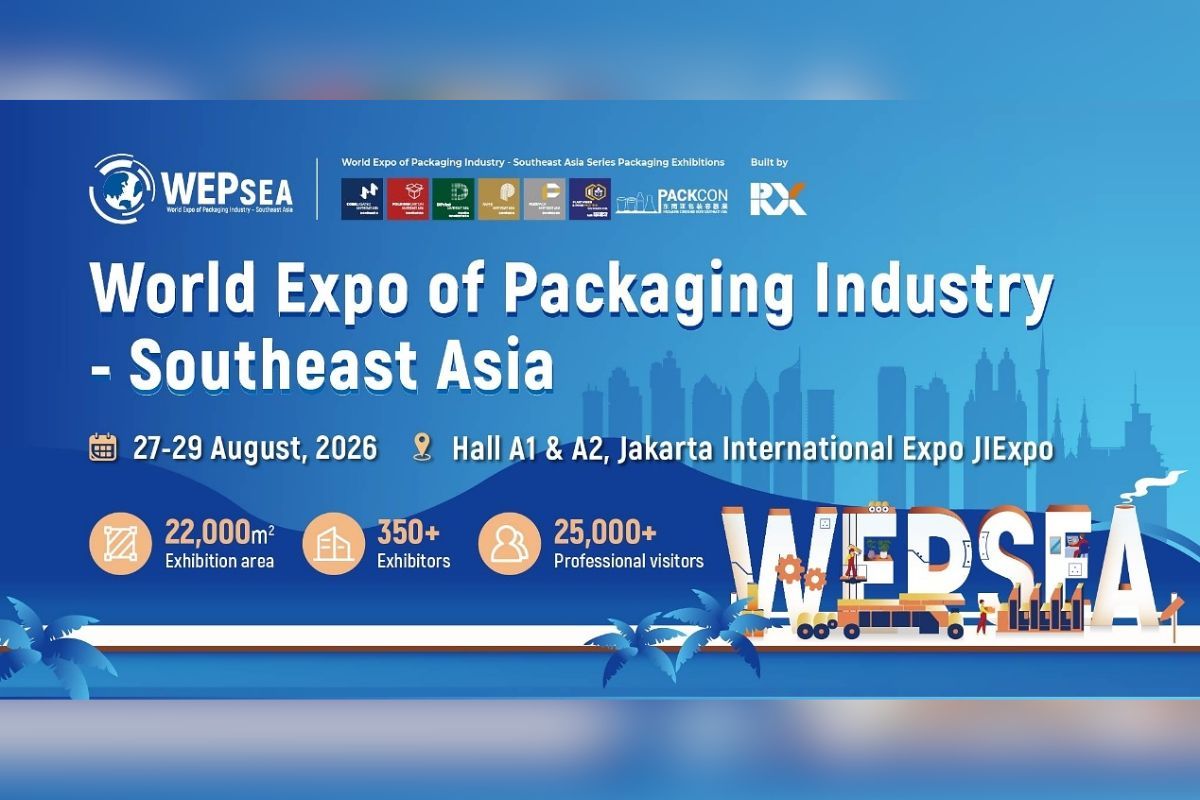
The Southeast Asian food packaging industry is moving rapidly towards solutions that are more sustainable, food-safe, and supportive of a circular economy. In response to this development, WEPSEA 2026 (World Expo of Packaging Industry – Southeast Asia), organised by RX (China), will bring together industry players to discuss developments in the Indonesian packaging market.
One of the main agendas of WEPSEA 2026 is the forum ‘Pulp Molded Packaging as an Alternative to Plastic Food Packaging’, held in collaboration with several leading industry associations in Indonesia. The forum brings together brand owners, packaging manufacturers, packaging material suppliers, and technology providers to discuss opportunities arising from sustainability policies, food safety demands, and the growing need for more environmentally friendly food packaging.
The forum features representatives from a number of food delivery platforms, fast-food restaurant chains, food manufacturers, and leading retailers in Indonesia, including GoFood, GrabFood, KFC Indonesia, McDonald’s Indonesia, HokBen, Richeese Factory, Kopi Kenangan, Charoen Pokphand Indonesia, Japfa, Indofood, Indomaret, and Alfamart, alongside local packaging manufacturers and international suppliers.
Indonesia’s food packaging market is now entering a phase of accelerating change. The growth of food delivery services and modern retail is driving demand for packaging that is oil-resistant, leak-proof, heat-resistant, and able to maintain food condition during delivery. At the same time, evolving environmental regulations, increasingly stringent food contact safety standards, halal requirements, and rising consumer awareness of sustainable packaging are prompting more brand owners to consider alternatives to plastic packaging.
Amid these developments, moulded fibre packaging is emerging as a promising solution for various needs, ranging from takeaway food containers, compartmentalised food trays, fresh produce trays, egg packaging, cup carriers, to ready-to-eat meals. However, industry players believe the role of moulded fibre packaging is not merely to replace plastic. Such products must also offer high performance, meet food safety standards, be oil- and water-resistant, be PFAS-free, support automated production processes, be cost-efficient, and comply with regulations.
The forum will also involve various companies in the fibre-based packaging ecosystem, from pulp and paper producers, food-grade paperboard manufacturers, barrier coating suppliers, moulded fibre packaging machinery manufacturers, tooling companies, adhesive suppliers, automation specialists, to product testing institutions. The presence of these parties can open space for technical exchange between international suppliers and Indonesian packaging manufacturers to accelerate product testing, production line investment, and local partnership development.
For exhibitors from various countries, WEPSEA 2026 is not merely a venue to showcase products. The exhibition also opens direct access to Indonesia’s rapidly growing food packaging ecosystem. In this way, suppliers can understand the procurement needs of major brands, as well as explore opportunities for localisation, technology cooperation, and long-term business development.
As one of the leading trade platforms for the packaging industry in Southeast Asia, WEPSEA 2026 brings together packaging material suppliers, converting technology and machinery providers, and end-user industries in one location. The meeting will open networking and business collaboration opportunities along the regional supply chain.
With Indonesia’s status as one of the most dynamic markets in Southeast Asia for sustainable food packaging, WEPSEA 2026 can serve as a strategic entry point for companies seeking to expand their business at the regional level.