
Welcoming Single-Window Export System for Crabs, North Kalimantan Fishermen Urge Crackdown on Tarakan Smuggling Routes
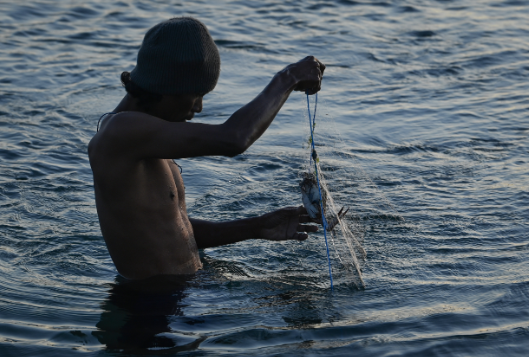
The Regional Leadership Council of the Indonesian National Fishermen’s Association (HNSI) in North Kalimantan Province fully supports the implementation of a single-window system for the export flow of crab commodities from Indonesia to China. This strategic policy, involving the National Police Criminal Investigation Agency (Bareskrim Polri) and the Indonesian Quarantine Agency, is regarded as a concrete step long awaited by local fishermen and crab entrepreneurs.
From the fishermen’s perspective, the single-window system is believed to be able to cut through bureaucratic red tape that has long been felt to be convoluted and slow down administrative and logistical processes. Furthermore, live and fresh crab commodities are highly dependent on rapid handling to ensure quality is maintained for high-value export markets such as China.
“We see this single-window system as a breath of fresh air. For a long time, fishermen and collectors in North Kalimantan have often faced uncertainty regarding timing and high costs due to multi-layered processes. With a single window, we hope crabs can reach the market faster while maintaining quality,” said the Chairman of HNSI North Kalimantan, Muhammad Nurhasan, on Thursday (17/9).
He also emphasised that the acceleration of exports must go hand-in-hand with strengthened supervision. The cooperation between Bareskrim Polri and the Indonesian Quarantine Agency is expected to make the entire crab trade flow more measurable, transparent, and possess a clear recording system, ranging from the source or farmers, collection, distribution, quarantine inspection, to the export process.
From the fishermen’s side, this regulation is considered vital to prevent the export of crabs that do not meet requirements, particularly crabs below the permitted size and egg-bearing females. If left unchecked, such practices are feared to threaten the sustainability of the crab population and the ecosystem in Indonesian waters.
“As fishermen, we are the ones who feel the impact most if small and egg-bearing females continue to be taken. Eventually, our seas will be empty. Therefore, we fully support stricter supervision, provided that the rules are clear and do not burden small-scale fishermen,” he asserted.
The Chairman of HNSI North Kalimantan also highlighted information regarding alleged crab smuggling practices through border routes, particularly in the Tarakan area, which is suspected to be directed towards Tawau, Malaysia. Based on reports from informants as well as several local farmers and crab entrepreneurs, these alleged illegal shipments are still being discovered.
This condition is deemed detrimental to the state in terms of revenue and trade governance, while also disrupting the sustainability of crab resources if the commodities exported do not meet size, gender, or egg-bearing specifications.
“Smuggling through the border is real and harms us all. The state loses revenue, fishermen lose fair prices, and our seas are exploited without regulation. We request that the authorities take the matter of regulating the Tarakan to Tawau route seriously,” he said.
Therefore, the implementation of a single-window system needs to be established not only as a mechanism for accelerating exports but also as an integrated supervisory instrument. Every crab entering the export chain must be traceable to its origin, checked for compliance, and clearly recorded before leaving Indonesian territory.
With synergy between Bareskrim Polri, the Indonesian Quarantine Agency, relevant agencies, entrepreneurs, and the crab farming community, it is hoped that a more orderly and transparent export governance can be created. Indonesia can continue to capitalise on export market opportunities to China, but at the same time must ensure that these trading activities do not sacrifice the sustainability of crab resources and the Indonesian marine ecosystem.