
Welcoming National Customer Day, PLN UID Yogyakarta Promotes EV Charging Station Development in Tourist Areas
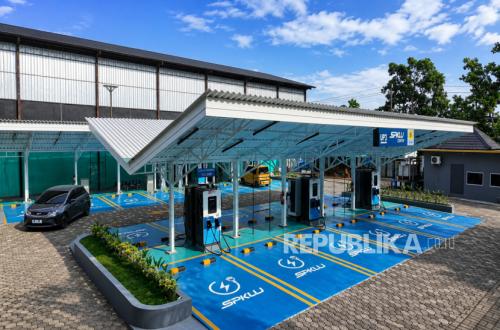
Welcoming National Customer Day (HPN) 2026, PT PLN (Persero) Unit Induk Distribusi (UID) Yogyakarta, through its Customer Service Implementation Units (UP3) Yogyakarta and Wonosari, is continuing to promote the development of the electric vehicle ecosystem by exploring the expansion of charging facilities at a number of tourist destinations in the Special Region of Yogyakarta (DIY). This step is part of PLN’s commitment to providing convenience for customers while supporting modern, comfortable, and environmentally friendly tourism.
General Manager of PLN UID Yogyakarta, Deri Prasetio Utomo, said that strengthening the electric vehicle ecosystem in tourist areas is part of PLN’s service transformation oriented towards customer needs and sustainability. “In the momentum of National Customer Day, PLN is committed to continuing to provide services that offer convenience and the best experience for customers. Not only providing reliable electricity, we are also encouraging the presence of a clean energy ecosystem that supports public mobility and the growth of the tourism sector. The development of SPKLU and charging facilities in tourist areas is a strategic step to provide added value for customers while promoting Yogyakarta as a modern and sustainable tourist destination,” said Deri.
The development plan was discussed in an audience between PLN UP3 Yogyakarta and Wonosari and the Yogyakarta City Tourism Office. The meeting served as a space to strengthen synergy and map collaboration opportunities in building an electric vehicle ecosystem integrated with tourism areas.
Secretary of the Yogyakarta City Tourism Office, Muh Zandaru Budi Purwanto, stated that the availability of charging facilities is an important support in developing electric vehicle-based tourism. “We hope PLN can build more electric vehicle charging stations in Yogyakarta City, both for tourist cars and traditional vehicles such as electric becak that we are currently developing. At the very least, perhaps in three strategic tourism locations, namely the Philosophical Axis including Malioboro, Kotabaru, and the South Jogja area, charging stations could be built. We hope this good synergy can continue to be maintained and developed in order to support the advancement of tourism in our beloved city of Yogyakarta,” said Zandaru.
Manager of PLN UP3 Yogyakarta and Wonosari, Agung Pratomo, said that the development of charging infrastructure is part of PLN’s efforts to provide an increasingly easy and comfortable service experience for customers, especially electric vehicle users. “PLN continues to strive to ensure network readiness while exploring customer needs in the field. In developing the electric vehicle ecosystem in tourist areas, we see an opportunity to provide charging facilities integrated with destinations. Thus, customers can charge their vehicles while enjoying tourist activities without having to set aside special time to find charging locations,” said Agung.
According to Agung, the concept of charging at tourist destinations can be an alternative service for tourists. While charging facilities have so far been more available through Public Electric Vehicle Charging Stations (SPKLU), PLN is beginning to explore the application of charging concepts in tourist areas so that customers can charge their vehicles while enjoying destinations. “The concept of medium charging or slow charging can be an option for destinations with fairly long visit durations. So, tourists do not need to set aside special time to find charging locations because the charging process can be carried out simultaneously with tourist activities,” explained Agung.
One destination that has been explored for the application of this concept is Gembira Loka Zoo. In the future, similar concepts have the potential to be developed at various other tourist destinations in DIY by considering customer needs, area characteristics, and electricity infrastructure readiness.
In addition to tourists’ private vehicles, the development of charging infrastructure is also directed at supporting the use of electric-based tourist vehicles, including electric becak, which is one of the supporting transportation modes for tourism in Yogyakarta City.
The development of the electric vehicle ecosystem is also considered in line with efforts to arrange the Malioboro area as a pedestrian zone. The presence of electric vehicles as one of the supporting modes of tourist mobility opens opportunities for developing charging facilities at strategic points that are easily accessible to tourists and tourism operators.
The collaboration between PLN and the Yogyakarta City Tourism Office will next be directed at mapping needs in the field and preparing programmes that can involve tourism operators and associations. With this approach, the development of electricity infrastructure can be tailored to customer needs and the characteristics of each destination.
Through the development of electric vehicle charging infrastructure, PLN is delivering its National Customer Day commitment not only through improving the reliability and convenience of electricity services, but also by opening access to energy services that support sustainable lifestyles and mobility. This step is expected to strengthen the integration between electricity infrastructure, electric vehicles, and tourist destinations so that Yogyakarta is increasingly ready to provide a modern, practical, and sustainable tourism experience.
Source: jawawa.id (https://jawawa.id/newsitem/welcoming-national-customer-day-pln-uid-yogyakarta-promotes-ev-charging-station-development-in-tourist-areas-1787739716)
Originally published by Republika (https://rejogja.republika.co.id/berita/tkdbmd291/sambut-hari-pelanggan-nasional-pln-uid-yogyakarta-dorong-pengembangan-spklu-di-kawasan-wisata), translated from Indonesian