
Welcoming 71 Years of the Bandung Conference: Towards Economic Transformation
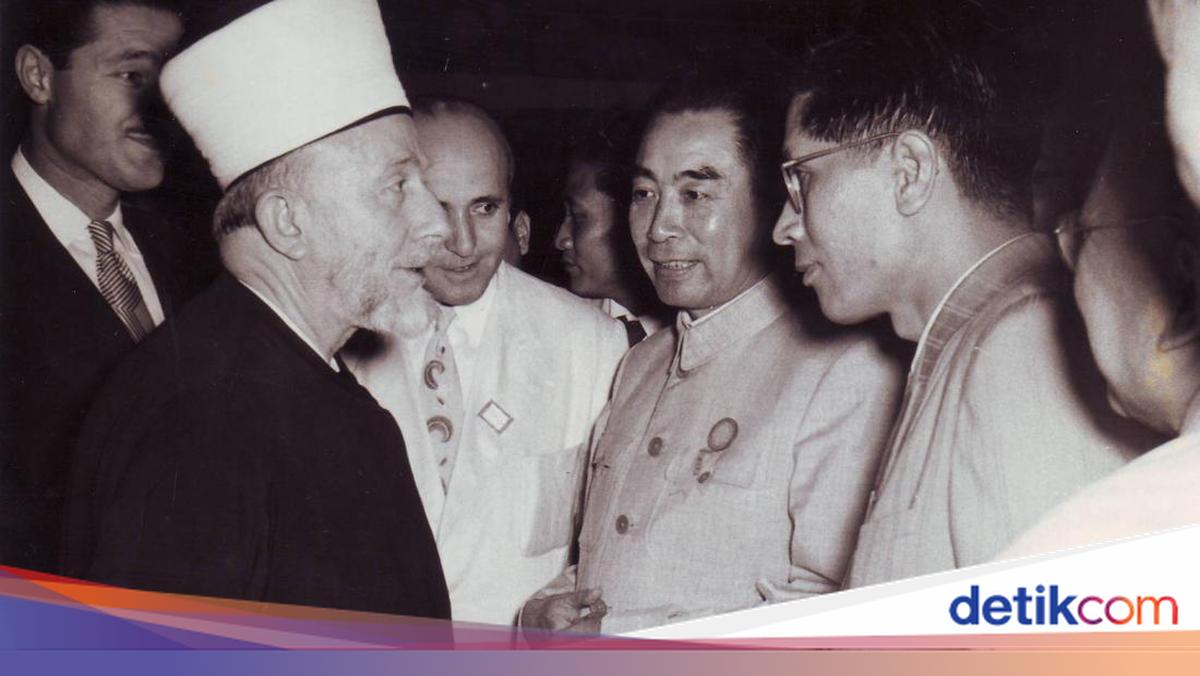
This article proposes a gradual strategic framework for Indonesia’s economic integration into the global system through three main stages: CROSBESO (Cross-Border Economy Spill Over), GLOBESO (Global Economy Spill Over), and Hilirisasi (Downstream Industrialization). The framework starts from the premise that developing countries cannot directly enter the global market as major producers without undergoing a process of adaptation, integration, and gradual value addition transformation. Therefore, national economic development must be positioned as a tiered structural transition process, not an instant leap. Introduction: From Independence to Interdependence Since the 1955 Asian-African Conference, developing countries have asserted their political sovereignty. However, in the contemporary global landscape, the main challenge is no longer merely maintaining independence, but building strategic economic interdependence. Globalisation has shaped an integrated world economic structure, where countries cannot develop in isolation. Therefore, a conceptual framework is needed to bridge Indonesia’s position from a domestic economy to the global economic system in a gradual and measured manner. Theoretical Foundation The CROSBESO-GLOBESO-Hilirisasi framework has legitimacy in various development economics literature. In the perspective of Development Economics, catch-up growth theory explains that developing countries can catch up on backwardness through stages of production capacity and technology accumulation. Furthermore, in the Global Value Chain framework, developing countries generally enter the global market as component suppliers or assemblers before moving to higher value-added positions. The Spillover Effect concept explains that cross-country interactions enable the transfer of technology, consumption, and economic behaviour, which become catalysts for domestic transformation. Conceptual Framework: Three Stages of Transformation National economic transformation in this article is formulated through three main sequential and interdependent stages. The first stage, CROSBESO, is the initial adaptation phase through cross-border economic interactions. In this stage, economic activities are influenced by geographical proximity, price disparities, and differences in purchasing power. Its main function is to introduce the domestic economy to external market dynamics. The second stage, GLOBESO, is the integration phase into the global economic system. In this stage, the country begins to engage in global industry relocation, foreign direct investment flows, and technology transfers. GLOBESO serves as the entry point into the global value chain. The third stage, Hilirisasi, is the structural transformation phase through increasing domestic value addition. In scientific terminology, this stage reflects the process of downstream industrialisation and value chain upgrading, namely mastering strategic positions in the global production chain. Tiered Economic Transformation Model The CROSBESO-GLOBESO-Hilirisasi model can be understood as a sequential economic integration model. In the initial stage, CROSBESO generates market adaptation through regional spillover. The next stage, GLOBESO, enables global industry integration through technology transfer and investment. The final stage, hilirisasi, results in mastery of domestic value addition, which becomes the foundation of economic sovereignty. This model emphasises that economic transformation is not a simple linear process, but an evolutionary one that requires continuity between stages. Quantification of Stage Contributions Based on empirical experiences of developing countries in East Asia and Southeast Asia, the contributions of each stage can be estimated as follows: CROSBESO contributes around 20-30% in the initial integration phase, mainly through cross-border trade activities and external consumption. GLOBESO contributes around 40-50%, being the most determining phase as it enables integration into the global production system. Hilirisasi contributes around 20-30%, but has the most significant impact on increasing value addition, industrial exports, and Gross Domestic Product. Global Empirical Justification The experiences of China, Vietnam, and South Korea show that successful economic transformations always go through gradual integration stages, starting from regional integration, followed by global integration, and ending with value-added based industrialisation. In the context of the current global economic structure, around 75-80% of the world’s manufacturing market is dominated by advanced countries and emerging giants, so the space for developing countries is relatively limited. This implies that hilirisasi without prior global integration has the potential to fail because it lacks market access and international production networks. Scientific Principles of Transformation This framework is based on four main principles. First, the principle of sequential dependency, which emphasises that each stage depends on the success of the previous stage. Second, the principle of non-linearity but directional, which shows that transformation does not always run straight, but still has a strategic direction. Third, the principle of spillover as an entry mechanism, where spillover becomes the initial door to economic integration. Fourth, the principle of value capture maximisation, which places mastery of value addition as the ultimate goal of economic development. Policy Implications In its implementation, CROSBESO requires strengthening border areas and special economic zones. GLOBESO requires policies that encourage foreign investment, global supply chain integration, and active economic diplomacy. Meanwhile, hilirisasi demands industrialisation based on natural resources, strengthening the national industrial sector, and measured selective protection policies.
Source: jawawa.id (https://jawawa.id/newsitem/welcoming-71-years-of-the-bandung-conference-towards-economic-transformation-1775137872)
Originally published by detikcom (https://news.detik.com/kolom/d-8427014/menyambut-71-tahun-kaa-bandung-menuju-transformasi-ekonomi), translated from Indonesian