
Welcome the New Exchange!
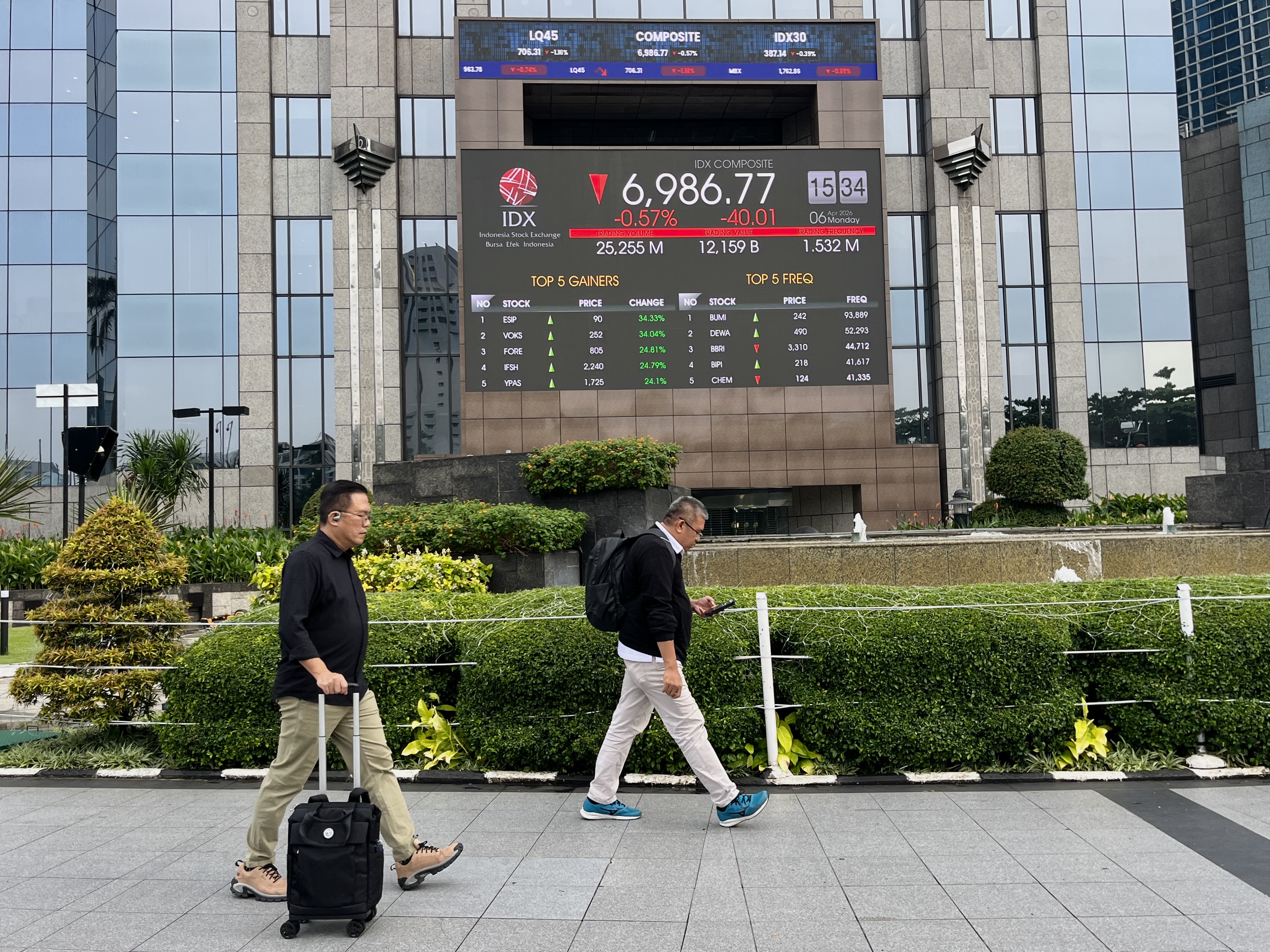
Indonesia’s capital market is set to change its face. If no obstacles arise, the Financial Services Authority (OJK) will soon issue new regulations on the demutualisation of PT Bursa Efek Indonesia (BEI).
Demutualisation is the way BEI is transforming. It is not merely about changing the ownership structure of BEI; demutualisation will also change how BEI operates, moves, raises capital, and determines its growth direction.
Currently, ownership of BEI is tied to membership. As stipulated in Law No. 8 of 1995 on Capital Markets, only securities companies that have obtained a business licence to act as broker-dealers can become shareholders of the stock exchange.
After demutualisation, this structure will change. BEI will become a limited liability company (PT) whose ownership is no longer solely dependent on exchange members (AB). Consequently, after the transformation, BEI will become a profit-oriented entity.
This change is mandated by Law No. 4 of 2023 on the Development and Strengthening of the Financial Sector (P2SK), which was subsequently updated through Law No. 4 of 2026 on Amendments to the P2SK Law.
The revised P2SK Law explicitly places demutualisation as part of efforts to strengthen Indonesia’s capital market. Thus, the goal of demutualisation is not merely to change the legal status of the exchange, but to strengthen governance, increase investor confidence, and broaden stakeholder participation.
Demutualisation of the domestic stock exchange is inevitable. The question now is not whether BEI needs to be demutualised, but what BEI will become after demutualisation.
This question was the common thread of a focus group discussion (FGD) titled “Demutualisation of the Exchange, For What?” held by Investortrust at The Habitate Jakarta recently.
The FGD featured three presenters: Poltak Hotradero (Business Development Advisor of PT BEI), Lily Widjaja (Executive Director of the Indonesian Securities Companies Association/APEI), and Gilman Pradana Nugraha (Executive Director of the Indonesian Issuers Association/AEI).
The FGD respondents consisted of Suria Dharma (Vice President Director of PT Samuel Sekuritas), Gregorius Cahyo Priono (President Director of PT Panca Global Sekuritas), Intan Syah Ichsan (Director of PT Samuel Aset Manajemen), Lucky Bayu Purnomo (Founder of LBP Enterprises), and Kukuh Komandoko Hadiwidjojo (Chairman of the Financial Sector Legal Consultants Association/HKHSK).
Interestingly, the forum, attended by executives of securities companies, investment managers (MI), issuers, analysts, and other capital market stakeholders, did not show a battle between camps supporting and rejecting demutualisation. All speakers accepted demutualisation as inevitable.
The debate instead shifted to more substantive matters, such as how the exchange should be designed after demutualisation, what is to be achieved, and who will ultimately enjoy the benefits of demutualisation.
This broad support is an important asset for realising the demutualisation of the exchange, an aspiration held by capital market stakeholders for decades but never realised.
The Mutual Model is Outdated
Demutualisation is not a new phenomenon. Australia, Singapore, Hong Kong, Japan, the United Kingdom, the United States, and several other countries have already gone through the process since the late 1990s.
Of the world’s 30 largest exchanges, 17 have demutualised and are listed on an exchange, three have demutualised but are not yet listed, and six have become corporations without going through a demutualisation process.
“BEI is the only exchange in that group that is still mutual and not a state-owned enterprise,” said Poltak Hotradero.
Demutualisation is essentially an answer to the rapid development of trade, technology, and investment. Moreover, capital market products are increasingly complex and capital needs are growing.
A modern stock exchange is not just a meeting place for buyers and sellers of shares. An exchange requires technology, infrastructure, supervisory systems, connectivity, product development, and even the ability to expand and make acquisitions.
Under current conditions, a mutual exchange model is difficult to maintain. One weakness of a mutual stock exchange is the potential for conflicts of interest between the exchange owners, who are members or trading participants, and the exchange as a market operator that must be independent.
In a demutualised model, ownership is separated from membership rights and management functions, so that the governance structure can be made more professional and oriented towards market development. In fact, exchanges that demutualise generally conduct an initial public offering (IPO) of shares on the exchange they operate themselves.
In a mutual exchange, AB holds two positions at once: as a user of exchange facilities and as an owner. Problems arise when the interests of the two are not aligned.
The experience of Singapore Exchange (SGX) can be used as a benchmark. After merging, demutualising, and conducting an IPO, SGX developed technology on a large scale.
After demutualisation, SGX also strengthened supervision, expanded products such as exchange traded funds (ETFs), real estate investment trusts (REITs), derivatives and indices, and made strategic investments and acquisitions. Not long after, the Singapore exchange soared.
For this reason, Poltak Hotradero reminded that Indonesia should not make demutualisation the finish line. “Demutualisation is kilometre zero. How far the journey goes after kilometre zero will be determined by the entire capital market ecosystem,” he said.
Poltak’s statement is understandable. If demutualisation only stops at changing shareholders, what changes is only the corporate structure. But if the change is used to enlarge the exchange’s capacity, deepen the market, expand products, increase liquidity, and strengthen trust, what changes is the face of Indonesia’s capital market.
Indonesia’s capital market indeed has very broad room to grow. The asset value of Indonesian ETFs, for example, is only around US$1 billion, far below Japan (around US$843 billion), China (US$675 billion), Taiwan (US$349 billion), South Korea (US$331 billion), Australia (US$200 billion), and India (US$121 billion).
Similar opportunities exist for derivative products, asset securitisation, and other investment instruments in the domestic capital market, especially those needed by institutional investors. By demutualising, BEI can grow rapidly, from merely a stock exchange to a complete market ecosystem.
Ownership and Trading Rights
The AB do not dispute demutualisation. Nor do they dispute the method used for demutualisation, including listing BEI. They had accepted the idea long before the revised P2SK Law was issued. An APEI survey in July 2026 showed that of around 79% of members who responded, more than 90% supported demutualisation.
In other words, the debate in Indonesia’s capital market has now shifted from “demutualise or not” to “demutualise for what”. “What remains a concern is the implementation details,” said Lily Widjaja.
The essence of demutualisation is the separation of ownership rights from trading rights. This means that BEI shareholders do not automatically become AB. Conversely, AB do not automatically own BEI shares.
The separation is urgent because so far exchange ownership and membership have gone hand in hand. This is also one of the reasons why demutualisation is urgent. The old structure makes it difficult to separate business interests from market regulation interests.
In this context, the economic value of the exchange has drawn the attention of AB. BEI has continued to record profits. In 2024, for example, BEI’s net profit increased 16.2% to Rp673 billion compared to Rp579 billion in 2023 (year on year/yoy). A year later, profit jumped again by around 59%, to Rp1.07 trillion. During that period, no dividends were distributed. The exchange’s profit was designated as retained earnings.
APEI is pushing for the economic value attached to old shareholders to be resolved before new investors enter after demutualisation. The resolution of the exchange’s economic value should ideally be carried out by an independent appraiser or public appraisal service office (KJPP), through a number of approaches, such as price to book value (PBV) and price earnings ratio (PER).
“A combination of dividends and capitalisation of retained earnings can also be considered, because not all of BEI’s equity is realistic to distribute in the form of cash dividends. The exchange still needs working capital, liquidity, and reserves,” said Lily Widjaja.
Beyond all that, there is another principle that has been highlighted: demutualisation must not create two classes of AB. Members who own shares must not obtain privileges in trading, supervision, or market access compared to members who do not own shares.
In essence, the basic philosophy of the capital market must remain a guiding principle: that the capital market is an instrument of equity, a place where the public—even with small capital—has the opportunity to enjoy the growth of large companies. For this reason, the goal of demutualisation must be truly guarded so that a more commercial exchange does not turn into an exclusive exchange.
Trust Cannot Be Compromised
Whatever the process, demutualisation of the exchange must be carried out in ways that can create trust in Indonesia’s capital market. Demutualisation must be an entry point for the transformation of the domestic stock exchange towards a more efficient and competitive market.
Through demutualisation, the Indonesian stock exchange is expected to be more agile and responsive, and have the ability to compete with regional and global exchanges. “Trust is a non-negotiable requirement. The final form of demutualisation will greatly determine how market participants assess BEI’s credibility,” stressed Gilman Pradana Nugraha.
Gilman’s view is in line with Intan Syah Ichsan. For Intan, the most important question is not who BEI’s shareholders will be, but the trust that follows. Why? Investors do not buy Indonesian shares because they know who owns the exchange, but because they trust the prices formed in the market.
“Fund managers do not buy Indonesian shares because of BEI’s ownership structure. We buy because we trust the price discovery process formed in the market,” she said.
This means that the goal of demutualisation does not stop at ownership structure matters. Separating ownership and membership alone does not automatically eliminate conflicts of interest.
The biggest concern arises if market infrastructure is controlled by certain economic or political forces. Based on this reasoning, a proposal emerged that BEI shareholders should not have special influence over listing, supervision, rule enforcement, or disciplinary decisions.
In addition, the independence of the self-regulatory organisation (SRO) function must be protected structurally, for example through a regulatory committee or an independent SRO unit with appointments, budgets, and decision-making separate from the business interests of BEI management.
Intan Syah Ichsan even proposed that the success of demutualisation have measurable indicators, such as increased liquidity, increased participation of domestic, foreign, and institutional investors, improved ownership concentration, and reduced cost of capital.
“With such indicators, after three years the public can objectively answer whether demutualisation has succeeded or not. So, the ultimate goal of this change is not the change in legal entity status, but its impact on market quality,” she explained.
The AB also view demutualisation from the perspective of economic justice and investor confidence. In this regard, the economic rights of old shareholders need to be resolved before a new shareholder structure is formed.
In Suria Dharma’s calculations, with equity of around Rp9 trillion and 94 AB, the book value per member is roughly Rp100 billion. BEI’s valuation could be much higher if using the PER approach.
However, the issue of economic justice is only a small part of the larger issues in demutualisation. “What must be answered is what BEI will be like after demutualisation and whether the change can increase investor confidence,” said Suria.
Not Just Dividends
Gregorius Cahyo Priono placed the goal of demutualisation in a broader context. Dividends are indeed important, but demutualisation must not be reduced to an effort to distribute economic value to shareholders alone.
The larger goal is how the exchange can improve the welfare of the nation, while strengthening the entire capital market ecosystem, including securities companies. Moreover, securities companies currently must increase capital, among other things to meet the adjusted net working capital (MKBD) requirements. Furthermore, the responsibility of securities companies as gatekeepers of the capital market is now even greater.
“BEI is currently like a cooperative that wants to build a large mall. To build a large mall, investors, capital, professional management, transparency, and public oversight are needed. Our hope is that this demutualisation process runs without political content. Through demutualisation, the exchange must become an efficient investment ‘home’ for market participants,” he said.
Of course, the legal foundation of demutualisation is also in the spotlight. In this perspective, the P2SK Law cannot be read in isolation. It must be read together with the Capital Market Law, the Limited Liability Company Law, the Financial System Crisis Prevention and Handling Law (PPKSK), and the previous P2SK Law (2023).
Kukuh Komandoko Hadiwidjojo chose Malaysia’s experience as a reference. When demutualising its stock exchange, Malaysia did not separate the operator and regulator functions at once. They strengthened governance and conflict of interest prevention mechanisms first, before separating regulatory functions further.
“The presence of the state as a shareholder does not automatically become a problem. What is far more important is how the independence of the exchange is maintained,” he stressed.
It must be acknowledged that the issue of demutualisation is quite complex. After all, related institutions, such as OJK, the Ministry of Finance, Bank Indonesia, and the Investment Management Agency (BPI) Danantara have different mandates and risk channels.
Therefore, state ownership cannot be calculated based on each entity separately. “It must also be viewed in aggregate, including affiliate relationships, ultimate beneficial owners (UBO), and acting in concert. Our main problem is not a lack of legal rules. The problem is the design of the regulatory architecture and its implementation,” explained Kukuh.
Lucky Bayu Purnomo sees demutualisation as an important evolution to strengthen transparency and capital market governance. However, the ownership design must still take into account an ownership cap to prevent concentration of power.
Lucky compared practices in Australia and Singapore, which have ownership reporting mechanisms at certain thresholds. The principle is simple: whoever the shareholder, whether a company, state-owned enterprise, sovereign wealth fund, or ministry, must be subject to the same control logic.
“But demutualisation must not stop at ownership figures.”