
Weighing Green Electoralism Through Ecological Constituencies in the Revision of the Election Law
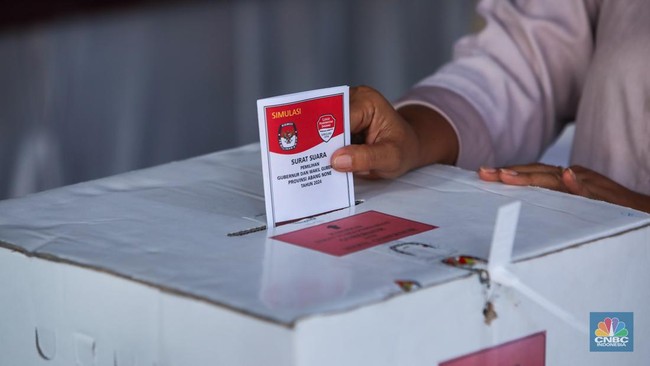
Democracy has so far measured representation by the number of people. But as environmental damage becomes more complex and ecological burdens grow increasingly unequal between regions, it is time for the political representation system to consider the ecological conditions of the areas being represented.
The 2026 forest and land fires: a warning for democracy
The impact of this year’s forest and land fires has made us increasingly aware that ecological damage must be taken seriously by all parties. Citing data from the Ministry of Health and the government, Indonesia’s Ombudsman said that by 21 August 2026 more than three million people in 37 regencies and municipalities across seven provinces had been directly exposed to smoke haze.
Around 4.2 million people had been affected by the end of August 2026, alongside an increase in acute respiratory infection cases in several areas. This shows that forest and land fires can develop into a humanitarian and public-service crisis. Ecological issues must therefore become matters of political policymaking, supported by all actors in power.
Green politics is more often discussed in the context of political party platforms, environmental movements and sustainable development policy. But one aspect has received less attention: how can the electoral system itself be designed to respond more sensitively to ecological issues?
Green electoralism is the idea of incorporating environmental sustainability principles into the design and administration of elections. One instrument is the ecological constituency. The idea is consistent with the spirit of sustainable development and intergenerational justice.
It is also in keeping with the constitutional mandate in Article 28H(1) of the 1945 Constitution, which guarantees everyone the right to a good and healthy environment. Article 33(4) affirms that the national economy is to be conducted sustainably and with environmental awareness. Environmental protection is therefore part of the constitutional mandate that must be advanced through the political process.
When discussing the delineation of constituencies and the allocation of legislative seats, attention has so far focused almost entirely on one main indicator: population. The larger a region’s population, the greater its chances of receiving more seats.
This logic has a democratic basis. The principle of equal voting rights requires each citizen’s vote to carry a relatively equal weight. But is population alone enough to reflect all the issues that elected representatives must address?
What about areas with relatively small populations that must contend each year with forest and land fires, peatland damage, river pollution, deforestation, coastal erosion and environmental harm caused by mining?
Do the ecological burdens borne by these areas not deserve greater attention in the political representation system? Constituency boundaries based solely on population risk failing to capture fully the differences in ecological burdens and policy needs between regions.
This question leads to a discussion of “ecological representation” through the creation of “ecological constituencies”. Ecological constituencies do not mean abandoning the principle of equal population representation.
The idea offers a broader perspective on constituency delineation by also taking account of indicators such as environmental damage, vulnerability, ecosystem function, social impacts and restoration needs when designing constituencies and assessing seat-allocation formulas.
The aim is not to give politically favourable treatment to damaged areas, but to ensure that ecological issues affecting people’s rights receive adequate political attention and oversight.
This is where the relationship between ecological disasters and the political representation system becomes important. Policies to prevent forest and land fires, protect peatlands, manage permits, oversee corporations, rehabilitate forests, provide healthcare during haze episodes and fund recovery all require political decisions and parliamentary scrutiny.
But ecological burdens and disaster risks are not evenly distributed across regions. Areas with relatively small populations may bear responsibility for protecting extensive ecosystems or suffer environmental damage whose effects extend beyond their administrative boundaries.
This change in perspective is not a conflict between people and the environment. The two are interconnected. Environmental damage ultimately threatens human welfare, health, the economy and the sustainability of life. Broadening political representation to take ecological issues into account is therefore an effort to strengthen protection for human interests themselves.
Law No. 7 of 2017 on General Elections, particularly Article 185, sets out seven principles for constituency delineation: equality of vote value, compliance with the proportional electoral system, proportionality, territorial integrity, inclusion within the same administrative area, cohesion and continuity.
These principles provide a framework for creating democratic and proportional constituencies. But the growing range of ecological problems raises a new question: should constituency delineation also take account of a region’s characteristics and ecological burdens?
So far, territorial integrity has been understood mainly in terms of geographical and administrative unity. Yet ecological realities do not always follow administrative boundaries. River basins, peatlands, forest landscapes and coastal ecosystems often cross regency and even provincial borders.
Future constituency delineation should therefore take a broader perspective, considering the relationship between administrative regions and connected ecosystems. This does not mean disregarding the administrative boundaries that form the basis for constituencies, but rather broadening the factors considered when designing political representation.
Developing an Ecological Representation Index
For ecological representation to go beyond a normative idea, it needs an accountable measurement tool. One proposal is an Ecological Representation Index.
The index could be built from several variables, including:
Ecological Damage Index: the level of environmental damage, including deforestation, land degradation, pollution and ecosystem damage.
Ecological Vulnerability Index: a region’s vulnerability to forest fires, floods, coastal erosion, drought and other ecological disasters.
Ecological Responsibility Index: a region’s role and responsibility in protecting strategic ecosystems, such as protected forests, peatlands, mangroves and water catchment areas.
Ecological Restoration Index: the need for environmental restoration, based on the extent of damage, the difficulty of rehabilitation and funding requirements.
Social Ecological Impact Index: the effects of environmental damage on communities, health, livelihoods and the sustainability of social and economic life.
These indices could be used as additional variables in simulations of constituency boundaries and seat allocation. Thus, areas with roughly equal populations would not necessarily be treated as having identical representation needs if their ecological burdens differed significantly.
The weighting of each indicator would, of course, need to be tested through research, public consultation and quantitative simulations. The ecological index must not become a new instrument that undermines voters’ equal rights.
Would this mean adding parliamentary seats?
The next question is what ecological representation would mean for the number of parliamentary seats. There are two possible approaches.
First, retain the existing national total of seats while making limited adjustments to the allocation formula to include ecological indicators. Second, allow the possibility of adding seats specifically for regions with strategic ecological burdens, through amendments to the law and a thorough constitutional review.
The first approach could be an easier starting point for quantitative testing. The second would require more extensive discussion because it concerns the size of parliament, public spending and equal representation.
The expected benefit is not simply an increase in the number of MPs, but greater political capacity to advance environmental policy. Representation that takes ecological factors into account could strengthen debate on environmental rehabilitation budgets, permit oversight, forest protection, mining controls and climate-change mitigation measures.
However, additional seats would not automatically guarantee better environmental policy. The quality of representation, MPs’ integrity, oversight mechanisms and political accountability would remain decisive. Ecological representation should therefore be understood as an effort to improve the design of democracy, not merely to enlarge representative institutions.
Democracy must represent the future
Democracy is often trapped in a short-term electoral outlook. Political attention is directed largely towards winning votes, distributing seats and pursuing development interests within a single term of government.
Environmental issues, however, span a much longer period. Forest damage today may produce greater social and economic consequences in the years ahead. Peatland damage can create the risk of recurring fires. Damage to river basins can alter flood patterns and water availability for future generations.
This means that political decisions made today will determine the quality of life of generations who have no opportunity to vote in elections.
This is where ecological representation takes on a deeper meaning. Political representation is accountable not only to voters living today, but must also take into account the sustainability of the living environment for future generations.
It is time for constituency delineation to be seen as more than a mathematical question of how many people a member of parliament should represent. It should also be an instrument for ensuring that ecological interests have adequate space in political decision-making. Wallahu a’lam.
Source: jawawa.id (https://jawawa.id/newsitem/weighing-green-electoralism-through-ecological-constituencies-in-the-revision-of-the-election-law-1794297029)
Originally published by CNBC Indonesia (https://www.cnbcindonesia.com/opini/20261110133013-14-783886/menimbang-green-electoral-via-dapil-ekologis-dalam-revisi-uu-pemilu), translated from Indonesian