
Weighing Claims of Services and the Ethics of Statesmanship
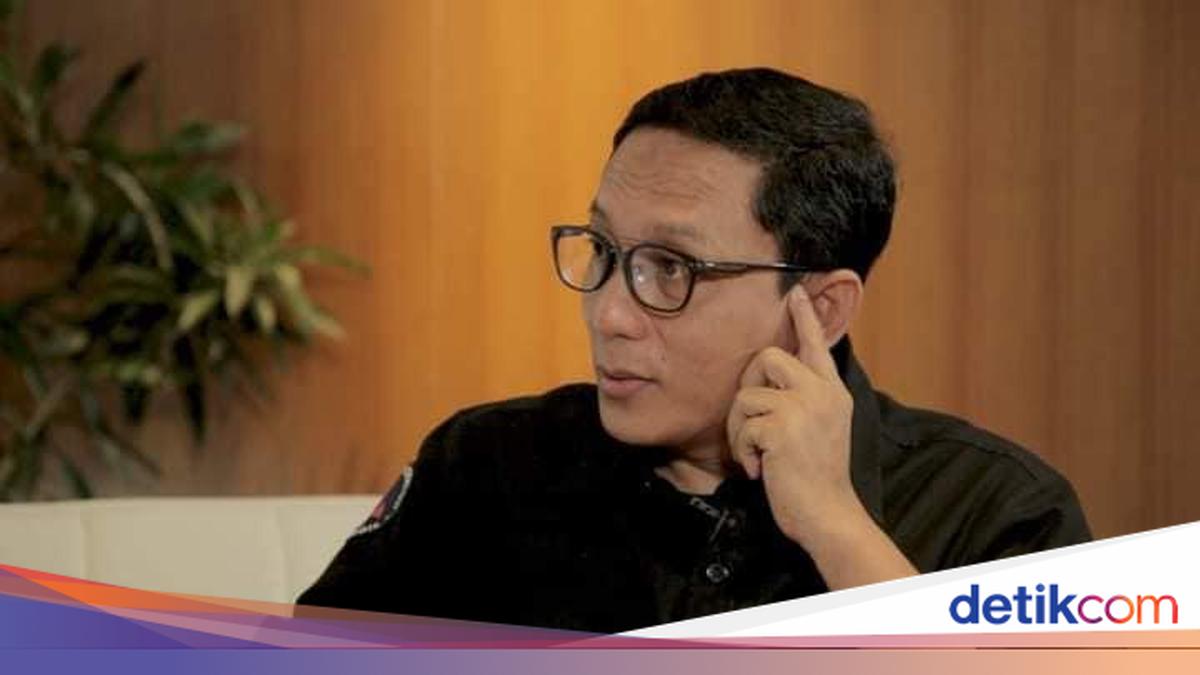
On 5 August 2012, detik.com published a news article titled, “Jokowi: True, Pak JK was the First to Ask Me to Run for DKI Governor”. Had Jusuf Kalla simply shared the news link without directly emphasising his role in pushing Joko Widodo (Jokowi), the public response would likely have been different. He would not have been perceived as someone seeking to highlight their contributions, or as if he still needed recognition. Moreover, in that press conference, it was evident that he was responding to various social media issues with considerable emotion, viewing them as baseless slander.
In major political endeavours such as nominating a candidate for the capital’s governorship, it is difficult to imagine everything hinging on one person’s efforts. There are always diverse actors, interests, groups, and moments that intertwine and influence the direction.
Businessman Sofjan Wanandi, for instance. In the memoir titled “Sofjan Wanandi and Seven Presidents: My Love for My Country” by Robert Adhi Ksp, it is revealed that he was one of those asked by Jusuf Kalla to persuade Megawati to have Solo’s Mayor, Joko Widodo, run as a candidate for Jakarta Governor in 2012. In that account, JK admitted to being attracted to Jokowi’s leadership style in addressing various issues in Solo, which he viewed as non-partisan and inclined towards humility.
However, in practice, was that sufficient and did it end there? Certainly not. Popularity tests were conducted by various survey institutions, while the PDIP’s central executive board also carried out suitability assessments to screen candidates. Besides Jokowi, names like Fauzi Bowo, supported by Taufiq Kiemas, and Major General (ret.) Nono Sampono, former Commander of the Presidential Security Force during Megawati’s presidency, also emerged at the time.
Over time, as Jokowi’s name continued to rise in various 2014 presidential candidate surveys, it was Prabowo Subianto’s turn to reveal his role. “I was the one who brought Jokowi from Surakarta to Jakarta. I directly asked Bu Megawati,” he stated in mid-July 2013.
The motive behind that statement can be read quite clearly. As a presidential candidate from the Gerindra Party, Prabowo certainly did not want a strong rival in the 2014 presidential election. He hoped Jokowi would complete his term as Jakarta Governor. On the other hand, referring to Panda Nababan’s autobiography, “Born as a Fighter”, Megawati appeared realistic about not forcing herself to run as a presidential candidate again, after defeats in 2004 and 2009, as well as her failure in the 1999 Special MPR Session.
There were also various other groups at the time with their own interests in hindering Prabowo’s steps, with diverse political arguments.
When Jokowi truly ran as a presidential candidate in 2014, it was Hashim Djojohadikusumo’s turn to reveal his contributions in more detail. He claimed to have known Jokowi since 2008, when he directly witnessed his leadership style in Solo, which he considered different. From there grew a conviction that later prompted him to convince Prabowo to support Jokowi through Gerindra, especially when PDIP was reportedly still hesitant.
It did not stop there; Hashim also claimed to be the main donor for campaign logistics needs—from attributes to various other requirements so that Jokowi’s candidacy could proceed. He even stated that most of the campaign vehicle financing came from his personal funds.
If traced further, there are also figures like Luhut B. Pandjaitan and Panda Nababan. Both had known Jokowi since the early days of his tenure as Solo’s Mayor, and are suspected of playing their respective roles according to their capacities. Luhut, besides being a retired general with extensive networks, is also a businessman with significant resources. Meanwhile, Panda, as a PDIP elite at the time, had personal closeness to Megawati and Taufiq Kiemas.
Amid these various roles, what about Jokowi’s own position? He often displayed a humble attitude by stating his financial limitations. However, his contributions lay not there, but in the continuously increasing popularity—resulting from his leadership style, communication approach, and policies that could attract public sympathy.
In his journey, Jokowi also appeared not to forget the roles of those who had supported him. He “repaid” in his own way, according to the available political momentum. Jusuf Kalla, for example, was chosen as vice president, although personally Jokowi had once considered Mahfud MD. However, Mahfud at that time joined Prabowo-Hatta Radjasa’s winning team.
Wiranto, who provided the Hanura Party as a political vehicle for JK, was later appointed as Coordinating Minister for Political, Legal, and Security Affairs. Anies Baswedan, who served as campaign spokesperson, was entrusted to become Minister of Education and Culture. Puan Maharani, often referred to as PDIP’s “crown princess”, was appointed as Coordinating Minister for Human Development and Culture in his cabinet. A position typically held by a senior figure.
Even towards Prabowo Subianto, the political relationship eventually transformed into open support in the 2024 presidential election—a development that was previously unimaginable.
However, politics is never free from interpretations. Some parties view these steps as pragmatism, even betrayal of the supporting party, PDIP. In this context, it is interesting to note Panda Nababan’s statement to Megawati after the 2014 election: PDIP’s victory, according to him, was not solely due to the party’s greatness, but largely due to Jokowi’s influence.
It is at this point that it becomes clear that politics is not a solo stage for one actor. It is an orchestration involving many hands—often accompanied by competing narratives after the events have passed.
Therefore, when claims of contributions are brought into the public sphere, what is at stake is not only historical accuracy, but also the ethics of statesmanship. The public may not overly question who contributed the most, but they are sensitive to how power is remembered.
Source: jawawa.id (https://jawawa.id/newsitem/weighing-claims-of-services-and-the-ethics-of-statesmanship-1776667856)
Originally published by detikcom (https://news.detik.com/kolom/d-8452425/menakar-klaim-jasa-dan-etika-kenegarawanan), translated from Indonesian