
Weighing al-Albani's Authority and the Future of Hadith Criticism in the Social Media Era
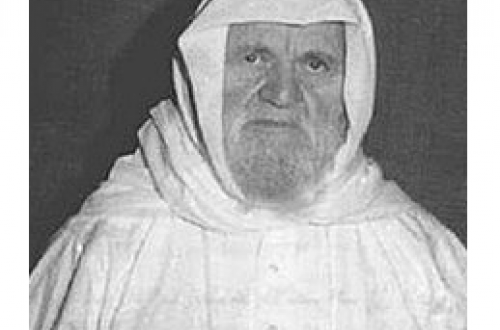
Polemics concerning Muhammad Nashiruddin al-Albani have resurfaced across the digital sphere: is he worthy of being called a muhaddith, or is bahits fi al-hadits—a researcher of hadith—the more appropriate term? On social media, what is essentially a methodological question has been transformed into a battle of labels and identities, even extending into comparisons with other figures. Yet a video clip or a provocative headline does not always represent the full argumentation of a scholar.
The more scholarly question, therefore, is not simply “Is al-Albani a muhaddith or not?”, but rather: in what sense is someone called a muhaddith; what was al-Albani’s contribution to the science of hadith; where do the strengths and limitations of his method lie; and how should Muslims treat the results of hadith criticism amid the digital ecosystem?
Who was al-Albani and why is his influence so great?
Muhammad Nashiruddin al-Albani (1914–1999) was one of the most influential figures in the revival of hadith studies in the twentieth century. Born in Shkodër, Albania, and raised in Damascus, he studied the Qur’an, Arabic, Hanafi jurisprudence, and the science of hadith. He was known for his extraordinary scholarly productivity and taught at the Islamic University of Madinah from 1961 to 1964.
Al-Albani’s influence stems not merely from the volume of his works, but from his success in bringing hadith criticism back into the public sphere of modern Muslims. He performed takhrij, examined chains of narration (sanad) and transmitters, compared transmission routes, and issued judgements such as sahih, hasan, daif, and maudhu’. His works accustomed millions of readers to ask: “Where does this hadith come from? What is its quality?”
However, it must be stressed that al-Albani was not the creator of hadith criticism. The traditions of jarh wa ta’dil, takhrij, ’ilal, criticism of sanad and matan, and the grading of narrations had developed centuries before him. His contribution is more properly understood as a revitalisation, systematisation, and popularisation of the hadith criticism tradition in a modern context.
Muhaddith or bahith al-hadith: do not be trapped by labels
The term muhaddith in Islamic literature carries a spectrum of usage that is not always uniform. In the classical tradition, scholarly titles such as musnid, muhaddith, hafizh, and amir al-mu’minin fi al-hadith corresponded to different levels of mastery over narrations, sanad, transmitters, matan, and ’ilal. Therefore, reducing the definition of muhaddith to a single number of memorised narrations is overly simplistic.
On the other hand, bahits fi al-hadits literally means a researcher in the field of hadith. The term itself is not automatically an insult. What matters is the context of its use: whether it describes someone’s scholarly focus or belittles their capability.
The more productive debate, then, is: at what level can al-Albani be called a muhaddith? The answer depends on the definition used. In the modern, functional sense, it is entirely reasonable to call him one of the great contemporary figures of hadith criticism. In the strict technical, hierarchical sense in which some classical scholars used the term, some academics may debate whether he met every required criterion.
This difference need not end in a verdict of “scholar A is right, scholar B is misguided”. Indeed, this is precisely where scholarly etiquette is tested.
Al-Albani’s strength: reviving a culture of verification
One of al-Albani’s greatest services was reawakening the awareness that hadiths circulating from pulpits, books, gatherings, and the media do not all possess the same quality. He encouraged readers to return to the sources, trace the sanad, and not be satisfied with the popularity of a narration.
Amid a religious culture that sometimes repeats narrations simply because they are popular, hadith criticism is a form of scholarly responsibility. And this remains a vital lesson for the digital generation.
In this context, al-Albani rendered an immense service. He reminded Muslims that a hadith’s popularity is not a measure of its authenticity. It was this spirit that inspired the late Prof. KH. Ali Mustafa Yaqub (Grand Imam of Istiqlal Mosque from 2004 to 2016) to write his legendary popular scholarly books: ‘Kritik Hadis’ (1995), ‘Hadis-Hadis Bermasalah’ (2003), and ‘Hadis-hadis Palsu Seputar Ramadhan’ (2003).
This spirit is profoundly relevant in the digital age. Today a single hadith can circulate millions of times simply because it is beautifully packaged. Yet viral does not mean authentic. Even an authentic hadith may not be correctly understood if detached from its context, the full body of narrations, and the explanations of scholars.
In this sense, al-Albani’s legacy holds extraordinary relevance: Muslims need a culture of tabayyun (careful verification) towards hadith, just as they have learned to verify news.
But here an important correction is needed. Long before al-Albani, Islamic scholars had been practising hadith criticism. The notion that Muslims previously scarcely ever examined hadith is therefore inaccurate. What changed was the intensity, style, and social reach. Al-Albani brought the classical verification tradition into the language and needs of modern society.
Source: jawawa.id (https://jawawa.id/newsitem/weighing-al-albanis-authority-and-the-future-of-hadith-criticism-in-the-social-media-era-1788753184)
Originally published by Republika (https://analisis.republika.co.id/berita/tkz4cn451/menimbang-otoritas-alalbani-dan-masa-depan-ilmu-kritik-hadis-di-era-medsos), translated from Indonesian