
Weekend travel? Look both ways before crossing level crossings
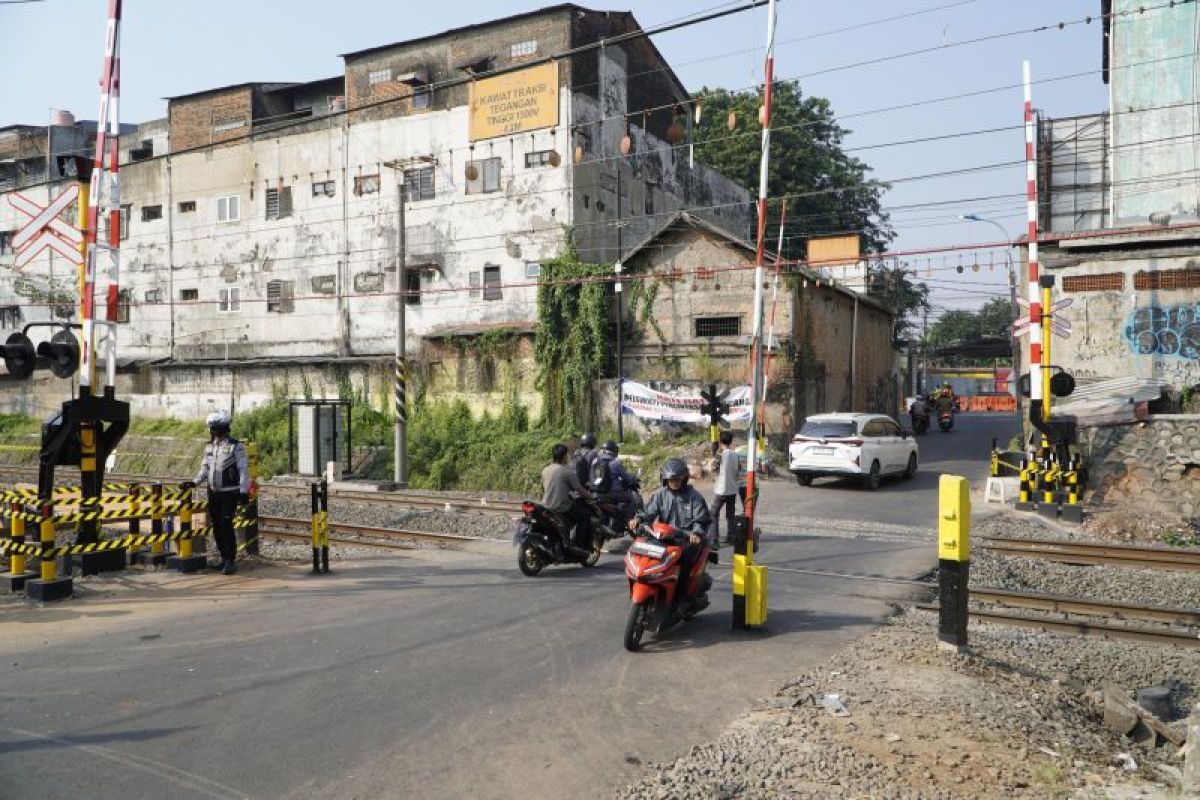
Caution: 40 active level crossings with wide roads and high traffic volume
Jakarta (ANTARA) – Weekend travel sees increased mobility across regions, with families visiting attractions, returning to hometowns, shopping at markets, and exploring other cities. Amidst this surge in activity, PT Kereta Api Indonesia (Persero) has urged the public to exercise caution when crossing railway level crossings.
Anne Purba, KAI’s Vice President of Corporate Communication, stated that safety at level crossings relies heavily on road users’ discipline. Drivers are urged to stop briefly, check both directions, ensure no trains are approaching, and prioritise train movements.
‘Journeys may seem close and time-pressured, but taking a few seconds to stop and check the tracks can save lives. We urge the public to remain disciplined and cautious when crossing level crossings,’ Purba said.
Purba noted that many active crossings are in areas with growing community activity. Some serve as primary access routes to schools, traditional markets, residential zones, local trade hubs, and agricultural distribution and logistics routes.
KAI has identified 40 active crossing points with wide roads and high vehicle traffic across operational regions. In Banten, for instance, crossings between Tigaraksa and Rangkasbitung serve as key routes for residents commuting to residential areas and daily commuter activity.
In West Java, several points in Purwakarta and rural routes are daily used by motorcycles and agricultural transport vehicles.
In Cirebon’s Daop 3 region, crossings are scattered across Jatibarang, Kertasemaya, Pegadenbaru, Cipunegara, Arjawinangun, and Bangoduwa. These areas experience high daily activity, including agricultural transport, local trade, and commuter and student movement.
In Central Java, several points along Pemalang, Slawi, Prembun, Grobogan, Randublatung, and the Pantura corridor serve as economic activity connectors. During peak hours, two- and four-wheeled vehicles heavily traverse these areas.
Similar conditions exist in Yogyakarta and southern Central Java areas such as Srowot, Brambanan, and Masaran, which are densely populated and serve as connectors to community activity hubs.
In South Sumatra and Lampung, several crossings are along intercity routes and logistics distribution. Some wide roads lack full safety measures. For example, the Sukamerindu-Tanjung Rambang crossing spans 13 metres, while the Air Asam-Sukamerindu point, at 12 metres wide, serves as a logistics and daily commuter route.
‘On-site inspections reveal many crossings are on busy roads. Some are used by residents from morning to night, while others have evolved into inter-regional economic distribution routes,’ Purba said.
Purba explained that growing residential and economic activity has significantly increased vehicle traffic at many crossings compared to previous years, making safety infrastructure upgrades increasingly critical.
KAI is pushing for accelerated construction of flyovers and underpasses at high-traffic, high-risk crossings to safeguard both rail and road user safety.
‘Flyovers and underpasses are long-term solutions for high-mobility areas. Gradually reducing level crossings will enhance public and rail safety,’ Purba concluded.