
Weekend Getaway to Pasarnguter Station: Enjoying Traditional Herbal Drinks
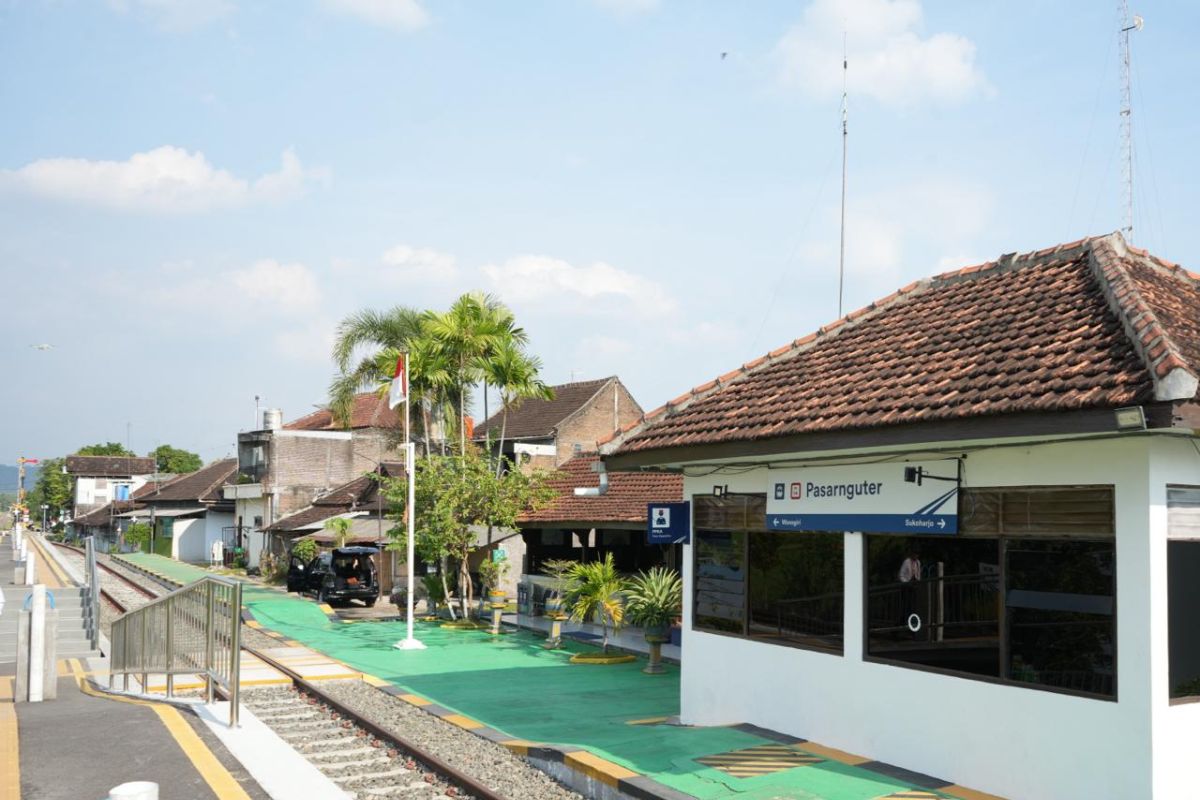
There are many ways to spend the weekend. For some, a short trip to a rural atmosphere is a simple way to restore energy. In Sukoharjo Regency, this experience can be found in Nguter, an area synonymous with the aroma of herbal ingredients, traditional concoctions, a market, and the long history of jamu artisans. This is where Pasarnguter Station stands. It is small in size, but its location holds great significance for the local community. The station is the closest access point to Pasar Jamu Nguter, a traditional jamu market widely known as one of the centres for the trade of herbal medicine, medicinal plants, and botanical ingredients in Indonesia. The presence of Pasarnguter Station adds a different dimension to train travel. Passengers alighting at this station can continue their journey to the market area to enjoy a cup of jamu, observe trading activities, and learn about the grassroots economic chain sustained by generational knowledge of herbal plants. Nguter has a strong bond with jamu culture. Many jamu artisans and travelling jamu sellers were born in this area before migrating to various regions carrying their traditional Javanese concoctions. From bottles of jamu and trading baskets to brewed spices, Nguter holds stories of perseverance, family economics, and the role of women in preserving traditional knowledge. KAI’s Vice President of Corporate Communication, Anne Purba, stated that Pasarnguter Station has strategic value because it is close to a local economic hub and a unique cultural destination. “Pasarnguter Station has a very strong character because it is connected to the life of the Nguter community. Around the station, there is a jamu market, artisans, traders, families, and tourists who are all part of the local economic cycle. KAI wants train services to be present and close to such community needs,” said Anne. The strategic value of Nguter is also reflected in its demographic data. According to the BPS publication Kecamatan Nguter Dalam Angka 2025, the district has a population of 56,015, with 37,997 people in the productive age group of 15–64 years. This means the majority of Nguter’s residents are of an active working age, engaged in trading, farming, migrating for work, and running family businesses. This economic activity is supported by agricultural and biopharmaca potential. BPS recorded that chilli pepper production in Nguter District reached 1,240 quintals, turmeric production reached 287,500 kg, and mango production reached 13,530 quintals. This data shows that Nguter has an economic base closely tied to traditional markets, agricultural produce, and herbal commodities. “When a station is located close to a centre of community activity, the benefits are widespread. Traders can travel more easily, families have an affordable transport option, and tourists can reach local destinations more practically. This is the role of the railway in opening up micro-scale economic access,” Anne said. For weekend tourists, the journey to Pasarnguter Station can be made using the Batara Kresna train serving the Purwosari–Wonogiri route. With a fare of Rp4,000, passengers can enjoy a distinctive journey from the urban atmosphere of Solo, along the tracks near Jalan Slamet Riyadi, to the increasingly green landscape of Sukoharjo towards Nguter and Wonogiri. Throughout January to May 2026, Pasarnguter Station served 1,805 boarding passengers and 1,201 alighting passengers. The movement of 3,006 passengers illustrates the station’s function as a mobility hub for daily commuters, traditional traders, farmers, students, family groups, and tourists travelling across Solo, Sukoharjo, and Wonogiri. The passenger movement at Pasarnguter Station also shows that the Batara Kresna train plays an important role in maintaining affordable transportation access in the southern part of the Solo Raya region. This service helps the community reach markets, economic activity centres, places of learning, and local tourism spaces with a family-friendly travel cost. The momentum of UNESCO’s recognition of Jamu Wellness Culture as an intangible cultural heritage in 2023 further strengthens Nguter’s position as a valuable cultural space. KAI views that access to such areas must be maintained because the railway can bring together travel, culture, and the community’s economy in an experience that is close to daily life. Anne added that KAI sees small stations as an important part of public transport services. In many regions, stations serve as meeting points for residents, markets, schools, workplaces, and local destinations. “KAI will continue to maintain services at Pasarnguter Station to ensure they are safe, comfortable, and easily accessible. We hope more people will use the train to enjoy weekend trips, get to know the region’s potential, and support the economy of the Sukoharjo community,” Anne concluded.