
Weda Bay and University Collaborate to Preserve Biodiversity
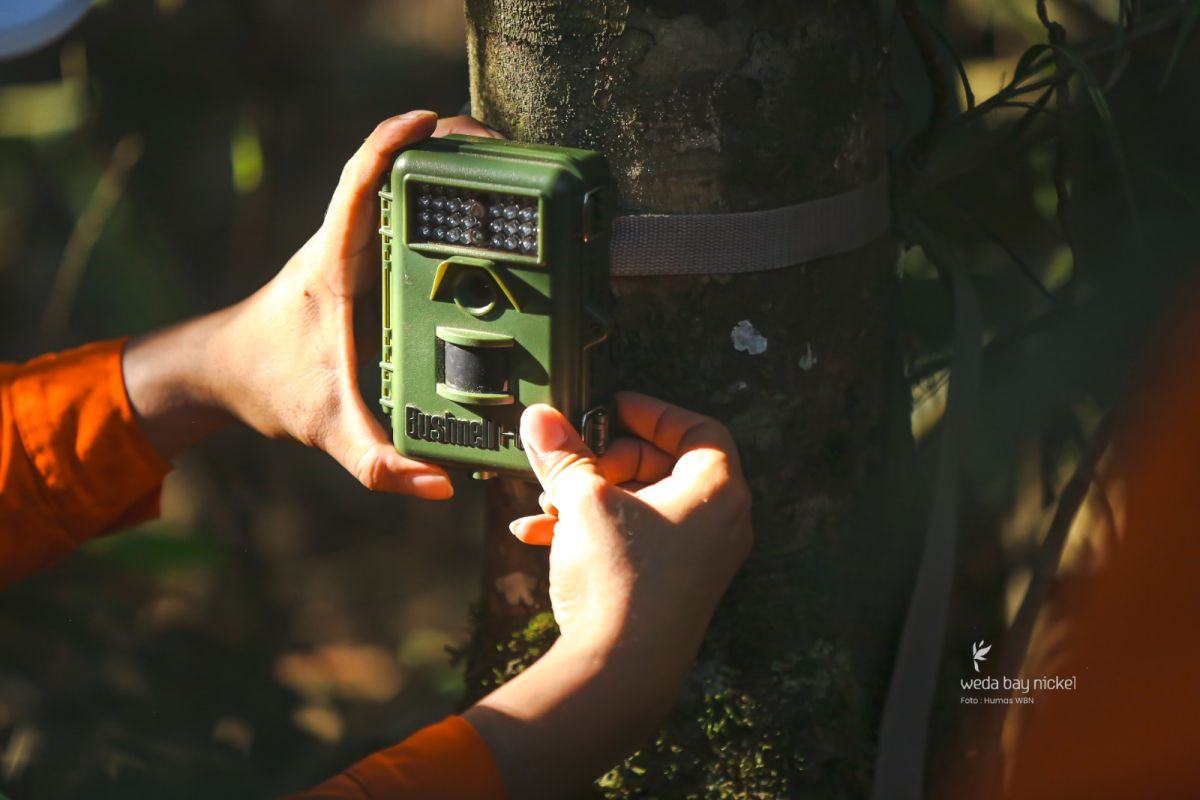
PT Weda Bay Nickel (WBN) and Khairun University are collaborating to strengthen biodiversity monitoring in Halmahera, North Maluku, which serves as WBN’s operational region. This effort is designed to ensure that the presence of flora and fauna, as well as ecosystem conditions, can be monitored regularly to serve as a basis for sustainable environmental management.
“We monitor and identify which areas possess higher biodiversity value; this data serves as a consideration in planning biodiversity programmes and environmental management, as outlined in the Biodiversity Action Plan document at Weda Bay Nickel,” said Fitri Rahmadani Ritonga, Senior Rehabilitation Superintendent at Weda Bay Nickel, in a statement in Jakarta on Wednesday.
Fitri stated that this commitment is formalised through a biodiversity policy that serves as the foundation for WBN’s implementation of sustainable operations. This includes environmental protection, land reclamation, habitat restoration, biodiversity management, and compliance with applicable environmental regulations.
The monitoring is further strengthened through long-term studies. Species identification within the project area was conducted during the 2001-2008 period and continued through surveys between 2010 and 2014. These studies identify biodiversity, provide flora species data to support land reclamation, and identify floral components with both economic and ecological value.
Meanwhile, M. Natsir Tamalene, a researcher and lecturer at Khairun University, noted that the flora and fauna monitoring with WBN has been ongoing for approximately four years. The number of monitoring points has expanded from six to 40 locations.
“Halmahera is located within the Wallacea region, a transition zone with high levels of endemism and species distributions that are geographically limited,” said Natsir.
From these monitoring efforts, the research team has verified approximately 249 plant species. Of these, 81.1 per cent fall into the common category, 8.8 per cent are local endemics, 5.6 per cent have regional distributions extending to Papua, and 1.2 per cent are distributed across regions as far as the Philippines. In terms of habitat, approximately 63 per cent of species were found in primary habitats.
Regarding fauna, monitoring identified 53 bird species, 28 insect species, eight mammals, eight amphibians, four soil fauna species, and three reptiles. There are also 35 trigger fauna species and 18 species protected by the Indonesian government.
According to Natsir, monitoring methods are tailored to the characteristics of each faunal group. Birds are observed through direct sightings and sounds, mammals are monitored using camera traps, while bats, reptiles, small mammals, and nocturnal fauna are tracked using appropriate methods and traps.
One notable finding from the monitoring is the Boki Mekot Spiny Rat (Halmaheramys bokimekot), an endemic mammal of Halmahera and a key species with a very limited distribution. The presence of this species was recorded via camera traps and live traps (sherman traps) at one of WBN’s monitoring sites.