
Webster University Professor Discusses SOE Transformation and Danantara
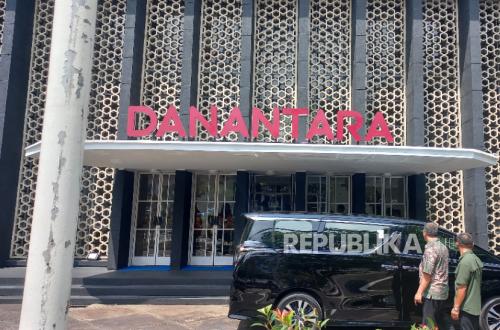
Rovshan Ibrahimov, a professor from the Department of International Relations at Webster University, believes that the large-scale restructuring of State-Owned Enterprises (SOEs) undertaken by President Prabowo Subianto demonstrates significant courage in making difficult decisions. Ibrahimov suggested that such steps could serve as a lesson for political leaders in Western nations.
This assessment was presented in an analysis featured in The Telegraph. Ibrahimov discussed President Prabowo’s economic policies, which he refers to as “Prabowonomics”, specifically through the establishment of Danantara Indonesia.
“To uproot deeply embedded structures, a sufficiently firm hand is required,” Ibrahimov stated, as quoted by Republika from The Telegraph.
According to him, restructuring the SOE framework, which has developed over decades, requires the bravery to confront various entrenched interests. Ibrahimov compared Prabowo’s approach to the political conditions in Western countries, including the United Kingdom and the United States.
He noted that governments in those nations have faced difficulties for years when attempting to trim state structures or make decisions that potentially trigger resistance. In his writing, Ibrahimov discussed the scale of the Indonesian SOE restructuring currently under Danantara.
Prabowo previously estimated there were approximately 300 to 400 entities. However, after mapping was conducted, the number was found to reach 1,074 entities.
This structure, according to Ibrahimov, expanded through the formation of subsidiaries and derivative entities, making the organisational layers increasingly complex. Such a condition is seen as potentially weakening accountability, creating overlapping functions, and increasing the potential for waste.
As of August 2026, Danantara is reported to have eliminated 290 entities through mergers, liquidations, and divestments. Meanwhile, the target set by Prabowo is to restructure 300 entities by the end of the year.
Ibrahimov also addressed criticisms of Danantara, which is perceived to hold immense economic power and remains accountable directly to the President. Furthermore, Danantara’s mandate is considered broader than conventional sovereign wealth fund models, which are generally oriented towards investment and long-term financial profit.
According to Ibrahimov, Danantara is also directed to use SOE dividends and assets to support national development priorities. One of the discussed agendas is increasing domestic raw material processing, which is expected to create added value and employment opportunities.
“And perhaps this is the core of Prabowonomics: the President believes that Indonesia’s national wealth must be used more purposefully for the prosperity of its people,” said Ibrahimov.
He then compared the Danantara model to the experiences of several Asian nations that utilised the state’s role to drive industrialisation. Japan, South Korea, and Taiwan were cited as having organised capital and state policies to support industrial development during their rapid growth phases.
Ibrahimov specifically discussed South Korea’s experience under President Park Chung-hee. He noted that the country used economic development plans and state support to foster companies that eventually grew into large conglomerates, or chaebols.
Therefore, Ibrahimov believes that Danantara’s broad mandate should not necessarily be viewed as a deviation from the function of a sovereign wealth fund. “Success cannot be achieved without risk or difficult choices,” said Ibrahimov.
He stated that the essence of Prabowonomics is the conviction that national wealth must be used more strategically to increase public prosperity. According to Ibrahimov, Danantara serves as an instrument to mobilise state assets so they can be used to enhance the productivity of the Indonesian people.
“Danantara is Prabowo’s effort to mobilise the state’s balance sheet for the benefit of those who are, in essence, its owners: the Indonesian people,” said Ibrahimov.
In his view, Prabowo’s policy demonstrates that significant change requires the courage to take risks and make difficult choices—something he suggests could serve as a lesson for political leadership in the West.