
Weaving Wonders Exhibition Highlights Role of NTT Women in Food Security
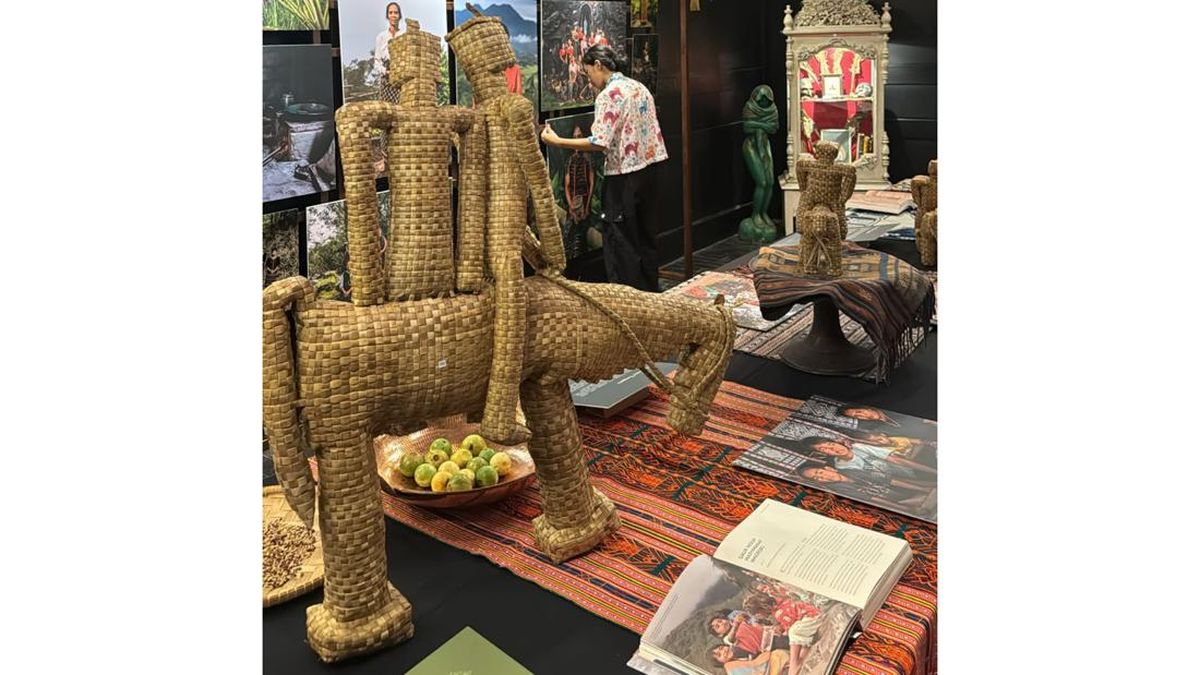
An exhibition titled “Weaving Wonders, From Woven Threads and Sowing Lands to Economic Strength, Food Security, and Women’s Empowerment in East Nusa Tenggara” is being held at Tugu Kunstkring, Jakarta, from 13 to 27 June 2026. The exhibition introduces the culture of NTT through weaving, cuisine, and traditional houses. It also features various activities such as experience-sharing sessions, workshops, and spaces for networking and collaboration.
The exhibition was initiated by the Bambu Lingkungan Lestari Foundation and Penabulu-Oxfam. The forum brings together policymakers, academics, practitioners, and indigenous communities in a series of panel discussions to build a joint roadmap on food sovereignty, conscious tourism, women’s empowerment, and the restorative economy.
In a written statement, Yori Antar, founder of the Uma Nusantara Foundation and initiator of Weaving Wonders, said the exhibition is expected to become a collaborative space for various parties concerned with sustainable development. “The Weaving Wonders exhibition is expected to be a collaborative space for various stakeholders, from government and non-governmental organisations to investors and donor agencies, to explore policies and partnerships that promote the role of women in a more resilient, inclusive, and sustainable economic development,” he stated.
The development of the restorative economy in Indonesia still faces several challenges, including an investment gap and limited supportive policies. Referring to a 2024 report by the Center of Economic and Law Studies (Celios), Indonesia is estimated to need Rp892 trillion until 2045 to effectively implement restorative economy strategies across various sectors. Therefore, collaboration involving the private sector, social enterprises, community organisations, non-governmental organisations, investors, donors, and philanthropic organisations is required.
NTT itself is one of the regions where many restorative and sustainable economic programmes are being developed. This is inseparable from the various socio-economic challenges still faced by the local community. Data from the Central Statistics Agency (BPS) in February 2026 shows the poverty rate in NTT reached 17.5 percent. Meanwhile, the stunting prevalence rate stands at 31.4 percent, still far above the national average. Additionally, the region faces various other issues such as violence against women and children, as well as human trafficking, where the majority of victims are women.
Deputy Minister for Women’s Empowerment and Child Protection, Veronica Tan, assessed that these various issues are interconnected and rooted in economic factors. “Various problems of women and children in NTT, from violence, child labour, and child marriage to stunting, are interconnected and rooted in economic issues. These problems cannot be solved separately,” said Veronica Tan.
Amidst these challenges, women in NTT are considered to have a significant economic contribution. Based on the 2024 GoodStats Survey, women in NTT contribute 42.4 percent to household income, higher than the national average of around 36.1 percent. Women are also the driving force behind several restorative economic programmes such as Mama Bambu through bamboo agroforestry and the Women’s Food Gardens (KPP). These two programmes focus on environmental conservation, strengthening food security, and improving family welfare, while also serving as efforts to reduce poverty and stunting rates.
“The Women’s Food Gardens are a strategic entry point to strengthen family economic resilience while improving women’s position in household decision-making,” said Veronica. According to her, this is not merely a gardening programme but also a strategy for strengthening women and families from the village level.
Women’s empowerment efforts are also reinforced through state policy. In May 2026, the government officially handed over Social Forestry Decrees (SK) to six women’s forest farmer groups in NTT, with a total managed land area of 648 hectares. The granting of these management rights is an important breakthrough, considering that out of the total 12.7 million hectares of forest area allocated by the government nationally, management rights granted to women’s groups are still relatively rare. Through this policy, women in NTT now play a role in restoring forest ecosystems as living spaces and sources of community sustainability.