
Weaving the pillars for a new phase in Indonesia's upstream oil and gas industry
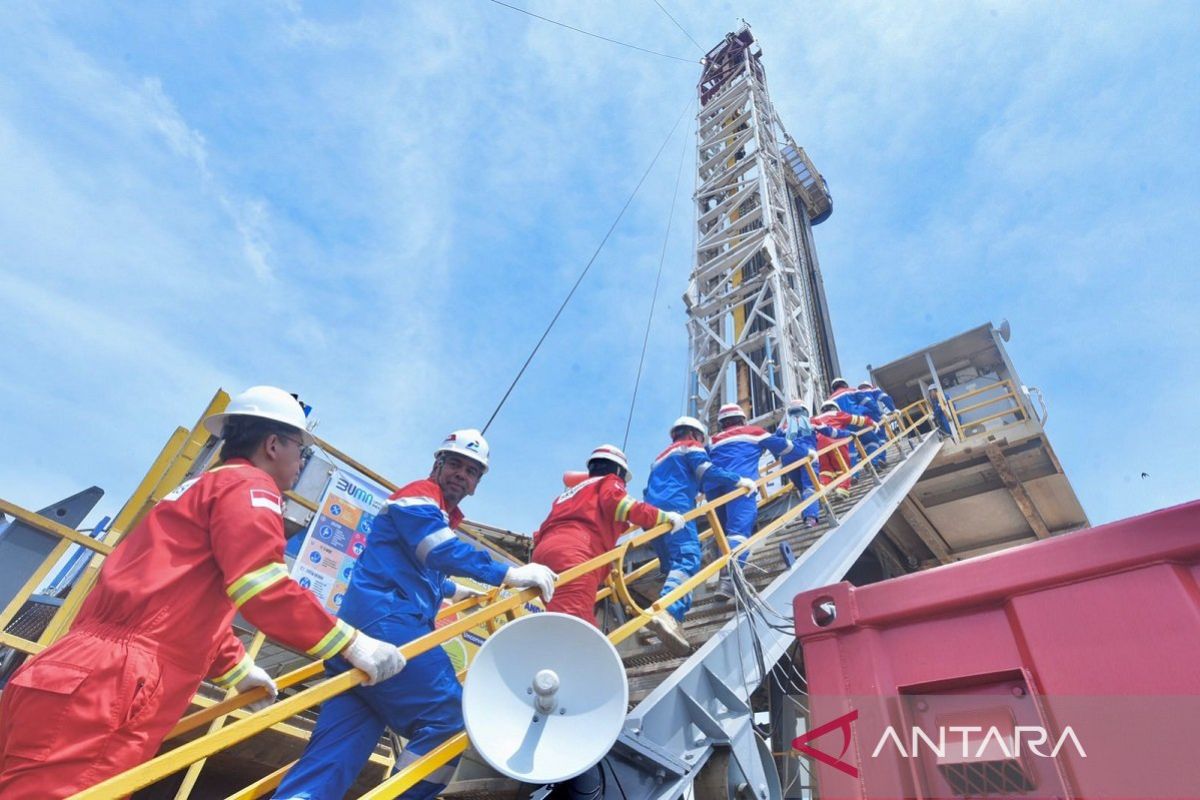
The most important thing in the early development of non-conventional oil and gas is to prepare its ecosystem and pay attention to drilling costs. Tangerang, Banten (ANTARA) – It is time for Indonesia to prepare to move beyond the era of easy energy and forge the pillars for a new phase in the upstream oil and gas industry. According to a briefing by Mubadala Energy CEO Mansoor Mohamed Al Hamed during the Global Executive Talk at IPA Convex 2026, signals of the fading easy energy era are evident from rising uncertainty in the upstream oil and gas sector with increasing business risk. The final phase of that era was also marked by more limited access to conventional oil and gas resources, ageing oil wells, and a trend of natural production decline. Those challenges are also faced by the Indonesian government in realising the oil lifting target in the 2026 State Budget (APBN) of 610 thousand barrels of oil per day. As of April 2026, Indonesia’s oil lifting averaged below 600 thousand barrels per day. Interestingly, the end of the easy energy era does not breed pessimism among upstream players. They instead believe this is the time to collaborate, form new partnerships, and accelerate the development of energy projects. Various challenges spur upstream players to manoeuvre by innovating and leveraging technological advances, including opening the way to non-conventional oil and gas development. Non-conventional oil and gas are hydrocarbons trapped in tighter rocks that are harder to penetrate. To extract these resources, more advanced technologies are required, such as fracking for extraction. Consequently, the costs involved are higher than for conventional oil and gas. Oki Muraza, Vice President Director of PT Pertamina (Persero), in the same forum, revealed the potential of non-conventional oil and gas possessed by Indonesia amid the challenge of the end of the easy energy era. Pertamina has identified a large potential in the North Aman sub-basin, which is estimated to have recoverable resources of 11.3 billion barrels of oil in place (BBO). This potential presents a significant opportunity that has not previously been tapped in Indonesia. Currently, according to Oki, the government’s homework is how the government can present regulations and fiscal policies that are competitive to support the development of non-conventional oil and gas. That homework is being undertaken by the Ministry of Energy and Mineral Resources (ESDM). Government support.