
Weaving the Destiny of Al-Aqsa and Istiqlal in Indonesia's Diplomatic Architecture
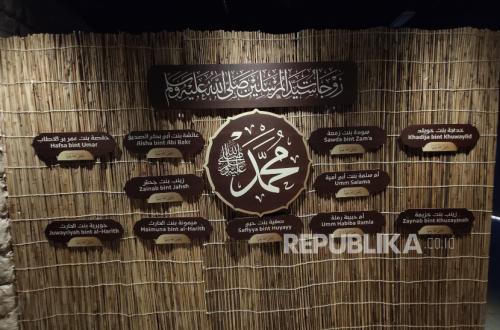
The commemoration of the Prophet Muhammad’s birthday is often trapped in ceremonial romanticism: the glow of lights, the chanting of praise poetry, and historical nostalgia isolated in passive cultural spaces. We frequently reduce the presence of the great man who brought the message of civilisation to merely a figure of individual piety, forgetting that every breath of his prophetic mission was a calculated, prophetic geopolitical construction.
Amidst the ongoing humanitarian wounds in Gaza and the annexation of land and Judaisation of East Jerusalem, the Prophet’s birthday must transform into a space of critical reflection for all layers of the ummah and the nation’s leadership elite. Discussing the Prophet today, without linking it to the suffering and the struggle for the liberation of the Al-Aqsa Mosque and the sovereignty of Palestinian land, is a fatal failure in reading the blueprint of prophetic leadership.
For Indonesia—a nation with the world’s largest Muslim population that has carved an anti-colonial mandate into the preamble of its constitution—the liberation of Al-Aqsa is not merely a foreign policy issue or partial humanitarian solidarity. It is a spiritual historical debt, a theological mandate, and a continuation of the chain of civilisational command laid down directly by the Prophet Muhammad.
History records that the liberation of Baitul Maqdis during the time of Caliph Umar bin Khattab was not a historical accident or merely the territorial ambition of an Arab empire. As sharply elaborated by Dr. Raghib As-Sirjani in his monumental work Fath Filasthin: Qirā’at at-Tārikh bi Ru’yah Islāmiyyah, the success of the conquest of Sham was the disciplined execution of a masterplan designed directly by the Prophet Muhammad through two complementary phases of leadership.
- The Meccan Period: Instilling the Theological Doctrine of the Two Qiblas
Amidst the oppression of the Quraysh disbelievers, the miracle of Isra Mi’raj was revealed not merely as a vertical esoteric journey to the Sidratul Muntaha, but as a transcendental horizontal movement from the Masjidil Haram in Mecca to the Masjidil Aqsa in Baitul Maqdis. Allah explicitly declared the organic link between these two epicentres of monotheism:
“Masjidil Haram” ⟷ “Masjidil Aqsa” ⟹ “Global Monotheistic Axis”
Through the establishment of Al-Aqsa as the first qibla (ula qiblatain), the Prophet carved into the subconscious of his companions that defending, loving, and safeguarding the sovereignty of Al-Quds is an integral part of the shahada. In Mecca, the Prophet laid down spiritual diplomacy: that the land of Palestine is a waqf land of Islamic civilisation that is forbidden to be left in the shackles of polytheistic tyranny and the arbitrariness of unjust power.
- The Medinan Period: A Roadmap for Defence and State Command
When the migration was accomplished and the sovereignty of Medina was established, the dimension of spiritual diplomacy shifted into real geopolitical action. The Prophet’s Mosque was built not merely as a place of prostration, but as an epicentre of international diplomacy, a defence council chamber, and the supreme command headquarters of the ummah. The securing of logistics routes and the pioneering of northern diplomacy towards Sham began from the command of the Prophet’s Mosque. From this mihrab, the Prophet’s strategic vision was always directed northwards: the axis of Sham and the liberation of Baitul Maqdis.
Nine Steps to Penetrate Tyranny: A Historical Pattern Towards Independence
The roadmap for the opening of Islamic civilisation into the Sham region unfolded across nine measurable historical moments. The Prophet Muhammad acted as the pioneering architect who tested the enemy’s strength, opened logistics routes, and established diplomacy, while the Rightly Guided Caliphs acted as executors of law enforcement and sovereignty.
TIMELINE OF THE PIONEERING & LIBERATION OF SHAM
[PROPHET MUHAMMAD: PIONEER & FOUNDATION LAYER]
629 CE ── Battle of Mu’tah (Test of military resilience vs Byzantium)
629 CE ── Expedition of Dhatus Salasil (Securing the Gulf of Aqaba logistics route)
630 CE ── Battle of Tabuk (Military diplomacy with 30,000 troops & jizya pact)
632 CE ── Army of Usamah bin Zaid (Final command testament to northern Sham)
[RIGHTLY GUIDED CALIPHS: EXECUTORS & UPHOLDERS OF CIVILISATION]
633 CE ── Mobilisation of the Futuhat Sham in the era of Caliph Abu Bakr
634 CE ── Battle of Ajnadain (Fall of the gates of Gaza & Nablus)
636 CE ── Battle of Yarmuk (Collapse of Roman military hegemony)
638 CE ── Peaceful surrender of Baitul Maqdis & the Al-’Uhdah Al-’Umariyah Charter
640 CE ── Conquest of the last port of Qaisariyah by Muawiyah bin Abu Sufyan
Source: jawawa.id (https://jawawa.id/newsitem/weaving-the-destiny-of-al-aqsa-and-istiqlal-in-indonesias-diplomatic-architecture-1787831582)
Originally published by Republika (https://analisis.republika.co.id/berita/tkfdua451/menganyam-takdir-alaqsa-dan-istiqlal-dalam-arsitektur-diplomasi-indonesia), translated from Indonesian