
Weaving Nature, Realising IKN as a World Forest City
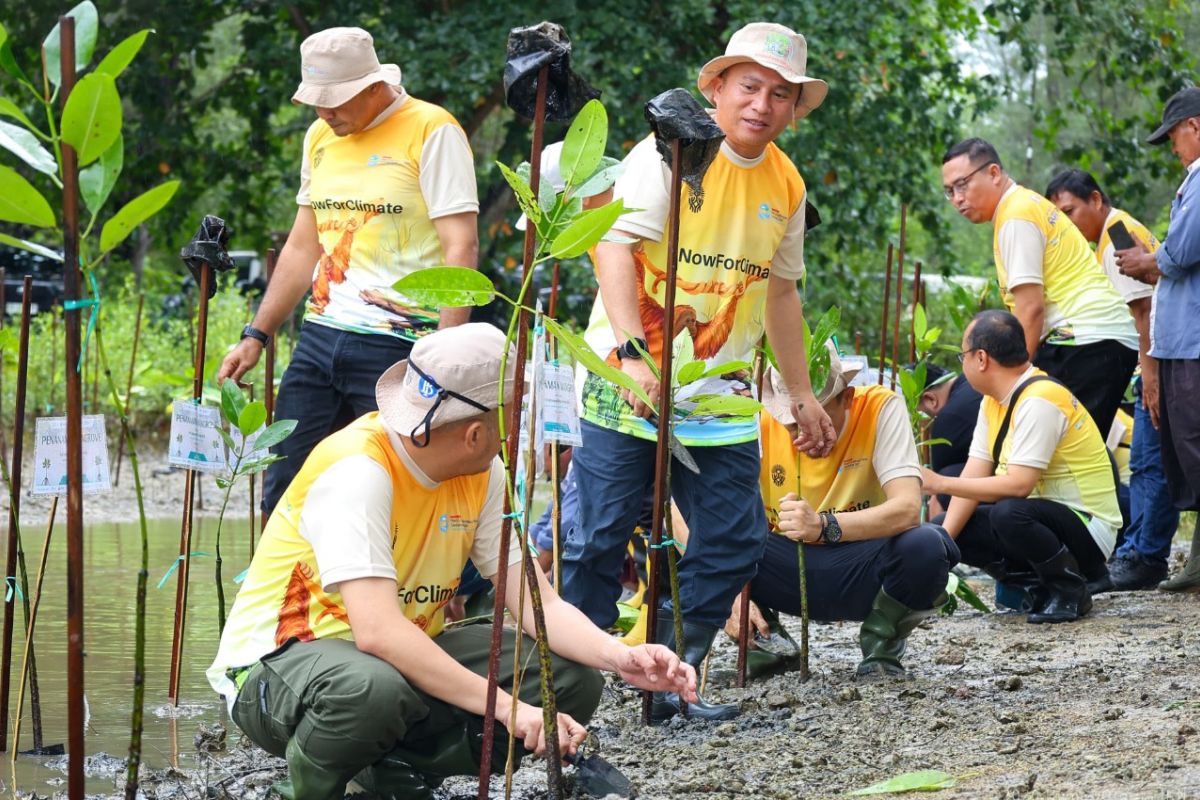
From former mining lands to urban forests, from coastal areas to the surroundings of places of worship, every step taken is part of a major effort to maintain nature’s balance.
In the midst of the construction of Nusantara Capital City (IKN) as Indonesia’s new centre of government, a significant commitment is embedded: building a city that grows in harmony with nature. It is not merely about building on a forest, but building together with the forest. This vision is continuously championed by the IKN Authority and realised through concrete actions, including a series of events marking World Environment Day 2026, which carries the spirit of ‘Time for Climate Action’.
Environmental restoration efforts began in the most challenging area: former mining lands. In collaboration with the Ministry of Forestry, the IKN Authority has established a strategic partnership to rehabilitate the Bukit Soeharto Grand Forest Park (Tahura) area. Once scarred by mining pits, barren land, and the threat of environmental damage, the area is now undergoing a transformation to become a productive forest, a water catchment zone, and a wildlife habitat.
The IKN Authority has affirmed its commitment to continuously strengthen collaboration with various parties, particularly the Ministry of Forestry, to restore the former mining areas within Tahura Bukit Soeharto. This effort serves as a crucial foundation for realising IKN as a world-class forest city, with a commitment to allocating 65 percent of its area as green space to revive a sustainable tropical rainforest ecosystem.
The rehabilitation process is carried out in stages and requires patience. It begins with area mapping, measuring the depth of former mining pits, followed by backfilling and land levelling. Drainage channels are repaired to prevent waterlogging, while soil fertility damaged by mining activities is restored with the assistance of experts.
Planting is conducted gradually. Fast-growing tree species such as acacia and sengon are planted first to prevent erosion and cover open land. Subsequently, endemic Kalimantan species like meranti, ulin, and kapur will be reintroduced so that the ecosystem can recover to near its natural state, supported by quality seedlings from the Forest Nursery Centre.
Restoration efforts extend beyond planting. Water management and erosion control are implemented through the construction of check dams and retention ponds, along with measures to prevent acid mine drainage from seeping into surrounding rivers. Plant growth is monitored regularly every three to six months. Strict supervision is also continuously enforced to ensure illegal mining activities do not recur.
Local communities are directly involved as implementers and custodians of the area. They are also encouraged to plant economically valuable commodities such as rubber, sugar palm, and various fruit trees. “This activity has multiple benefits. Besides restoring nature, it also aims to improve the welfare of residents and supports the ASRI programme (Aman, Sehat, Resik, dan Indah),” said Head of the IKN Authority Basuki Hadimuljono.