
Weaving Justice into the City Budget
Justice should be visible in safe roads, neighbourhoods that are not easily flooded, affordable schools, nearby healthcare and economic opportunities open to everyone.
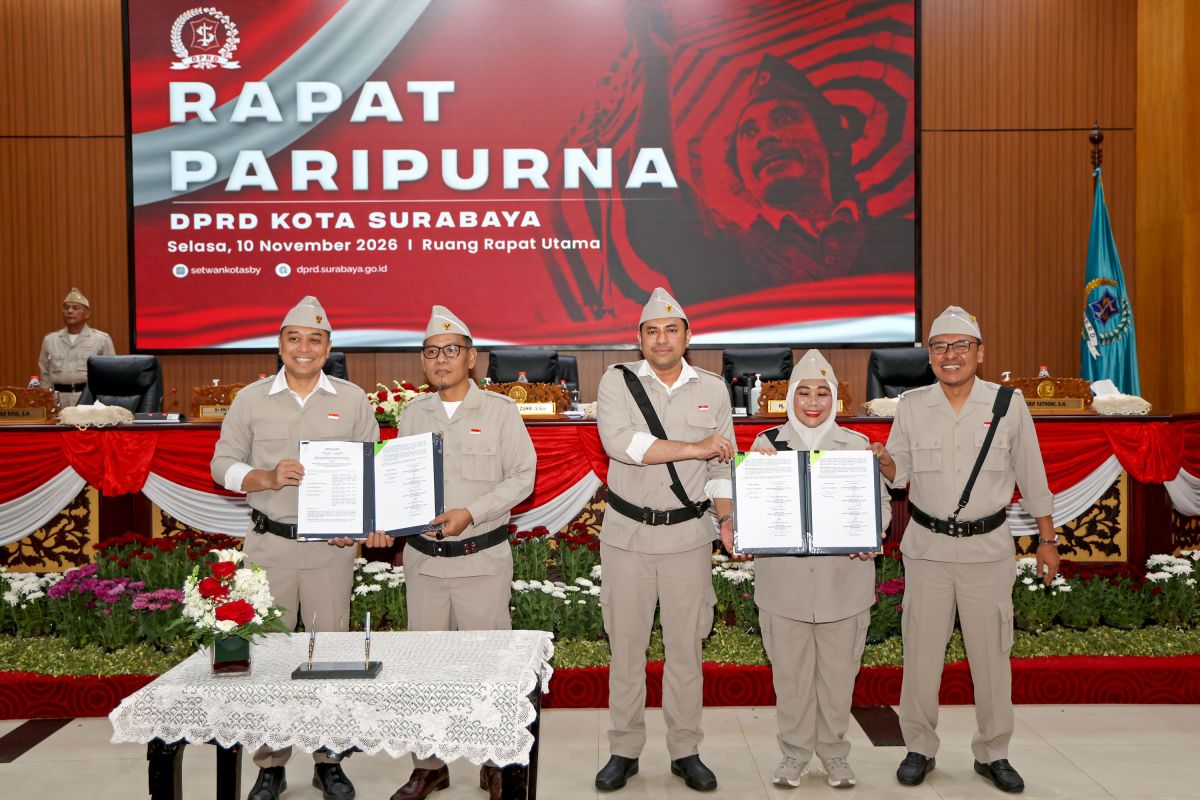
Surabaya (ANTARA) - The approval of Surabaya’s 2027 municipal budget of Rp12.9 trillion coincided with Heroes’ Day on 10 November 2026. This can be seen as a reminder that the spirit of the struggle must be translated into concrete work to improve public welfare.
A budget’s success is not determined by the size of the figure approved, but by how far public money makes residents’ lives better.
With regional spending of around Rp12.66 trillion, Surabaya has fiscal room to improve basic services, strengthen infrastructure, reduce poverty and stimulate the economy.
However, the facts show that the city’s needs continue to grow while its budgetary capacity is limited. The regional budget, therefore, is not merely a list of projects, but a test of how priorities are set, public money is used appropriately and development outcomes are measured.
The budget figures need to be read as a whole. Revenue, expenditure and financing must be considered together to assess fiscal health and the policy’s commitment to the public interest.
Reading the figures
Regional revenue in 2027 is projected to reach Rp11.12 trillion, comprising about Rp8.44 trillion in Regional Own-Source Revenue (PAD) and Rp2.68 trillion in transfer revenue. Around 76 per cent of revenue comes from PAD. This proportion indicates relatively strong fiscal capacity, while also making the sustainability of revenue sources essential.
PAD should be increased by expanding economic activity, optimising assets, improving tax compliance and digitising services, rather than simply imposing more levies.
Regional spending is planned at around Rp12.66 trillion. Operating expenditure will amount to Rp9.85 trillion, capital expenditure to Rp2.76 trillion and unforeseen expenditure to about Rp47.68 billion.
This means almost 78 per cent of regional spending is operating expenditure. This includes government services, goods and services, and community programmes, so it does not automatically indicate waste. However, the large share makes transparency about personnel costs, operations, grants and social assistance essential.
Each regional agency needs to explain the relationship between costs and service outcomes. The measure is not simply whether activities were carried out or the budget spent, but whether services have become faster, more accessible and better in quality.
Financing also warrants scrutiny. Financing receipts are planned at around Rp1.7 trillion, including a 2026 budget surplus (SiLPA) of Rp395.9 billion and regional borrowing of about Rp1.3 trillion. After financing expenditure of Rp253 billion, net financing will be around Rp1.5 trillion, and the SiLPA for the current year is set at zero.
Regional borrowing is not automatically wrong. Debt can accelerate long-term infrastructure development. However, the Rp1.3 trillion loan must be accompanied by an explanation of its purpose, source, interest rate, term and repayment capacity. The projects it finances must be ready to proceed and deliver measurable benefits.
The zero SiLPA target also needs to be interpreted carefully. Unspent funds may point to weaknesses in planning or implementation. However, the government should not spend money at the end of the year simply to meet a spending target. The quality of expenditure matters more than the speed at which money is spent.
Setting priorities
Source: jawawa.id (https://jawawa.id/newsitem/weaving-justice-into-the-city-budget-1794362007)
Originally published by Antara (Indonesian) (https://www.antaranews.com/berita/5845631/menjahit-keadilan-dari-anggaran-kota), translated from Indonesian