
Weaving Indonesia-Australia Friendship from an Early Age
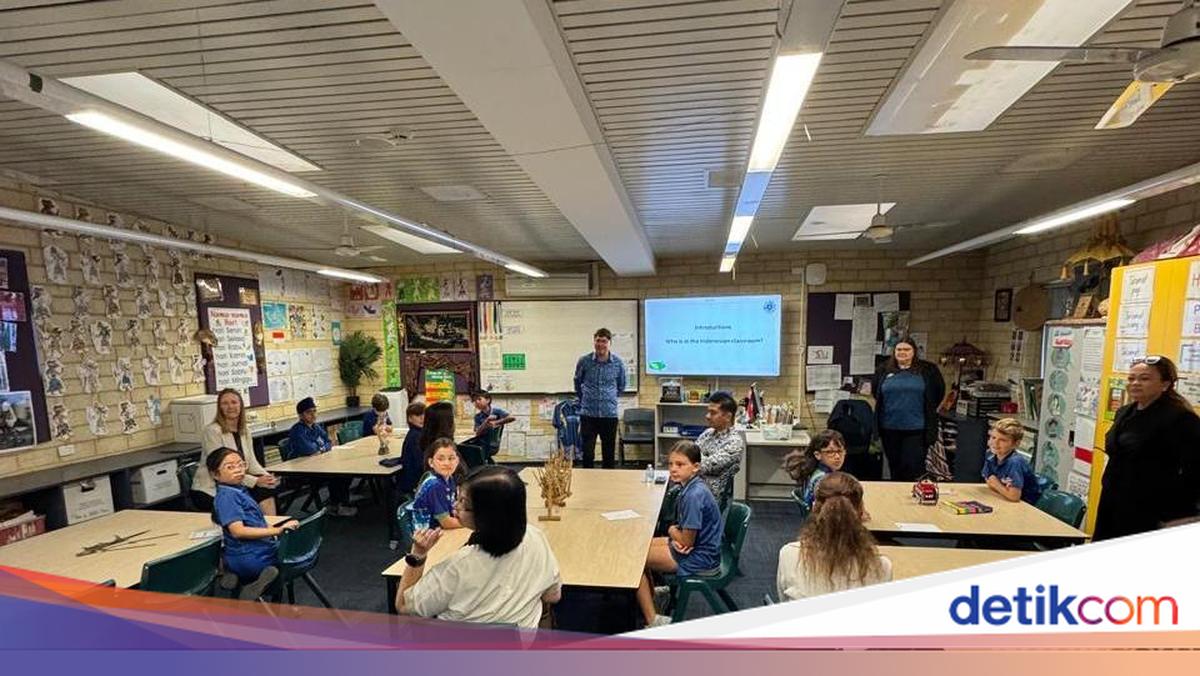
This is what primary school students at Bertram Primary School, located in southern Perth, Western Australia, are currently doing. Situated approximately 35 minutes from Perth city centre, students at this school are provided with Indonesian language lessons.
A delegation of Indonesian editors, participating in the Australia-Indonesia Senior Editors visit programme, witnessed firsthand Bertram students fluently reciting numbers one to ten in Indonesian. They were also able to greet the visitors with phrases such as ‘selamat pagi’ (good morning), ‘selamat datang’ (welcome), and ‘apa kabar’ (how are you).
“I also know a couple of words, like api (fire), angin (wind), and baik-baik saja (fine),” said one student, Mia.
Vincent Sweetman, the Indonesian language teacher at Bertram Primary School, admits to having a strong bond with Indonesia. Vincent stated that he teaches not only the language but also the culture. He has been teaching Indonesian at Bertram for the past four years, following more than four years of teaching in various schools in Jakarta.
“In the future, the students’ understanding of Indonesia, and vice versa, will further strengthen the friendship between them,” said Vincent. He emphasised that mastering a foreign language is crucial for honing critical thinking skills and developing students into global citizens who appreciate diversity.
“At the primary school level, teaching Indonesian allows students to go beyond merely memorising vocabulary and basic communication; it enables them to develop an appreciation for Indonesia’s rich culture and history. This fosters respect and a sincere bond from an early age,” Vincent explained.
Furthermore, he revealed three main reasons why schools in Western Australia are making Indonesian a primary focus. First, geography and tourism: Perth’s location on Australia’s west coast makes travel to Indonesia, particularly Bali, very quick and popular among local families. Second, economic partnership: Indonesia is viewed as a rapidly growing regional economic power, meaning proficiency in Indonesian can open future opportunities in fields such as education, diplomacy, and business. Third, ease of learning: Indonesian uses the Latin alphabet, making reading and writing much more accessible, which boosts children’s confidence.
Beyond language, students and teachers from both nations engage in various collaborations to maintain the friendship. This includes routine cross-border visits by teachers, such as visits from partner schools to Australia in 2023, followed by return visits from Bertram to Bandung in 2024 to discuss inclusive education, and comparative studies in 2025.
Indonesian language and culture have become part of Bertram’s identity. Australian children celebrate Indonesia’s Independence Day, learn to cook Indonesian dishes, and hold Cultural Appreciation Nights. For the 2026-2027 period, this friendship is designed to deepen through six concrete actions led by students: bilingual introduction videos, showcasing traditional games, environmental actions (such as waste sorting and recycling posters), exchanging handmade symbols of friendship, continued teacher visits to Bandung to share insights on inclusion through sports, and cross-cultural practices.
These inspiring collaborations are made possible through the BRIDGE (Building Relationships through Intercultural Dialogue and Growing Engagement) School Partnership initiative. This is an Australian Government initiative through the Department of Foreign Affairs and Trade (DFAT) in collaboration with Asialink Education, active since 2008. To date, the BRIDGE programme has connected over 250 pairs of schools in Indonesia and Australia. Bertram Primary School partners with SDN 023 Pajagalan in Bandung, a partnership that has lasted over 10 years.
For Vincent, such direct collaboration is immensely helpful for both teachers and students, as teaching a foreign language in school presents unique challenges, such as limited weekly lesson hours. The collaboration with SDN 023 Pajagalan provides a practical solution, supported by the Indonesian Consul General (KJRI) and local community figures. “This partnership provides a platform for authentic cultural exchange. Personally, I feel honoured and grateful to work with Indonesian teaching colleagues to introduce the wonders of Indonesian culture and history, a country so close to my heart,” Vincent said with pride.