
Weather Modification Operation Launched in Jambi to Prevent Forest and Land Fires
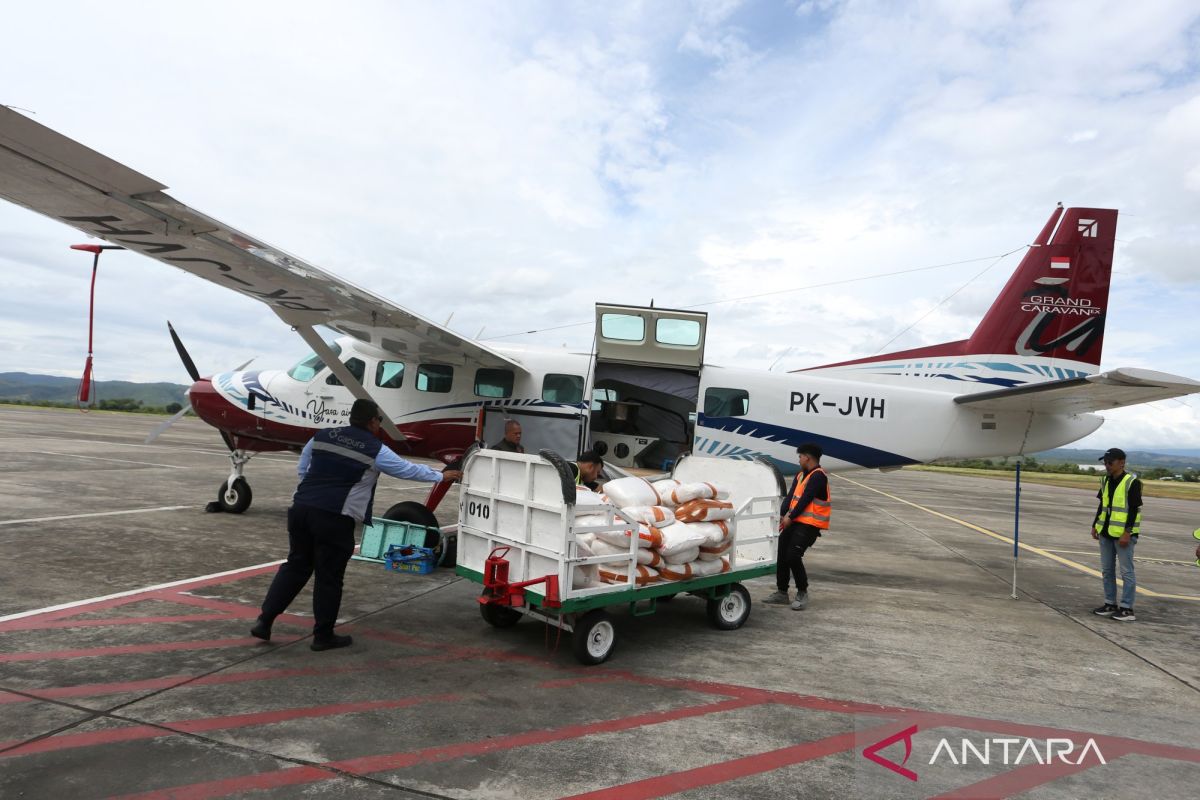
The National Disaster Management Agency (BNPB) is conducting a Weather Modification Operation (OMC) for one week in Jambi Province as a preventive measure to forest and land fires (karhutla) ahead of the peak dry season.
Abdul Muhari, Head of the BNPB Disaster Data, Information, and Communication Centre, stated in Jakarta on Monday that the operation aims to moisten vulnerable areas, particularly peatlands, to prevent them from easily catching fire as rainfall intensity begins to decrease in the region. “The steps taken for forest fire management are a combination of prevention and suppression. Before hotspots expand, weather modification operations must be carried out to moisten the peat,” he said.
The OMC in Jambi is scheduled to take place from 5 to 12 June 2026, following the Jambi Provincial Government’s declaration of a forest fire emergency alert status, which is in effect from 27 April until the end of November 2026. The aerial operation, based at Sultan Thaha Airport in Jambi, involves close collaboration between the BNPB, the Meteorology, Climatology, and Geophysics Agency (BMKG), and the Indonesian Air Force.
During the first few days of the operation, aerial mitigation teams conducted seeding sorties using salt-based materials over high-risk areas, including West Tanjung Jabung, East Tanjung Jabung, and Muaro Jambi. The cloud seeding efforts have reportedly successfully triggered localised rainfall in several vulnerable spots.
According to Abdul, Jambi is one of six priority provinces in Indonesia for forest fire management receiving technological intervention and aerial support from the central government. To anticipate the impact of the dry season, which could worsen the potential for haze disasters, the BNPB emphasised the importance of compliance with Presidential Instruction Number 3 of 2020 regarding forest fire management. “The BNPB urges local governments, communities, and forestry and agricultural businesses to cooperate in early prevention,” he added.
Weather modification to increase rainfall potential is considered vital so that during the peak of the dry season, critical forests and peatlands do not easily ignite. This programme serves as a mitigation step, as the BMKG has noted that global climate conditions could develop into a weak to moderate El Niño phenomenon in the second half of 2026, with a 50-80 percent probability, increasing the risk of drought and forest fires in Indonesia.
BMKG Head Teuku Faisal Fathani previously explained that while the El Niño Southern Oscillation (ENSO) is currently in a neutral phase, the indications of strengthening towards El Niño must be monitored. Based on expert studies, the BMKG anticipates an earlier and longer dry season, with overall climate conditions in 2026 expected to be drier than normal. The risk of forest fires is expected to rise in Riau in June, spreading to Jambi and South Sumatra, and continuing to West and South Kalimantan between July and August. Currently, the number of hotspots in Indonesia has reached 1,601, higher than the same period in previous years. “As a mitigation step, BMKG continues to strengthen the preventive approach through Weather Modification Operations using land rewetting methods, particularly in peat-vulnerable areas,” said Teuku Faisal.